

Sanskrit Verse
तस्मादपरिहार्येऽर्थे न त्वं शोचितुमर्हसि।।2.27।।
English Translation
2.27 For certain is death for the born, and certain is birth for the dead; therefore, over the inevitable thou shouldst not grieve.
Hindi Translation
।।2.27।। जन्मने वाले की मृत्यु निश्चित है और मरने वाले का जन्म निश्चित है; इसलिए जो अटल है अपरिहार्य – है उसके विषय में तुमको शोक नहीं करना चाहिये।।
Detailed Meaning
English
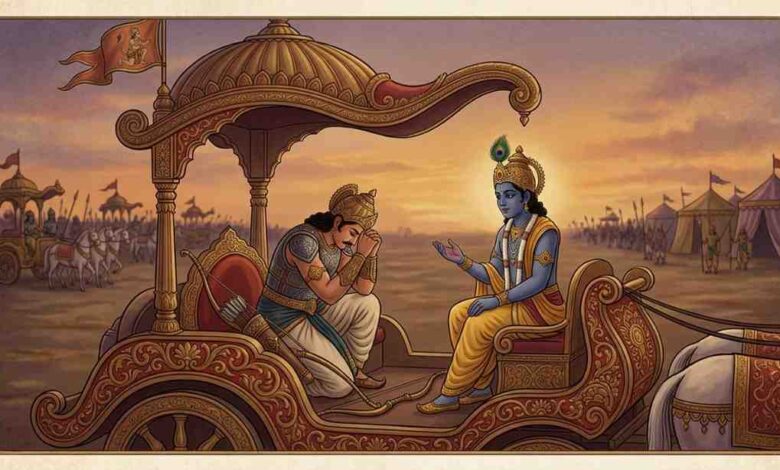
In this verse from the Bhagavad Gita, Lord Krishna emphasizes the inevitability of life and death, illustrating the cyclical nature of existence. The phrase ‘For certain is death for the born’ signifies that all beings must eventually face death, while ‘certain is birth for the dead’ implies that death leads to rebirth. This duality is a fundamental aspect of the cycle of samsara (the cycle of birth and rebirth). Krishna advises Arjuna not to grieve over the inevitable. By recognizing that death is a natural part of life, one can cultivate a sense of detachment from the physical body and develop a deeper understanding of the eternal soul (Atman). This perspective can alleviate fear and sorrow, allowing individuals to focus on their duties and purpose without being overwhelmed by the transient nature of life.
Hindi
भगवद गीता के इस श्लोक में, भगवान कृष्ण जीवन और मृत्यु की अनिवार्यता को रेखांकित करते हैं, जो अस्तित्व के चक्रीय स्वभाव को दर्शाता है। ‘जन्मने वाले की मृत्यु निश्चित है’ वाक्यांश यह दर्शाता है कि सभी प्राणियों को अंततः मृत्यु का सामना करना पड़ता है, जबकि ‘मरने वाले का जन्म निश्चित है’ का अर्थ है कि मृत्यु पुनर्जन्म का कारण बनती है। यह द्वैत सन्सार (जन्म और पुनर्जन्म का चक्र) का एक मौलिक पहलू है। कृष्ण अर्जुन को अनिवार्य चीज़ों पर शोक न करने की सलाह देते हैं। जब व्यक्ति यह समझता है कि मृत्यु जीवन का स्वाभाविक हिस्सा है, तो वह शारीरिक शरीर से अलगाव की भावना विकसित कर सकता है और आत्मा (आत्मा) की गहरी समझ प्राप्त कर सकता है। यह दृष्टिकोण भय और दुःख को कम कर सकता है, जिससे व्यक्ति अपने कर्तव्यों और उद्देश्य पर ध्यान केंद्रित कर सकता है।
Practical Wisdom
English
Understanding the inevitability of death can transform how we live our lives. Instead of fearing loss, we should embrace each moment, knowing that life is fleeting. This perspective encourages us to prioritize meaningful relationships and experiences. By accepting that death is a natural part of existence, we can focus on what truly matters, leading to a more enriched and fulfilling life.
Hindi
मृत्यु की अनिवार्यता को समझना हमारे जीवन जीने के तरीके को बदल सकता है। नुकसान से डरने के बजाय, हमें हर पल को अपनाना चाहिए, यह जानते हुए कि जीवन क्षणिक है। यह दृष्टिकोण हमें सार्थक रिश्तों और अनुभवों को प्राथमिकता देने के लिए प्रोत्साहित करता है। मृत्यु को अस्तित्व का एक स्वाभाविक हिस्सा मानकर, हम उस पर ध्यान केंद्रित कर सकते हैं जो वास्तव में महत्वपूर्ण है, जिससे हमारा जीवन अधिक समृद्ध और पूर्ण हो सके।
Life Application
English
To apply this teaching in daily life, start by reflecting on your fears related to loss and change. Embrace the idea that everything is temporary, which can help you appreciate the present moment. Engage in activities that foster connections with others and pursue passions without the weight of fear. This approach not only enriches your experiences but also prepares you for inevitable life transitions.
Hindi
इस शिक्षण को दैनिक जीवन में लागू करने के लिए, अपने नुकसान और परिवर्तन से संबंधित भय पर विचार करना शुरू करें। इस विचार को अपनाएँ कि सब कुछ अस्थायी है, जो आपको वर्तमान क्षण की सराहना करने में मदद कर सकता है। दूसरों के साथ संबंधों को बढ़ावा देने वाली गतिविधियों में संलग्न हों और भय के भार के बिना अपने जुनून का पीछा करें। यह दृष्टिकोण न केवल आपके अनुभवों को समृद्ध करता है, बल्कि आपको जीवन के अनिवार्य परिवर्तन के लिए भी तैयार करता है।
Spiritual Insight
English
This verse provides profound spiritual insight into the nature of the self. It teaches that the soul is eternal and unaffected by the physical changes of birth and death. By realizing that one’s true essence is beyond these temporary states, individuals can attain a sense of liberation from the cycle of suffering. This understanding fosters inner peace and a deeper connection to the universal spirit.
Hindi
यह श्लोक आत्मा के स्वभाव के बारे में गहन आध्यात्मिक अंतर्दृष्टि प्रदान करता है। यह सिखाता है कि आत्मा शाश्वत है और जन्म और मृत्यु के भौतिक परिवर्तनों से अप्रभावित है। जब व्यक्ति यह समझता है कि उसका असली सार इन अस्थायी अवस्थाओं से परे है, तो वह दुख के चक्र से मुक्ति का अनुभव कर सकता है। यह समझ आंतरिक शांति और सार्वभौमिक आत्मा के साथ गहरे संबंध को बढ़ावा देती है।
Modern Context
English
In modern society, this verse resonates with the challenges of loss and grief. With increasing awareness of mental health, recognizing the inevitability of life’s cycles can help individuals cope with loss. This teaching encourages mindfulness and living in the present, which is increasingly relevant in a fast-paced world where stress and anxiety are common.
Hindi
आधुनिक समाज में, यह श्लोक नुकसान और दुःख की चुनौतियों के साथ गूंजता है। मानसिक स्वास्थ्य के प्रति बढ़ती जागरूकता के साथ, जीवन के चक्रों की अनिवार्यता को पहचानना व्यक्तियों को नुकसान से निपटने में मदद कर सकता है। यह शिक्षण वर्तमान में जीने और सचेत रहने को प्रोत्साहित करता है, जो तेजी से बदलते विश्व में प्रासंगिक है जहाँ तनाव और चिंता सामान्य हैं।
Key Takeaways
English
- Acceptance of death leads to reduced fear and anxiety.
- Life is a cycle; understanding it fosters resilience.
- Embrace the present moment fully.
- Focus on meaningful relationships and experiences.
- Detachment from the physical body allows for spiritual growth.
Hindi
- मृत्यु को स्वीकारने से भय और चिंता कम होती है।
- जीवन एक चक्र है; इसे समझने से लचीलापन बढ़ता है।
- वर्तमान क्षण को पूरी तरह से अपनाएँ।
- सार्थक रिश्तों और अनुभवों पर ध्यान केंद्रित करें।
- शारीरिक शरीर से अलगाव आध्यात्मिक विकास की अनुमति देता है।

