

Sanskrit Verse (संस्कृत श्लोक)
मामकाः पाण्डवाश्चैव किमकुर्वत सञ्जय।।1.1।।
Transliteration
English Translation
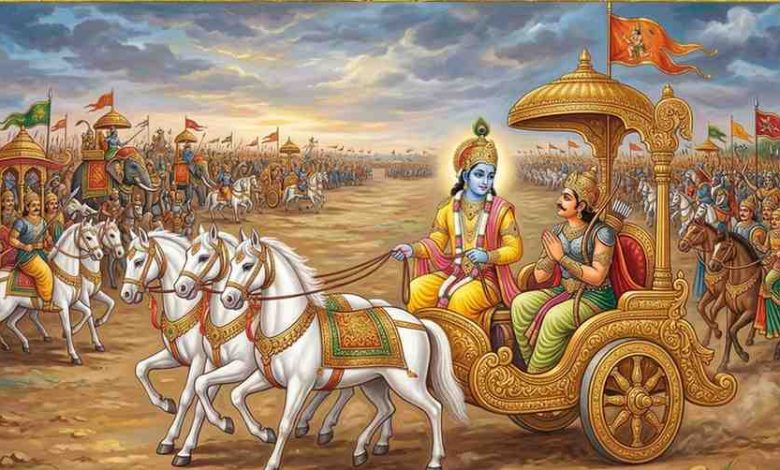
1.1 Dhritarashtra said What did my people and the sons of Pandu do when they had assembled together eager for battle on the holy plain of Kurukshetra, O Sanjaya.
Hindi Translation (हिंदी अनुवाद)
।।1.1।।धृतराष्ट्र ने कहा — हे संजय ! धर्मभूमि कुरुक्षेत्र में एकत्र हुए युद्ध के इच्छुक (युयुत्सव:) मेरे और पाण्डु के पुत्रों ने क्या किया?
Detailed Meaning (विस्तृत अर्थ)
English Explanation
In this opening verse of the Bhagavad Gita, Dhritarashtra, the blind king of Hastinapura, poses a poignant question to his charioteer Sanjaya. He asks about the actions of his sons and the sons of Pandu as they gather on the sacred battlefield of Kurukshetra, eager for war. The term ‘Dharmakshetra’ (place of righteousness) signifies that this is not just a physical battleground but a moral and ethical arena where concepts of dharma (duty) and adharma (unrighteousness) will clash. The verse sets the stage for the philosophical dialogues that follow, highlighting the internal conflict of duty versus desire. Dhritarashtra’s blindness is symbolic of ignorance, representing those who fail to perceive the true nature of reality and their responsibilities. This verse encapsulates the essence of the epic conflict, inviting readers to reflect on their own lives and the moral dilemmas they face.
Hindi Explanation (हिंदी व्याख्या)
भगवद गीता के इस पहले श्लोक में धृतराष्ट्र, हस्तिनापुर के अंधे राजा, अपने सारथी संजय से एक महत्वपूर्ण प्रश्न पूछते हैं। वह पूछते हैं कि जब उनके पुत्र और पाण्डवों के पुत्र धर्मभूमि कुरुक्षेत्र में युद्ध के लिए एकत्र हुए, तो उन्होंने क्या किया। ‘धर्मक्षेत्र’ (धर्म का स्थान) का अर्थ है कि यह केवल एक भौतिक युद्धभूमि नहीं है, बल्कि एक नैतिक और धार्मिक क्षेत्र है जहाँ धर्म और अधर्म के सिद्धांतों का टकराव होगा। यह श्लोक बाद में आने वाली दार्शनिक वार्ताओं के लिए मंच तैयार करता है, जो कर्तव्य और इच्छा के बीच आंतरिक संघर्ष को उजागर करता है। धृतराष्ट्र की अंधता अज्ञानता का प्रतीक है, जो उन लोगों का प्रतिनिधित्व करती है जो वास्तविकता और अपनी जिम्मेदारियों को नहीं समझ पाते। यह श्लोक महाकाव्य संघर्ष के सार को संक्षेप में प्रस्तुत करता है, पाठकों को उनके जीवन और नैतिक दुविधाओं पर विचार करने के लिए आमंत्रित करता है।
Practical Wisdom (व्यावहारिक ज्ञान)
English
This verse teaches us the importance of being aware of our responsibilities, especially in challenging situations. Just like Dhritarashtra, who was blind to his sons’ actions, we must not ignore our duties in pursuit of personal desires. For example, if you’re facing a conflict at work, it’s essential to focus on ethical actions and collaboration rather than just winning. Recognizing the broader implications of our choices can lead to more harmonious outcomes in our personal and professional lives.
Hindi (हिंदी)
यह श्लोक हमें यह सिखाता है कि चुनौतीपूर्ण परिस्थितियों में अपनी जिम्मेदारियों के प्रति जागरूक रहना कितना महत्वपूर्ण है। ठीक उसी तरह जैसे धृतराष्ट्र अपने पुत्रों की क्रियाओं के प्रति अंधे थे, हमें व्यक्तिगत इच्छाओं की पूर्ति में अपनी जिम्मेदारियों की अनदेखी नहीं करनी चाहिए। उदाहरण के लिए, यदि आप अपने काम में संघर्ष का सामना कर रहे हैं, तो नैतिक कार्यों और सहयोग पर ध्यान केंद्रित करना आवश्यक है, न कि केवल जीतने पर। अपने विकल्पों के व्यापक प्रभावों को पहचानने से हमारे व्यक्तिगत और व्यावसायिक जीवन में अधिक सामंजस्यपूर्ण परिणाम मिल सकते हैं।
Life Application (जीवन में उपयोग)
English
In personal development, this verse encourages us to confront our inner battles with clarity. Just as Dhritarashtra was unaware of the true nature of his situation, we often overlook our own flaws and responsibilities. Regular self-reflection and mindfulness practices can help us understand our motivations and actions better. For instance, journaling about daily experiences can reveal patterns in our behavior, guiding us toward more conscious and ethical decision-making in our lives.
Hindi (हिंदी)
व्यक्तिगत विकास में, यह श्लोक हमें स्पष्टता के साथ अपनी आंतरिक लड़ाइयों का सामना करने के लिए प्रेरित करता है। ठीक उसी तरह जैसे धृतराष्ट्र अपनी स्थिति की वास्तविकता से अज्ञात थे, हम अक्सर अपनी गलतियों और जिम्मेदारियों की अनदेखी करते हैं। नियमित आत्म-प्रतिबिंब और ध्यान अभ्यास हमें अपनी प्रेरणाओं और कार्यों को बेहतर ढंग से समझने में मदद कर सकते हैं। उदाहरण के लिए, दैनिक अनुभवों के बारे में जर्नलिंग करने से हमारे व्यवहार में पैटर्न प्रकट हो सकते हैं, जो हमें अपने जीवन में अधिक सचेत और नैतिक निर्णय लेने की ओर मार्गदर्शित करते हैं।
Spiritual Insight (आध्यात्मिक अंतर्दृष्टि)
English
The verse invites us to meditate on our own ‘Kurukshetra’—the inner battles we face daily. In spiritual terms, Kurukshetra symbolizes the field of the mind where conflicting thoughts and desires battle for dominance. Meditation can help us cultivate awareness, enabling us to observe these conflicts without attachment. By recognizing our true self beyond these conflicts, we can attain a state of peace and clarity, much like the teachings that unfold in the Gita.
Hindi (हिंदी)
यह श्लोक हमें अपने ‘कुरुक्षेत्र’ पर ध्यान करने के लिए आमंत्रित करता है – जो आंतरिक संघर्ष हम दैनिक रूप से सामना करते हैं। आध्यात्मिक दृष्टिकोण से, कुरुक्षेत्र मन के क्षेत्र का प्रतीक है जहाँ विचारों और इच्छाओं का टकराव होता है। ध्यान हमें जागरूकता विकसित करने में मदद कर सकता है, जिससे हम इन संघर्षों को बिना जुड़ाव के देख सकें। जब हम इन संघर्षों के पार अपने वास्तविक स्व को पहचानते हैं, तो हम शांति और स्पष्टता की स्थिति प्राप्त कर सकते हैं, जैसे कि गीता में प्रकट होने वाले शिक्षाओं में।
Modern Context (आधुनिक संदर्भ)
English
In today’s fast-paced world, this verse resonates with the conflicts we face in our work and personal lives. The gathering on Kurukshetra can be likened to team meetings where differing opinions clash. Recognizing that these situations are not just about winning but about ethical decision-making is crucial. For instance, in a corporate setting, focusing on collective goals rather than individual ambitions can lead to more productive outcomes. This awareness fosters collaboration and harmony in diverse environments.
Hindi (हिंदी)
आज की तेज़-तर्रार दुनिया में, यह श्लोक हमारे कामकाजी और व्यक्तिगत जीवन में आने वाले संघर्षों के साथ गूंजता है। कुरुक्षेत्र पर एकत्र होना टीम बैठकों के समान है जहाँ भिन्न विचार टकराते हैं। यह पहचानना कि ये स्थितियाँ केवल जीतने के बारे में नहीं हैं, बल्कि नैतिक निर्णय लेने के बारे में है, बहुत महत्वपूर्ण है। उदाहरण के लिए, कॉर्पोरेट सेटिंग में, व्यक्तिगत महत्वाकांक्षाओं के बजाय सामूहिक लक्ष्यों पर ध्यान केंद्रित करना अधिक उत्पादक परिणाम ला सकता है। यह जागरूकता विविध वातावरणों में सहयोग और सामंजस्य को बढ़ावा देती है।
Key Takeaways (मुख्य बिंदु)
English
- Awareness of responsibilities is crucial in conflict.
- Moral dilemmas are central to human experience.
- Reflection can lead to better decision-making.
- Spiritual awareness helps navigate life’s battles.
- Collaboration fosters harmony in diverse settings.
Hindi (हिंदी)
- संघर्ष में जिम्मेदारियों का ज्ञान आवश्यक है।
- नैतिक दुविधाएँ मानव अनुभव के केंद्र में हैं।
- प्रतिबिंब बेहतर निर्णय लेने की ओर ले जाता है।
- आध्यात्मिक जागरूकता जीवन की लड़ाइयों में मदद करती है।
- सहयोग विविध सेटिंग्स में सामंजस्य बढ़ाता है।

