

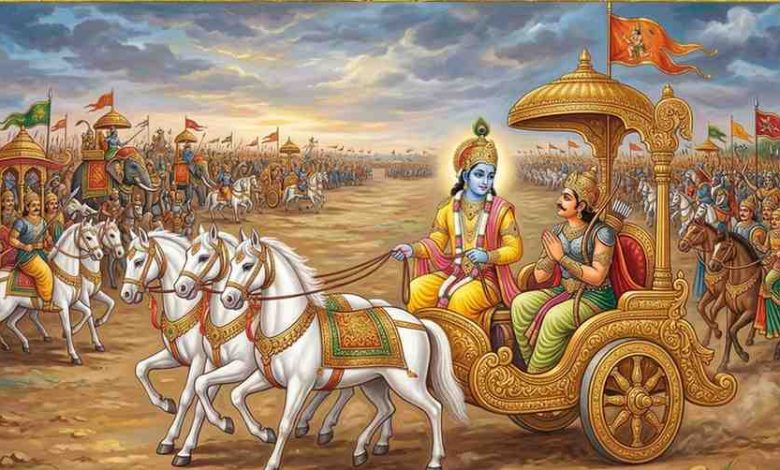
Sanskrit Verse
सहसैवाभ्यहन्यन्त स शब्दस्तुमुलोऽभवत्।।1.13।।
English Translation
1.13. Then (following Bhishma), conches and kettledrums, tabors,
drums and cow horns blared forth ite suddenly (from the Kaurava side)
and the sound was tremendous.
Hindi Translation
।।1.13।।तत्पश्चात् शंख, नगारे, ढोल व शृंगी आदि वाद्य एक साथ ही बज उठे, जिनका बड़ा भयंकर शब्द हुआ।
Detailed Meaning
English
In this verse from the Bhagavad Gita, the scene is set for the great Kurukshetra war. Following the command of Bhishma, who is the grand elder of the Kauravas, various instruments like conches and kettledrums are sounded. This cacophony signifies the commencement of a monumental battle, symbolizing not just the physical confrontation but also the inner turmoil and moral dilemmas faced by the warriors. The loud sounds create an atmosphere of tension and anticipation, highlighting the gravity of the situation. Each instrument has its significance; the conch represents the call to battle and duty, while the drums and horns signify the urgency and seriousness of the conflict ahead. The tremendous sound encapsulates the emotions and stakes involved in the war, reflecting the conflicts of dharma (duty) and adharma (unrighteousness) that will unfold throughout the text. This verse serves as a marker of the transition from peace to war, urging readers to contemplate the choices and responsibilities that come with such moments of crisis.
Hindi
भगवद गीता के इस श्लोक में, कुरुक्षेत्र युद्ध का दृश्य प्रस्तुत किया गया है। भीष्म के आदेश के पश्चात्, जो कौरवों के दादा हैं, विभिन्न वाद्ययंत्र जैसे शंख और नगारे बजाए जाते हैं। यह शोर एक महाकाय युद्ध की शुरुआत का प्रतीक है, जो न केवल शारीरिक संघर्ष को दर्शाता है, बल्कि योद्धाओं द्वारा सामना किए गए आंतरिक उथल-पुथल और नैतिक संदेहों को भी उजागर करता है। ये तेज ध्वनियाँ तनाव और प्रत्याशा का एक वातावरण बनाती हैं, जो स्थिति की गंभीरता को उजागर करती हैं। प्रत्येक वाद्य का अपना महत्व है; शंख युद्ध और कर्तव्य की पुकार को दर्शाता है, जबकि नगारे और शृंगियों का अर्थ संघर्ष की गंभीरता है। यह भव्य ध्वनि युद्ध में शामिल भावनाओं और दांव को समेटती है, जो धर्म (कर्तव्य) और अधर्म (अधर्म) के संघर्ष को दर्शाती है। यह श्लोक शांति से युद्ध की ओर संक्रमण का प्रतीक है, जो पाठकों को ऐसे संकट के क्षणों में विकल्पों और जिम्मेदारियों पर विचार करने के लिए प्रेरित करता है।
Practical Wisdom
English
This verse emphasizes the importance of being prepared for the challenges and conflicts we face in life. Just as the sound of conches and drums heralds the impending battle, we must recognize and acknowledge the trials that await us. By preparing ourselves mentally and emotionally, we can navigate through our challenges effectively. This preparation involves understanding our responsibilities and being courageous in the face of adversity. Reflect on your own life and identify the ‘battles’ you need to engage in—whether they are personal, professional, or ethical—and take action with clarity and purpose.
Hindi
यह श्लोक हमारे जीवन में आने वाली चुनौतियों और संघर्षों के लिए तैयार रहने के महत्व को रेखांकित करता है। जैसे शंख और नगारे impending युद्ध की सूचना देते हैं, हमें भी अपने सामने आने वाली कठिनाइयों को पहचानना और स्वीकार करना चाहिए। मानसिक और भावनात्मक रूप से तैयार रहकर, हम अपने संघर्षों का प्रभावी ढंग से सामना कर सकते हैं। इस तैयारी में हमारी जिम्मेदारियों को समझना और विपत्ति का सामना करने में साहसी होना शामिल है। अपने जीवन पर विचार करें और उन ‘युद्धों’ की पहचान करें जिनमें आपको भाग लेना है—चाहे वे व्यक्तिगत, पेशेवर, या नैतिक हों—और स्पष्टता और उद्देश्य के साथ कार्रवाई करें।
Life Application
English
In daily life, we often face decisions that resemble battles—choosing between right and wrong, or facing uncomfortable truths. This verse from the Gita reminds us to listen to our ‘inner conches’ that call us to act in accordance with our values. When faced with dilemmas, reflect on your core beliefs and ideals. This reflection will guide your decisions and help you confront challenges with courage and integrity. Develop a practice of self-reflection to understand your motivations and align your actions with your true self.
Hindi
हमारे दैनिक जीवन में, हम अक्सर ऐसे निर्णय लेते हैं जो युद्धों की तरह होते हैं—सही और गलत के बीच चुनना या असहज सच्चाइयों का सामना करना। गीता का यह श्लोक हमें याद दिलाता है कि हमें अपने ‘अंदर के शंख’ की सुनवाई करनी चाहिए, जो हमें हमारे मूल्यों के अनुसार कार्य करने के लिए बुलाते हैं। जब हम दुविधाओं का सामना करते हैं, तो अपने मूल विश्वासों और आदर्शों पर विचार करें। यह विचार आपकी निर्णय लेने में मार्गदर्शन करेगा और आपको साहस और ईमानदारी के साथ चुनौतियों का सामना करने में मदद करेगा। अपनी प्रेरणाओं को समझने के लिए आत्म-चिंतन का अभ्यास विकसित करें और अपने कार्यों को अपने सच्चे स्व के साथ संरेखित करें।
Spiritual Insight
English
From a spiritual perspective, this verse encapsulates the awakening of consciousness that occurs when we face significant life events. The loud sounds symbolize the call to awareness, urging us to engage with our deeper selves and confront our fears and responsibilities. The battle is not just external; it is also an internal struggle between our higher self and our lower instincts. In this way, the verse encourages us to listen to the inner call (represented by the conch) to fulfill our dharma and act with integrity. It invites us to embrace transformation through self-awareness and commitment to our values.
Hindi
आध्यात्मिक दृष्टिकोण से, यह श्लोक उन महत्वपूर्ण जीवन घटनाओं के दौरान जागरूकता की उत्तेजना को समेटे हुए है। तेज ध्वनियाँ जागरूकता की पुकार का प्रतीक हैं, जो हमें अपने गहरे स्वरूप से जुड़ने और अपने भय और जिम्मेदारियों का सामना करने के लिए प्रेरित करती हैं। संघर्ष केवल बाहरी नहीं है; यह हमारे उच्च स्व और निम्न प्रवृत्तियों के बीच भी एक आंतरिक संघर्ष है। इस प्रकार, यह श्लोक हमें अपने धर्म को पूरा करने और ईमानदारी से कार्य करने के लिए अपने भीतर की पुकार (जो शंख द्वारा प्रदर्शित होती है) को सुनने के लिए प्रेरित करता है। यह हमें आत्म-जागरूकता और अपने मूल्यों के प्रति प्रतिबद्धता के माध्यम से परिवर्तन को अपनाने के लिए आमंत्रित करता है।
Modern Context
English
In today’s fast-paced world, the sounds of life—like deadlines, responsibilities, and societal pressures—can feel overwhelming. This verse serves as a reminder that we must pay attention to our personal ‘battlefields.’ The instruments that blared signify the urgency to respond to life’s demands. By recognizing when to act and when to reflect, we can manage stress and maintain balance. The call to battle is also a call to self-awareness; understanding our motivations and priorities can help us align our actions with our true goals, making our ‘battle’ more meaningful.
Hindi
आज की तेज़-तर्रार दुनिया में, जीवन की आवाज़ें—जैसे समय सीमा, जिम्मेदारियाँ, और सामाजिक दबाव—अत्यधिक महसूस हो सकती हैं। यह श्लोक हमें याद दिलाता है कि हमें अपने व्यक्तिगत ‘युद्ध क्षेत्रों’ पर ध्यान देना चाहिए। जो वाद्य बज रहे हैं, वे जीवन के मांगों के प्रति प्रतिक्रिया देने की तात्कालिकता का प्रतीक हैं। यह पहचानकर कि कब कार्य करना है और कब विचार करना है, हम तनाव का प्रबंधन कर सकते हैं और संतुलन बनाए रख सकते हैं। युद्ध की पुकार एक आत्म-जागरूकता की भी पुकार है; अपनी प्रेरणाओं और प्राथमिकताओं को समझना हमें अपने कार्यों को अपने सच्चे लक्ष्यों के साथ संरेखित करने में मदद कर सकता है, जिससे हमारा ‘युद्ध’ अधिक अर्थपूर्ण बनता है।
Key Takeaways
English
- Recognize the call to action in your life.
- Prepare mentally for challenges ahead.
- Understand the significance of your responsibilities.
- Embrace your inner conflict as part of growth.
- Act with courage and integrity in your decisions.
Hindi
- अपने जीवन में कार्य करने की पुकार को पहचानें।
- आगे की चुनौतियों के लिए मानसिक रूप से तैयार रहें।
- अपनी जिम्मेदारियों के महत्व को समझें।
- अपने आंतरिक संघर्ष को विकास के हिस्से के रूप में अपनाएँ।
- अपने निर्णयों में साहस और ईमानदारी के साथ कार्य करें।

