

Sanskrit Verse
धृष्टद्युम्नो विराटश्च सात्यकिश्चापराजितः।।1.17।।
English Translation
1.17. The king of Kasi, an exellent archer, Sikhandi, the mighty
car-warrior, Dhrishtadyumna and Virata and Satyaki, the unconered.
Hindi Translation
।।1.17।।श्रेष्ठ धनुषवाले काशिराज, महारथी शिखण्डी, धृष्टद्युम्न, राजा विराट और अजेय सात्यकि।
Detailed Meaning
English
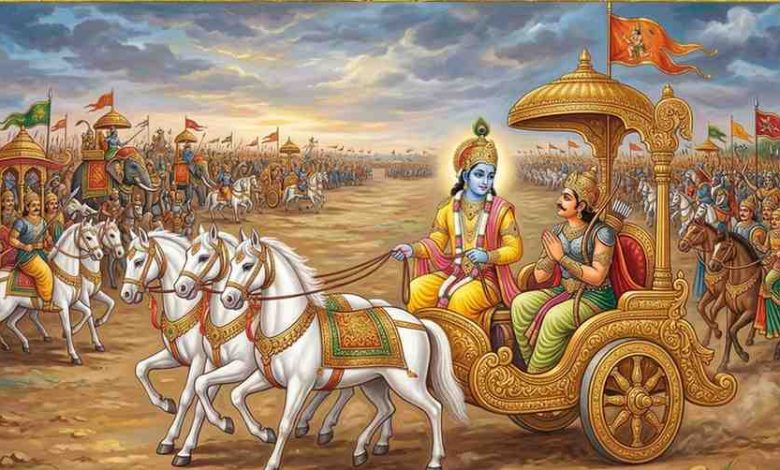
In Bhagavad Gita Chapter 1, Verse 17, Arjuna identifies key warriors on the opposing side, highlighting their prowess in battle. The verse lists notable figures such as the king of Kasi, renowned for his archery skills; Sikhandi, a formidable warrior known for his unique identity; Dhrishtadyumna, who is destined to lead the Pandavas to victory; Virata, a king with unwavering loyalty; and Satyaki, an unconquered champion. These characters signify not just their martial abilities, but also represent various virtues like courage, loyalty, and destiny. The presence of these warriors emphasizes the weight of Arjuna’s dilemma, as he must confront not only his family and teachers but also the valor embodied by each of these individuals. This verse sets the stage for the moral and ethical conflict that Arjuna faces, reflecting the complexities of duty, righteousness, and the consequences of war. The names evoke respect and fear, illustrating the high stakes of the Kurukshetra war, a central theme of the Gita that questions the moral fabric of life itself.
Hindi
भगवद गीता के अध्याय 1, श्लोक 17 में, अर्जुन अपने समकक्ष योद्धाओं की पहचान करते हैं, जो युद्ध में अपनी श्रेष्ठता के लिए ज्ञात हैं। इस श्लोक में काशी के राजा, जो धनुर्विद्या में प्रसिद्ध हैं; शिखंडी, जो अपनी विशिष्ट पहचान के लिए जाने जाते हैं; धृष्टद्युम्न, जो पांडवों को विजय की ओर ले जाने के लिए नियत हैं; विराट, जो अडिग निष्ठा के साथ एक राजा हैं; और अजेय सात्यकि का उल्लेख किया गया है। ये पात्र केवल उनके युद्ध कौशल का प्रतिनिधित्व नहीं करते, बल्कि साहस, निष्ठा और नियति जैसे विभिन्न गुणों का भी प्रतीक हैं। इन योद्धाओं की उपस्थिति अर्जुन के संकट को और बढ़ाती है, क्योंकि उसे अपने परिवार और शिक्षकों का सामना करना है, साथ ही इन सभी व्यक्तियों द्वारा व्यक्त की गई वीरता का भी। यह श्लोक कुरुक्षेत्र युद्ध के उच्च दांव को दर्शाता है, जो गीता के केंद्रीय विषय को स्पष्ट करता है जो जीवन के नैतिक ताने-बाने पर सवाल उठाता है।
Practical Wisdom
English
This verse reminds us of the importance of recognizing the strengths and capabilities of those we face in our lives. In professional and personal challenges, acknowledging the skills of others can lead to better strategies and collaboration. Instead of viewing others as mere obstacles, we can learn from their strengths and adapt our approaches. Additionally, understanding the context and significance of our challenges can help us navigate them with greater wisdom and insight.
Hindi
यह श्लोक हमें इस बात की याद दिलाता है कि हमें अपने जीवन में जिनसे हम सामना कर रहे हैं, उनके गुणों और क्षमताओं को पहचानना कितना महत्वपूर्ण है। व्यक्तिगत और पेशेवर चुनौतियों में, दूसरों की क्षमताओं को मान्यता देना बेहतर रणनीतियों और सहयोग की ओर ले जा सकता है। दूसरों को केवल बाधाओं के रूप में देखने के बजाय, हम उनकी ताकतों से सीख सकते हैं और अपने दृष्टिकोण को अनुकूलित कर सकते हैं। इसके अलावा, हमारी चुनौतियों के संदर्भ और महत्व को समझना हमें उन्हें अधिक बुद्धिमानी और अंतर्दृष्टि के साथ नेविगेट करने में मदद कर सकता है.
Life Application
English
In personal development, this verse encourages us to evaluate our relationships and interactions. Just as Arjuna acknowledges the strengths of his opponents, we should also recognize the strengths of those around us—friends, family, and colleagues. This practice can enhance our empathy and lead to constructive dialogues, allowing us to grow together. Embracing the diversity of skills and perspectives can foster collaboration and mutual respect, ultimately leading to personal growth.
Hindi
व्यक्तिगत विकास में, यह श्लोक हमें अपने संबंधों और इंटरैक्शंस का मूल्यांकन करने के लिए प्रेरित करता है। जैसे अर्जुन अपने विरोधियों की ताकतों को पहचानता है, हमें भी अपने आसपास के लोगों—मित्रों, परिवार और सहकर्मियों की ताकतों को पहचानना चाहिए। यह अभ्यास हमारी सहानुभूति को बढ़ा सकता है और रचनात्मक संवाद की दिशा में अग्रसर कर सकता है, जिससे हम साथ मिलकर विकसित हो सकें। कौशल और दृष्टिकोण की विविधता को अपनाने से सहयोग और आपसी सम्मान को बढ़ावा मिल सकता है, जो अंततः व्यक्तिगत विकास की ओर ले जाता है.
Spiritual Insight
English
On a spiritual level, this verse illustrates the necessity of recognizing the divine within everyone, even adversaries. Each warrior mentioned represents different aspects of the self that we must confront in our spiritual journey. Recognizing their strengths allows us to better understand our own challenges and the inner battles we fight. The acknowledgment of these figures serves as a reminder that, in the journey of life, every encounter is an opportunity for growth and deeper understanding of the self.
Hindi
आध्यात्मिक स्तर पर, यह श्लोक यह दर्शाता है कि हमें हर किसी में, यहां तक कि विरोधियों में भी, दिव्यता को पहचानने की आवश्यकता है। हर योद्धा जो उल्लेखित है, आत्म के विभिन्न पहलुओं का प्रतिनिधित्व करता है जिनका हमें अपनी आध्यात्मिक यात्रा में सामना करना होता है। उनकी शक्तियों को पहचानने से हमें अपने स्वयं के संघर्षों और आंतरिक युद्धों को बेहतर समझने में सहायता मिलती है। इन पात्रों की स्वीकृति इस बात की याद दिलाती है कि जीवन की यात्रा में, हर मुठभेड़ विकास और आत्म के गहरे समझने का एक अवसर होती है.
Modern Context
English
In today’s context, this verse can be seen as a metaphor for facing challenges in a competitive world. Just as Arjuna acknowledges the strengths of formidable opponents, professionals today must recognize the competencies of competitors and collaborators alike. Understanding the strengths and weaknesses of others informs our strategies, enabling us to make informed decisions and build alliances. This approach fosters a culture of respect and mutual growth in both personal and professional environments.
Hindi
आज के संदर्भ में, इस श्लोक को प्रतिस्पर्धात्मक दुनिया में चुनौतियों का सामना करने के लिए एक रूपक के रूप में देखा जा सकता है। जैसे अर्जुन शक्तिशाली विरोधियों की ताकतों को पहचानता है, आज के पेशेवरों को भी प्रतिस्पर्धियों और सहयोगियों दोनों की क्षमताओं को पहचानना चाहिए। दूसरों की ताकतों और कमजोरियों को समझना हमारी रणनीतियों को सूचित करता है, जिससे हमें सूचित निर्णय लेने और गठबंधन बनाने में मदद मिलती है। यह दृष्टिकोण व्यक्तिगत और पेशेवर वातावरण में सम्मान और आपसी विकास की संस्कृति को बढ़ावा देता है.
Key Takeaways
English
- Recognizing the strengths of others can inform our strategies.
- Facing challenges requires an understanding of all parties involved.
- Acknowledging opponents can transform competition into collaboration.
- Diversity in skills fosters mutual respect and growth.
- Ethical dilemmas often arise in the context of relationships.
Hindi
- दूसरों की ताकतों को पहचानना हमारी रणनीतियों को सूचित कर सकता है।
- चुनौतियों का सामना करने के लिए सभी पक्षों की समझ आवश्यक है।
- विरोधियों को स्वीकार करना प्रतिस्पर्धा को सहयोग में बदल सकता है।
- कौशल में विविधता आपसी सम्मान और विकास को बढ़ावा देती है।
- नैतिक दुविधाएं अक्सर संबंधों के संदर्भ में उत्पन्न होती हैं।

