

Sanskrit Verse (संस्कृत श्लोक)
अश्वत्थामा विकर्णश्च सौमदत्तिस्तथैव च।।1.8।।
Transliteration
English Translation
1.8. “Thyself and Bhishma, and Karna and also Kripa, the victorious
in war, Asvatthama, Vikarna, and also Bhurisrava, the son of Somadatta.
Hindi Translation (हिंदी अनुवाद)
।।1.8।।एक तो स्वयं आप, भीष्म, कर्ण, और युद्ध विजयी कृपाचार्य तथा अश्वत्थामा, विकर्ण और सोमदत्त का पुत्र है।
Detailed Meaning (विस्तृत अर्थ)
English Explanation
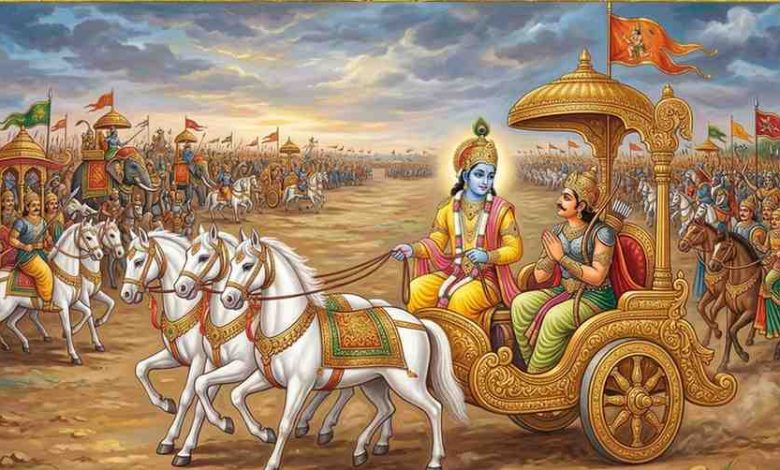
In Chapter 1, Verse 8 of the Bhagavad Gita, Arjuna lists the formidable warriors on the battlefield of Kurukshetra, acknowledging the prowess of Bhishma, Karna, Kripa, Asvatthama, Vikarna, and Bhurisrava. This verse sets the stage for Arjuna’s internal conflict, as he grapples with the moral implications of fighting against revered relatives and mentors. Each name mentioned symbolizes a specific trait: Bhishma represents loyalty and sacrifice, Karna embodies valor and generosity, and Kripa is known for his wisdom. The verse emphasizes the significance of duty (Dharma) and the emotional turmoil faced when duty conflicts with personal relationships. It reflects the broader philosophical theme of the Gita—understanding one’s duty amidst complex moral dilemmas.
Hindi Explanation (हिंदी व्याख्या)
भगवद गीता के पहले अध्याय, श्लोक 8 में, अर्जुन कुरुक्षेत्र के युद्ध में उपस्थित शक्तिशाली योद्धाओं का उल्लेख करते हैं। वे भीष्म, कर्ण, कृपाचार्य, अश्वत्थामा, विकर्ण और भूरिश्रवा की साहसिकता को मान्यता देते हैं। यह श्लोक अर्जुन के आंतरिक संघर्ष को दर्शाता है, क्योंकि वह अपने प्रियजनों और गुरु के खिलाफ युद्ध करने के नैतिक परिणामों से जूझता है। हर नाम एक विशेष गुण का प्रतीक है: भीष्म निष्ठा और बलिदान का प्रतिनिधित्व करते हैं, कर्ण साहस और उदारता का, और कृपा अपने ज्ञान के लिए जाने जाते हैं। यह श्लोक धर्म (Dharma) के महत्व को रेखांकित करता है और व्यक्तिगत संबंधों के साथ संघर्ष में कर्तव्य का सामना करने की भावना को दर्शाता है।
Practical Wisdom (व्यावहारिक ज्ञान)
English
Understanding the significance of our relationships and responsibilities is crucial in daily life. Just as Arjuna recognized formidable opponents, we must acknowledge the challenges we face in our personal and professional lives. For instance, when making a difficult decision at work that may impact colleagues, it’s essential to weigh the consequences carefully. This verse inspires us to confront our responsibilities, even when it’s uncomfortable, and to act in accordance with our values, ensuring we maintain integrity while navigating complex situations.
Hindi (हिंदी)
हमारे रिश्तों और जिम्मेदारियों का महत्व समझना दैनिक जीवन में बहुत आवश्यक है। जैसे अर्जुन ने मजबूत प्रतिद्वंद्वियों को पहचाना, हमें भी अपने व्यक्तिगत और व्यावसायिक जीवन में आने वाली चुनौतियों को पहचानना चाहिए। उदाहरण के लिए, जब किसी कार्य में कठिन निर्णय लेना हो जो सहयोगियों को प्रभावित कर सकता है, तो इसके परिणामों को ध्यान से तौलना आवश्यक है। यह श्लोक हमें हमारी जिम्मेदारियों का सामना करने के लिए प्रेरित करता है, भले ही यह असहज हो, और यह सुनिश्चित करता है कि हम अपने मूल्यों के अनुसार कार्य करें।
Life Application (जीवन में उपयोग)
English
In personal development, recognizing the weight of our choices is vital. Like Arjuna, we often face situations where our duties conflict with emotional ties. By reflecting on our decisions and their impact on others, we can cultivate mindfulness. For instance, if you need to end a toxic relationship, acknowledge the pain but prioritize your well-being. This approach fosters growth, helping you align with your true self while navigating life’s challenges.
Hindi (हिंदी)
व्यक्तिगत विकास में, हमारे विकल्पों के महत्व को पहचानना बहुत आवश्यक है। अर्जुन की तरह, हमें अक्सर ऐसे हालात का सामना करना पड़ता है जहाँ हमारी जिम्मेदारियाँ भावनात्मक संबंधों से संघर्ष करती हैं। अपने निर्णयों और उनके दूसरों पर प्रभाव को ध्यान में रखकर, हम जागरूकता विकसित कर सकते हैं। उदाहरण के लिए, यदि आपको एक विषाक्त रिश्ते को समाप्त करना है, तो दर्द को स्वीकार करें लेकिन अपनी भलाई को प्राथमिकता दें। यह दृष्टिकोण विकास को बढ़ावा देता है, जिससे आप जीवन की चुनौतियों का सामना करते हुए अपने सच्चे स्व के साथ मेल खा सकें।
Spiritual Insight (आध्यात्मिक अंतर्दृष्टि)
English
This verse invites meditation on the nature of duty and the relationships that bind us. As you reflect, consider the warriors in your life—those who inspire and challenge you. In meditation, visualize the battlefield of your mind, where personal desires and responsibilities collide. Embrace the duality of existence, recognizing that spiritual growth often arises from conflict and resolution. This practice will deepen your understanding of Dharma and enhance your inner strength.
Hindi (हिंदी)
यह श्लोक कर्तव्य और उन रिश्तों पर ध्यान देने के लिए आमंत्रित करता है जो हमें बांधते हैं। जब आप ध्यान करते हैं, तो अपने जीवन के योद्धाओं पर विचार करें—जो आपको प्रेरित और चुनौती देते हैं। ध्यान में, अपने मन के युद्धक्षेत्र की कल्पना करें, जहाँ व्यक्तिगत इच्छाएँ और जिम्मेदारियाँ टकराती हैं। अस्तित्व के द्वैत को अपनाएँ, यह पहचानते हुए कि आध्यात्मिक वृद्धि अक्सर संघर्ष और समाधान से उत्पन्न होती है। यह अभ्यास आपके धर्म की समझ को गहरा करेगा और आपकी आंतरिक शक्ति को बढ़ाएगा।
Modern Context (आधुनिक संदर्भ)
English
In today’s world, the conflict between personal and professional responsibilities is prevalent. Just as Arjuna faced a moral dilemma, many individuals today grapple with work-life balance. For example, a parent may struggle to meet work deadlines while wanting to be present for their child’s milestones. This verse serves as a reminder to evaluate our duties critically, make choices aligned with our values, and navigate the complexities of modern life with courage and integrity.
Hindi (हिंदी)
आज की दुनिया में, व्यक्तिगत और पेशेवर जिम्मेदारियों के बीच संघर्ष आम है। जैसे अर्जुन ने नैतिक दुविधा का सामना किया, आज कई व्यक्ति कार्य-जीवन संतुलन से जूझते हैं। उदाहरण के लिए, एक माता-पिता कार्य की समय सीमा को पूरा करने की कोशिश कर सकता है जबकि अपने बच्चे के महत्वपूर्ण क्षणों में उपस्थित रहना चाहता है। यह श्लोक हमें अपने कर्तव्यों का गंभीरता से मूल्यांकन करने, अपने मूल्यों के साथ मेल खाने वाले विकल्प बनाने और आधुनिक जीवन की जटिलताओं को साहस और ईमानदारी के साथ नेविगेट करने की याद दिलाता है।
Key Takeaways (मुख्य बिंदु)
English
- Recognize the moral dilemmas in life.
- Acknowledge the complexity of relationships and duties.
- Embrace personal growth through challenges.
- Make decisions aligned with your values.
- Understand the significance of Dharma in daily life.
Hindi (हिंदी)
- जीवन में नैतिक दुविधाओं को पहचानें।
- रिश्तों और जिम्मेदारियों की जटिलता को स्वीकार करें।
- चुनौतियों के माध्यम से व्यक्तिगत विकास को अपनाएँ।
- अपने मूल्यों के साथ मेल खाने वाले निर्णय लें।
- दैनिक जीवन में धर्म के महत्व को समझें।

