

Sanskrit Verse
यो जा॒त ए॒व प्र॑थ॒मो मन॑स्वान् दे॒वो दे॒वान् क्रतु॑ना प॒र्यभू॑षत् ।
यस्य॒ शुष्मा॒द् रोद॑सी॒ अभ्य॑सेतां नृ॒म्णस्य॑ म॒ह्ना स ज॑नास॒ इन्द्र॑: ॥१॥
यः पृ॑थि॒वीं व्यथ॑माना॒मदृं॑ह॒द् यः पर्व॑ता॒न् प्रकु॑पिताँ॒ अर॑म्णात् ।
यो अ॒न्तरि॑क्षं विम॒मे वरी॑यो॒ यो द्यामस्त॑भ्ना॒त् स ज॑नास॒ इन्द्र॑: ॥२॥
यो ह॒त्वाहि॒मरि॑णात् स॒प्त सिन्धू॒न् यो गा उ॒दाज॑दप॒धा व॒लस्य॑ ।
यो अश्म॑नोर॒न्तर॒ग्निं ज॒जान॑ सं॒वृक् स॒मत्सु॒ स ज॑नास॒ इन्द्र॑: ॥३॥
येने॒मा विश्वा॒ च्यव॑ना कृ॒तानि॒ यो दासं॒ वर्ण॒मध॑रं॒ गुहाक॑: ।
श्व॒घ्नीव॒ यो जि॑गी॒वाँ ल॒क्षमाद॑द॒र्यः पु॒ष्टानि॒ स ज॑नास॒ इन्द्र॑: ॥४॥
यं स्मा॑ पृ॒च्छन्ति॒ कुह॒ सेति॑ घो॒रमु॒तेमा॑हु॒र्नैषो अ॒स्तीत्ये॑नम् ।
सो अ॒र्यः पु॒ष्टीर्विज॑ इ॒वा मि॑नाति॒ श्रद॑स्मै धत्त॒ स ज॑नास॒ इन्द्र॑: ॥५॥
यो र॒ध्रस्य॑ चोदि॒ता यः कृ॒शस्य॒ यो ब्र॒ह्मणो॒ नाध॑मानस्य की॒रेः ।
यु॒क्तग्रा॑व्णो॒ योऽवि॒ता सु॑शि॒प्रः सु॒तसो॑मस्य॒ स ज॑नास॒ इन्द्र॑: ॥६॥
यस्याश्वा॑सः प्र॒दिशि॒ यस्य॒ गावो॒ यस्य॒ ग्रामा॒ यस्य॒ विश्वे॒ रथा॑सः ।
यः सूर्यं॒ य उ॒षसं॑ ज॒जान॒ यो अ॒पां ने॒ता स ज॑नास॒ इन्द्र॑: ॥७॥
यं क्रन्द॑सी संय॒ती वि॒ह्वये॑ते॒ परेऽव॑र उ॒भया॑ अ॒मित्रा॑: ।
स॒मा॒नं चि॒द् रथ॑मातस्थि॒वांसा॒ नाना॑ हवेते॒ स ज॑नास॒ इन्द्र॑: ॥८॥
यस्मा॒न्न ऋ॒ते वि॒जय॑न्ते॒ जना॑सो॒ यं युध्य॑माना॒ अव॑से॒ हव॑न्ते ।
यो विश्व॑स्य प्रति॒मानं॑ ब॒भूव॒ यो अ॑च्युत॒च्युत् स ज॑नास॒ इन्द्र॑: ॥९॥
यः शश्व॑तो॒ मह्येनो॒ दधा॑ना॒नम॑न्यमाना॒ञ्छर्वा॑ ज॒घान॑ ।
यः शर्ध॑ते॒ नानु॒ददा॑ति शृ॒ध्यां यो दस्यो॑र्ह॒न्ता स ज॑नास॒ इन्द्र॑: ॥१०॥
यः शम्ब॑रं॒ पर्व॑तेषु क्षि॒यन्तं॑ चत्वारिं॒श्यां श॒रद्य॒न्ववि॑न्दत् ।
ओ॒जा॒यमा॑नं॒ यो अहिं॑ ज॒घान॒ दानुं॒ शया॑नं॒ स ज॑नास॒ इन्द्र॑: ॥११॥
यः स॒प्तर॑श्मिर्वृष॒भस्तुवि॑ष्मान॒वासृ॑ज॒त् सर्त॑वे स॒प्त सिन्धू॑न् ।
यो रौ॑हि॒णमस्फु॑र॒द् वज्र॑बाहु॒र्द्यामा॒रोह॑न्तं॒ स ज॑नास॒ इन्द्र॑: ॥१२॥
द्यावा॑ चिदस्मै पृथि॒वी न॑मेते॒ शुष्मा॑च्चिदस्य॒ पर्व॑ता भयन्ते ।
यः सो॑म॒पा नि॑चि॒तो वज्र॑बाहु॒र्यो वज्र॑हस्त॒: स ज॑नास॒ इन्द्र॑: ॥१३॥
यः सु॒न्वन्त॒मव॑ति॒ यः पच॑न्तं॒ यः शंस॑न्तं॒ यः श॑शमा॒नमू॒ती ।
यस्य॒ ब्रह्म॒ वर्ध॑नं॒ यस्य॒ सोमो॒ यस्ये॒दं राध॒: स ज॑नास॒ इन्द्र॑: ॥१४॥
यः सु॑न्व॒ते पच॑ते दु॒ध्र आ चि॒द् वाजं॒ दर्द॑र्षि॒ स किला॑सि स॒त्यः ।
व॒यं त॑ इन्द्र वि॒श्वह॑ प्रि॒यास॑: सु॒वीरा॑सो वि॒दथ॒मा व॑देम ॥१५॥
Mantra-by-Mantra Translations
Mantra 1
English
He who first among the gods, the intelligent one, covered the divine beings with his wisdom.
Hindi / हिंदी
जो देवताओं में पहले आया, वह बुद्धिमान देव ने अपने ज्ञान से दिव्य प्राणियों को ढक लिया।
Mantra 2
English
He who, with his strength, disturbs the earth, who calms the mountains in a tumult.
Hindi / हिंदी
जो अपनी शक्ति से पृथ्वी को व्यथित करता है, जो पर्वतों को हलचल में शांत करता है।
Mantra 3
English
He who has slain the enemies, and has brought forth the seven rivers, who has created fire within the stones.
Hindi / हिंदी
जो दुश्मनों को मारकर, सात नदियों को बाहर लाया है, जिसने पत्थरों के भीतर अग्नि उत्पन्न की।
Mantra 4
English
By whom all the creatures were created, who brought forth the lowly servant and the hidden ones.
Hindi / हिंदी
जिससे सभी प्राणी उत्पन्न हुए, जिसने नीच सेवक और छिपे हुए को बाहर लाया।
Mantra 5
English
To whom they ask, ‘where is this terror going?’ They say, ‘there is none like him.’
Hindi / हिंदी
जिनसे वे पूछते हैं, ‘यह आतंक कहाँ जा रहा है?’ वे कहते हैं, ‘उसके समान कोई नहीं है।’
Mantra 6
English
He who is the guide of the weak, who is the strong among the weak, who is the protector of the righteous.
Hindi / हिंदी
जो कमजोरों का मार्गदर्शक है, जो कमजोरों में शक्तिशाली है, जो धर्मात्माओं का रक्षक है।
Mantra 7
English
Whose horses are swift, whose cows are abundant, whose people are numerous and whose chariots are universal.
Hindi / हिंदी
जिसके घोड़े तेज हैं, जिसकी गायें प्रचुर हैं, जिसकी प्रजा बहुत है और जिसकी रथ सम्पूर्ण हैं।
Mantra 8
English
Who, while the enemies are gathering, unites both sides with a chariot.
Hindi / हिंदी
जो शत्रुओं के इकट्ठा होते समय, दोनों पक्षों को एक रथ से जोड़ता है।
Mantra 9
English
From whom the people gain victory, whom the warriors invoke with offerings.
Hindi / हिंदी
जिससे लोग विजय प्राप्त करते हैं, जिसे योद्धा आह्वान करते हैं।
Mantra 10
English
He who, through his might, overcomes the foes, who does not forsake the righteous.
Hindi / हिंदी
जो अपनी शक्ति से दुश्मनों पर विजय प्राप्त करता है, जो धर्मात्माओं का साथ नहीं छोड़ता।
Mantra 11
English
He who, in the mountains, has found the four directions, who has slain the enemy, who lies down.
Hindi / हिंदी
जो पर्वतों में चारों दिशाओं को खोजता है, जिसने दुश्मन को मारा है, जो लेटा है।
Mantra 12
English
He who has released seven rivers, who, with his thunderous arms, ascends to the sky.
Hindi / हिंदी
जिसने सात नदियों को मुक्त किया, जो अपने गर्जन भरे बाहुओं के साथ आकाश की ओर चढ़ता है।
Mantra 13
English
The sky is his, the earth is his, and the mountains are his, he who has the strength of the thunderbolt.
Hindi / हिंदी
आसमान उसका है, पृथ्वी उसकी है, और पर्वत उसके हैं, जिसके पास वज्र की शक्ति है।
Mantra 14
English
He who nourishes the strong, who cooks and who blesses, whose power grows.
Hindi / हिंदी
जो मजबूत का पोषण करता है, जो पकाता है और जो आशीर्वाद देता है, जिसकी शक्ति बढ़ती है।
Mantra 15
English
We, O Indra, are your friends, we are the strong, let us speak of the truth.
Hindi / हिंदी
हम, हे इन्द्र, आपके मित्र हैं, हम शक्तिशाली हैं, चलो सत्य की चर्चा करें।
English Translation
Hindi Translation
Detailed Meaning
English
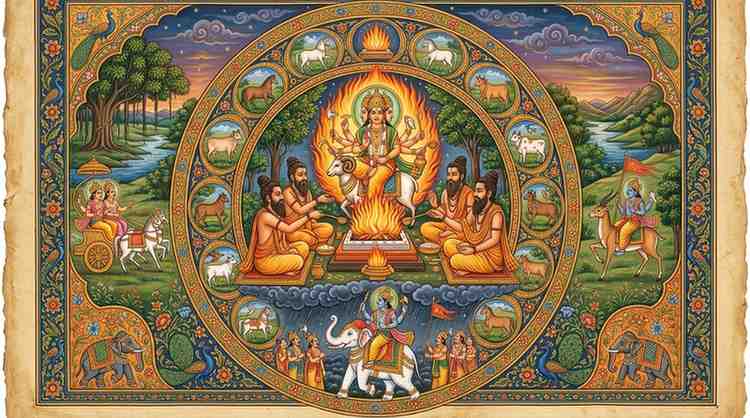
This Sukta from the Rigveda highlights various attributes of Indra, the chief deity of the Vedic pantheon, emphasizing his role as a protector and a powerful force in nature. Each mantra elucidates Indra’s might and his ability to govern various elements of the cosmos, from rivers to mountains. The repeated invocation of Indra reflects the ancient Vedic belief in divine intervention and the importance of seeking blessings for strength and victory in life’s endeavors. The verses communicate a deep reverence for Indra, portraying him as a benevolent deity who ensures the prosperity and protection of his devotees.
Hindi
यह ऋग्वेद का सूक्त इन्द्र के विभिन्न गुणों को उजागर करता है, जो वेदिक पंथ के मुख्य देवता हैं, उनके रक्षक और प्रकृति में शक्तिशाली शक्ति के रूप में। प्रत्येक मंत्र इन्द्र की शक्ति और ब्रह्माण्ड के विभिन्न तत्वों, जैसे नदियों और पर्वतों, पर शासन करने की उनकी क्षमता को स्पष्ट करता है। इन्द्र का बार-बार आह्वान प्राचीन वेदिक विश्वास को दर्शाता है कि दिव्य हस्तक्षेप आवश्यक है और जीवन के प्रयासों में शक्ति और विजय के लिए आशीर्वाद प्राप्त करना महत्वपूर्ण है। ये श्लोक इन्द्र के प्रति गहरी श्रद्धा को व्यक्त करते हैं, उन्हें एक दयालु देवता के रूप में चित्रित करते हैं, जो अपने भक्तों की समृद्धि और सुरक्षा सुनिश्चित करते हैं।
Practical Wisdom
English
The teachings of this Sukta illustrate the importance of invoking higher powers for guidance and strength in challenging situations. In daily life, one can draw inspiration from Indra’s characteristics—being a protector, fostering unity, and striving for victory. This can translate into practical actions such as helping others, working collaboratively, and seeking wisdom to overcome obstacles.
Hindi
इस सूक्त की शिक्षाएँ यह दर्शाती हैं कि चुनौतीपूर्ण परिस्थितियों में मार्गदर्शन और शक्ति के लिए उच्च शक्तियों को आह्वान करना कितना महत्वपूर्ण है। दैनिक जीवन में, इन्द्र के गुणों से प्रेरणा लेना—संरक्षक होना, एकता को बढ़ावा देना और विजय के लिए प्रयास करना—महत्वपूर्ण है। इसका व्यावहारिक क्रियान्वयन दूसरों की मदद करने, सहयोगात्मक रूप से काम करने और बाधाओं को पार करने के लिए ज्ञान प्राप्त करने के रूप में किया जा सकता है।
Life Application
English
This Sukta emphasizes the need for inner strength and resilience. In personal development, individuals can embody Indra’s qualities by facing challenges head-on and seeking assistance when needed. Embracing a courageous mindset and maintaining a focus on ethical values can lead to personal growth and improved relationships.
Hindi
यह सूक्त आंतरिक शक्ति और लचीलापन की आवश्यकता पर जोर देता है। व्यक्तिगत विकास में, व्यक्ति इन्द्र के गुणों को अपनाकर चुनौतियों का सामना कर सकते हैं और जब आवश्यक हो तो सहायता प्राप्त कर सकते हैं। साहसी मानसिकता को अपनाना और नैतिक मूल्यों पर ध्यान केंद्रित करना व्यक्तिगत विकास और बेहतर संबंधों की ओर ले जा सकता है।
Spiritual Insight
English
On a spiritual level, this Sukta teaches the significance of divine guidance in our lives. It encourages believers to connect with higher forces, which can provide strength and wisdom. By recognizing the presence of the divine in everyday life, individuals can cultivate a sense of peace and fulfillment, aligning their actions with spiritual principles.
Hindi
आध्यात्मिक स्तर पर, यह सूक्त हमारे जीवन में दिव्य मार्गदर्शन के महत्व को सिखाता है। यह विश्वासियों को उच्च शक्तियों से जुड़ने के लिए प्रेरित करता है, जो शक्ति और ज्ञान प्रदान कर सकते हैं। दैनिक जीवन में दिव्य की उपस्थिति को पहचानकर, व्यक्ति शांति और संतोष की भावना विकसित कर सकते हैं, और अपने कार्यों को आध्यात्मिक सिद्धांतों के साथ संरेखित कर सकते हैं।
Modern Context
English
In today’s world, the essence of this Sukta resonates with the need for unity and strength in the face of adversity. It serves as a reminder that we can seek support from our community and higher powers during difficult times. The call for collaboration and collective efforts is more relevant than ever, emphasizing the importance of resilience and courage in modern society.
Hindi
आज की दुनिया में, इस सूक्त का सार कठिनाइयों का सामना करते समय एकता और शक्ति की आवश्यकता के साथ प्रतिध्वनित होता है। यह हमें याद दिलाता है कि हम कठिन समय में अपने समुदाय और उच्च शक्तियों से समर्थन प्राप्त कर सकते हैं। सहयोग और सामूहिक प्रयासों की आवश्यकता पहले से कहीं अधिक प्रासंगिक है, जो आधुनिक समाज में लचीलापन और साहस के महत्व पर जोर देता है।
Key Takeaways
English
- Invoke divine support for strength.
- Embrace unity and collaboration.
- Recognize the importance of wisdom in decision-making.
- Exhibit resilience in the face of challenges.
- Cultivate ethical values for personal growth.
Hindi
- शक्ति के लिए दिव्य समर्थन की प्रार्थना करें।
- एकता और सहयोग को अपनाएँ।
- निर्णय लेने में ज्ञान के महत्व को पहचानें।
- चुनौतियों का सामना करते समय लचीलापन दिखाएँ।
- व्यक्तिगत विकास के लिए नैतिक मूल्यों का विकास करें।

