

Sanskrit Verse
कैर्मया सह योद्धव्यमस्मिन्रणसमुद्यमे।।1.22।।
English Translation
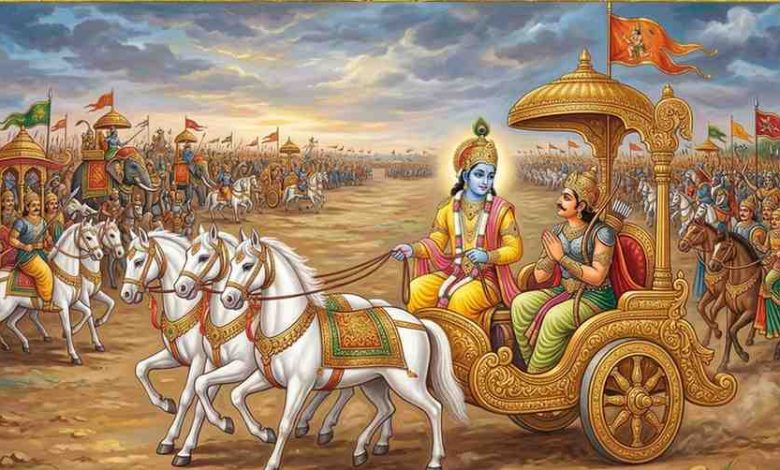
1.22. Arjuna said In the middle between the two armies, place my chariot,
O krishna, so that I may behold those who stand here desirous to fight,
and know with whom I must fight, when the battle is about to commence.
Hindi Translation
।।1.22।।जिससे मैं युद्ध की इच्छा से खड़े इन लोगों का निरीक्षण कर सकूँ कि इस युद्ध में मुझे किनके साथ युद्ध करना है।
Detailed Meaning
English
In this verse, Arjuna, the protagonist of the Bhagavad Gita, finds himself in a moral and emotional dilemma as he prepares to engage in battle against his own relatives and mentors. By requesting Lord Krishna to position his chariot in the midst of the two armies, Arjuna seeks clarity and understanding of the situation he faces. This moment symbolizes a critical turning point where the warrior is torn between duty (dharma) and familial bonds. His desire to observe and comprehend the identities of those who stand ready to fight reflects a deeper philosophical inquiry about the nature of conflict, relationships, and one’s responsibilities. Arjuna’s internal struggle exemplifies the human condition, where individuals often face challenges that require introspection and ethical consideration before taking action. It is a reminder that in moments of crisis, seeking guidance and understanding is essential to making informed decisions.
Hindi
इस श्लोक में, भगवद गीता के नायक अर्जुन एक नैतिक और भावनात्मक संघर्ष में हैं, जब वह अपने रिश्तेदारों और गुरु के खिलाफ युद्ध करने के लिए तैयार हैं। भगवान कृष्ण से अपनी गाड़ी को दोनों सेनाओं के बीच रखने के लिए कहकर, अर्जुन स्पष्टता और स्थिति की समझ की तलाश करता है। यह क्षण एक महत्वपूर्ण मोड़ का प्रतीक है जहां योद्धा कर्तव्य (धर्म) और पारिवारिक बंधनों के बीच फंसा है। लड़ाई के लिए खड़े लोगों की पहचान को देखने और समझने की उसकी इच्छा एक गहरे दार्शनिक शोध को दर्शाती है, जो संघर्ष, रिश्तों और जिम्मेदारियों की प्रकृति के बारे में है। अर्जुन का आंतरिक संघर्ष मानव स्थिति का उदाहरण है, जहां व्यक्ति अक्सर उन चुनौतियों का सामना करते हैं जो कार्रवाई करने से पहले आत्म-निरीक्षण और नैतिक विचार की आवश्यकता होती है। यह एक अनुस्मारक है कि संकट के क्षणों में, मार्गदर्शन और समझ की खोज करना सूचित निर्णय लेने के लिए आवश्यक है।
Practical Wisdom
English
In our daily lives, we often face dilemmas similar to Arjuna’s, where we must make difficult choices that involve personal and ethical considerations. Just as Arjuna sought clarity before entering battle, we should take time to assess our situations thoughtfully. This could involve gathering information, consulting trusted advisors, or simply reflecting on our values and priorities. Engaging in this practice can help us resolve conflicts, make informed decisions, and act with integrity, ultimately leading to more harmonious outcomes in our personal and professional relationships.
Hindi
हमारी दैनिक ज़िंदगी में, हम अक्सर अर्जुन की तरह दुविधाओं का सामना करते हैं, जहां हमें व्यक्तिगत और नैतिक विचारों में कठिन निर्णय लेने होते हैं। जैसे अर्जुन ने युद्ध में प्रवेश करने से पहले स्पष्टता की खोज की, हमें भी अपनी परिस्थितियों का सोच-समझकर मूल्यांकन करने के लिए समय निकालना चाहिए। इसमें जानकारी एकत्र करना, विश्वसनीय सलाहकारों से परामर्श करना, या बस अपने मूल्यों और प्राथमिकताओं पर विचार करना शामिल हो सकता है। इस अभ्यास में संलग्न होने से हमें संघर्षों को सुलझाने, सूचित निर्णय लेने और सत्यनिष्ठा के साथ कार्य करने में मदद मिल सकती है, जो अंततः हमारे व्यक्तिगत और व्यावसायिक संबंधों में अधिक सामंजस्यपूर्ण परिणामों की ओर ले जाएगा।
Life Application
English
Arjuna’s request to Krishna serves as a powerful metaphor for personal development. In our lives, we often encounter situations where we are uncertain about the right course of action. By pausing to reflect and assess our circumstances, we can gain greater clarity about our goals and the potential consequences of our choices. This self-reflection is crucial for personal growth and helps us align our actions with our core values. Seeking guidance, whether from mentors, spiritual texts, or introspection, can provide the insights needed to navigate life’s complexities effectively.
Hindi
अर्जुन की कृष्ण से की गई प्रार्थना व्यक्तिगत विकास के लिए एक शक्तिशाली उपमा के रूप में कार्य करती है। हमारे जीवन में, हम अक्सर ऐसी परिस्थितियों का सामना करते हैं जहां हम सही कार्रवाई के बारे में अनिश्चित होते हैं। अपने हालात पर रुककर विचार करने से हमें अपने लक्ष्यों और अपने निर्णयों के संभावित परिणामों के बारे में अधिक स्पष्टता प्राप्त होती है। यह आत्म-प्रतिबिंब व्यक्तिगत विकास के लिए महत्वपूर्ण है और हमें अपने कार्यों को अपने मूल मूल्यों के साथ संरेखित करने में मदद करता है। मार्गदर्शन की खोज करना, चाहे वह मेंटर्स, आध्यात्मिक ग्रंथों या आत्म-निरीक्षण के माध्यम से हो, जीवन की जटिलताओं को प्रभावी ढंग से नेविगेट करने के लिए आवश्यक अंतर्दृष्टियां प्रदान कर सकता है।
Spiritual Insight
English
On a spiritual level, this verse emphasizes the importance of self-awareness and the necessity of understanding one’s duty (dharma). Arjuna’s plea to Krishna reflects a yearning for deeper insight into the nature of his responsibilities and the ethical complexities of life. This moment serves as a reminder that spiritual growth often requires us to confront our inner conflicts and seek clarity before taking decisive actions. The act of placing oneself in a position to observe and reflect can lead to profound realizations about our purpose and the interconnectedness of all beings.
Hindi
आध्यात्मिक स्तर पर, यह श्लोक आत्म-जागरूकता के महत्व और अपने कर्तव्य (धर्म) को समझने की आवश्यकता को उजागर करता है। अर्जुन की कृष्ण से की गई प्रार्थना उसकी जिम्मेदारियों की प्रकृति और जीवन की नैतिक जटिलताओं के बारे में गहरी अंतर्दृष्टि की लालसा को दर्शाती है। यह क्षण एक अनुस्मारक के रूप में कार्य करता है कि आध्यात्मिक विकास अक्सर हमें अपने आंतरिक संघर्षों का सामना करने और निर्णायक कार्रवाई करने से पहले स्पष्टता की खोज करने की आवश्यकता होती है। स्वयं को अवलोकन और विचार करने की स्थिति में रखने की क्रिया हमारे उद्देश्य और सभी प्राणियों के आपसी संबंधों के बारे में गहन अनुभवों की ओर ले जा सकती है।
Modern Context
English
In today’s fast-paced world, the essence of Arjuna’s dilemma resonates with many individuals facing conflicts in their personal and professional lives. The pressure to succeed can lead to confusion about one’s true desires and responsibilities. By taking a moment to pause, reflect, and seek guidance—whether through meditation, mentorship, or counseling—individuals can navigate their challenges more effectively. Embracing self-awareness allows for a more deliberate and thoughtful approach to decision-making, ultimately leading to a more fulfilling and balanced life.
Hindi
आज की तेज़-तर्रार दुनिया में, अर्जुन की दुविधा का सार कई व्यक्तियों के साथ गूंजता है जो अपने व्यक्तिगत और व्यावसायिक जीवन में संघर्षों का सामना कर रहे हैं। सफलता का दबाव व्यक्ति की सच्ची इच्छाओं और जिम्मेदारियों के बारे में भ्रम उत्पन्न कर सकता है। पल भर रुककर विचार करने और मार्गदर्शन खोजने से—चाहे वह ध्यान, मेंटॉर्शिप, या परामर्श के माध्यम से हो—व्यक्तियों को अपने चुनौतीपूर्ण समय को अधिक प्रभावी ढंग से नेविगेट करने में मदद मिल सकती है। आत्म-जागरूकता को अपनाने से निर्णय लेने के लिए एक अधिक जानबूझकर और विचारशील दृष्टिकोण की अनुमति मिलती है, जो अंततः एक अधिक संतोषजनक और संतुलित जीवन की ओर ले जाती है।
Key Takeaways
English
- Self-reflection is essential in decision-making.
- Understanding one’s duties can clarify personal conflicts.
- Seeking guidance helps navigate moral dilemmas.
- Pause and assess situations before acting.
- Inner conflicts must be addressed for spiritual growth.
Hindi
- निर्णय लेने में आत्म-प्रतिबिंब आवश्यक है।
- अपने कर्तव्यों को समझने से व्यक्तिगत संघर्ष स्पष्ट हो सकते हैं।
- मार्गदर्शन प्राप्त करना नैतिक दुविधाओं को नेविगेट करने में मदद करता है।
- कार्य करने से पहले रुकें और परिस्थितियों का मूल्यांकन करें।
- आध्यात्मिक विकास के लिए आंतरिक संघर्षों का समाधान करना आवश्यक है।

