

Sanskrit Verse
धार्तराष्ट्रा रणे हन्युस्तन्मे क्षेमतरं भवेत्।।1.46।।
English Translation
1.46. If the sons of Dhritarashtra with weapons in hand should
slay me in battle, unresisting and unarmed, that would be better for me.
Hindi Translation
।।1.46।।यदि मुझ शस्त्ररहित और प्रतिकार न करने वाले को ये शस्त्रधारी कौरव रण में मारें, तो भी वह मेरे लिये कल्याणकारक होगा।
Detailed Meaning
English
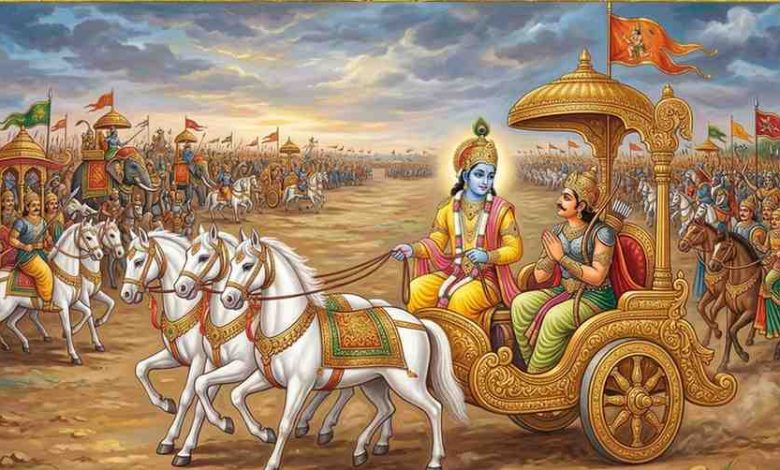
In this verse from the Bhagavad Gita, Arjuna expresses a profound philosophical stance on the nature of life, duty, and righteousness. He contemplates the morality of battle, where he would rather face death than kill his own kin. The phrase ‘unresisting and unarmed’ highlights his commitment to non-violence and the ethical dilemma he faces as a warrior. Arjuna believes that being slain by the sons of Dhritarashtra, despite their aggression, is a better fate than compromising his principles by fighting against them. This reflects the inner conflict between dharma (duty) and personal ethics, illustrating that true strength lies in adhering to one’s values even in challenging situations. The verse encapsulates the essence of selflessness and the idea that true victory might sometimes mean surrendering one’s ego and desires for a greater cause.
Hindi
भगवद गीता के इस श्लोक में, अर्जुन जीवन, कर्तव्य और धर्म के स्वभाव पर एक गहन दार्शनिक दृष्टिकोण व्यक्त करते हैं। वह युद्ध की नैतिकता पर विचार करते हैं, जहां वह अपने प्रियजनों को मारने के बजाय मृत्यु का सामना करना पसंद करते हैं। ‘प्रतिकार न करने वाले और शस्त्ररहित’ शब्द उनके अहिंसा के प्रति समर्पण और एक योद्धा के रूप में उनके सामने आने वाले नैतिक द्वंद्व को उजागर करते हैं। अर्जुन का मानना है कि यदि धृतराष्ट्र के पुत्र उन्हें मारें, तो यह उनके सिद्धांतों से समझौता करने की बजाय एक बेहतर भाग्य है। यह धर्म (कर्तव्य) और व्यक्तिगत नैतिकता के बीच के आंतरिक संघर्ष को दर्शाता है, यह बताते हुए कि सच्ची ताकत अपने मूल्यों पर टिके रहना है, भले ही परिस्थितियाँ चुनौतीपूर्ण हों। यह श्लोक आत्म-त्याग और इस विचार को संक्षेप करता है कि कभी-कभी सच्ची विजय का अर्थ अपने अहंकार और इच्छाओं का परित्याग करना होता है।
Practical Wisdom
English
This verse teaches us the importance of standing by our principles, even in the face of adversity. In life, we often encounter situations where we must choose between our values and external pressures. Embracing non-violence and integrity, as exemplified by Arjuna, encourages us to act with compassion and avoid harmful actions, regardless of the circumstances. By prioritizing ethical decisions over immediate gains, we cultivate a life filled with purpose and fulfillment. This wisdom can be applied in everyday scenarios such as workplace conflicts or personal relationships, where choosing empathy and understanding can lead to more harmonious outcomes.
Hindi
यह श्लोक हमें सिखाता है कि विपरीत परिस्थितियों में भी अपने सिद्धांतों पर खड़ा रहना कितना महत्वपूर्ण है। जीवन में, हम अक्सर ऐसी स्थितियों का सामना करते हैं जहां हमें अपने मूल्यों और बाहरी दबावों के बीच चयन करना पड़ता है। अर्जुन द्वारा प्रदर्शित अहिंसा और अखंडता को अपनाने से हमें दया के साथ कार्य करने और परिस्थितियों की परवाह किए बिना हानिकारक कार्यों से बचने के लिए प्रेरित किया जाता है। तात्कालिक लाभ के बजाय नैतिक निर्णयों को प्राथमिकता देकर, हम एक उद्देश्य और संतोष से भरी हुई जीवन का निर्माण करते हैं। यह ज्ञान रोजमर्रा के परिदृश्यों में लागू किया जा सकता है, जैसे कार्यस्थल के संघर्ष या व्यक्तिगत संबंधों में, जहां सहानुभूति और समझ को चुनना अधिक सामंजस्यपूर्ण परिणामों की ओर ले जा सकता है।
Life Application
English
In personal development, this verse encourages us to reflect on our values and the principles we stand for. It emphasizes the significance of self-awareness and the need to align our actions with our beliefs. When faced with difficult choices, we should ask ourselves whether our decisions honor our core values. This self-reflection can facilitate personal growth and resilience. By practicing self-discipline and commitment to non-violence in our daily interactions, we can foster better relationships and create a positive impact on those around us. Ultimately, this guidance helps us navigate life’s challenges with dignity and strength.
Hindi
व्यक्तिगत विकास में, यह श्लोक हमें अपने मूल्यों और सिद्धांतों पर विचार करने के लिए प्रेरित करता है। यह आत्म-जागरूकता और अपने कार्यों को अपने विश्वासों के साथ संरेखित करने की आवश्यकता के महत्व को उजागर करता है। जब कठिन विकल्पों का सामना करना पड़े, तो हमें यह पूछना चाहिए कि क्या हमारे निर्णय हमारे मूल मूल्यों का सम्मान करते हैं। यह आत्म-चिंतन व्यक्तिगत विकास और लचीलापन को सुविधाजनक बना सकता है। अपने दैनिक अंतःक्रियाओं में अहिंसा के प्रति आत्म-अनुशासन और प्रतिबद्धता का अभ्यास करके, हम बेहतर संबंधों को बढ़ावा दे सकते हैं और अपने चारों ओर सकारात्मक प्रभाव डाल सकते हैं। अंततः, यह मार्गदर्शन हमें जीवन की चुनौतियों को गरिमा और ताकत के साथ नेविगेट करने में मदद करता है।
Spiritual Insight
English
The spiritual essence of this verse lies in the understanding of selflessness and surrender to a higher cause. Arjuna’s willingness to accept death rather than compromise his principles signifies a deep spiritual realization that life is transient. It teaches us that true peace comes from aligning ourselves with our inner truth and acting from a place of compassion rather than fear or selfishness. This surrender is not a sign of weakness but rather a profound strength that connects us to the divine. By embracing this perspective, we can cultivate inner peace and a sense of purpose that transcends the material aspects of life.
Hindi
इस श्लोक की आध्यात्मिक सार essence आत्म-त्याग और उच्च कारण के प्रति समर्पण की समझ में निहित है। अर्जुन की अपने सिद्धांतों से समझौता न करने के लिए मृत्यु को स्वीकार करने की इच्छा एक गहन आध्यात्मिक जागरूकता का संकेत देती है कि जीवन तात्कालिक है। यह हमें सिखाता है कि सच्ची शांति तब आती है जब हम अपने आंतरिक सत्य के साथ संरेखित होते हैं और डर या स्वार्थ के बजाय दया से कार्य करते हैं। यह समर्पण कमजोरी का संकेत नहीं बल्कि एक गहन शक्ति है जो हमें दिव्य से जोड़ती है। इस दृष्टिकोण को अपनाकर, हम आंतरिक शांति और एक ऐसा उद्देश्य विकसित कर सकते हैं जो जीवन के भौतिक पहलुओं से परे है।
Modern Context
English
In today’s world, where conflicts and moral dilemmas are prevalent, this verse resonates with the need for ethical leadership and integrity. It serves as a reminder that sometimes choosing the path of non-violence and standing firm in one’s beliefs can lead to a more meaningful existence. In various modern contexts, such as corporate ethics, social justice movements, and personal relationships, the principle of prioritizing moral values over immediate gains is essential. This verse encourages individuals to reflect on their actions and the impact they have on society, promoting a culture of compassion and responsibility.
Hindi
आज की दुनिया में, जहां संघर्ष और नैतिक दुविधाएँ आम हैं, यह श्लोक नैतिक नेतृत्व और अखंडता की आवश्यकता के साथ गूंजता है। यह इस बात की याद दिलाता है कि कभी-कभी अहिंसा के मार्ग का चयन करना और अपने विश्वासों में दृढ़ रहना एक अधिक अर्थपूर्ण जीवन की ओर ले जा सकता है। विभिन्न आधुनिक संदर्भों, जैसे कि कॉर्पोरेट नैतिकता, सामाजिक न्याय आंदोलनों और व्यक्तिगत संबंधों में, तात्कालिक लाभों पर नैतिक मूल्यों को प्राथमिकता देने का सिद्धांत आवश्यक है। यह श्लोक व्यक्तियों को उनके कार्यों और समाज पर उनके प्रभाव पर विचार करने के लिए प्रेरित करता है, दया और जिम्मेदारी की संस्कृति को बढ़ावा देता है।
Key Takeaways
English
- True strength lies in adhering to one’s principles.
- Non-violence can lead to greater peace.
- Self-reflection is crucial in decision-making.
- Compassion overcomes fear and selfishness.
- Surrendering to a higher cause is a sign of strength.
Hindi
- सच्ची ताकत अपने सिद्धांतों पर टिके रहने में है।
- अहिंसा अधिक शांति की ओर ले जाती है।
- निर्णय लेने में आत्म-चिंतन आवश्यक है।
- दया डर और स्वार्थ पर काबू पाती है।
- उच्च कारण के प्रति समर्पण ताकत का संकेत है।

