

Sanskrit Verse
कथं भीष्ममहं संख्ये द्रोणं च मधुसूदन।
इषुभिः प्रतियोत्स्यामि पूजार्हावरिसूदन।।2.4।।
English Translation
2.4 Arjuna said How, O Madhusudana, shall I fight in battle with arrows against Bhishma and Drona, who are fit to be worshipped, O destroyer of enemies?
Hindi Translation
।।2.4।। अर्जुन ने कहा — हे मधुसूदन ! मैं रणभूमि में किस प्रकार भीष्म और द्रोण के साथ बाणों से युद्ध करूँगा। हे अरिसूदन, वे दोनों ही पूजनीय हैं।।
Detailed Meaning
English
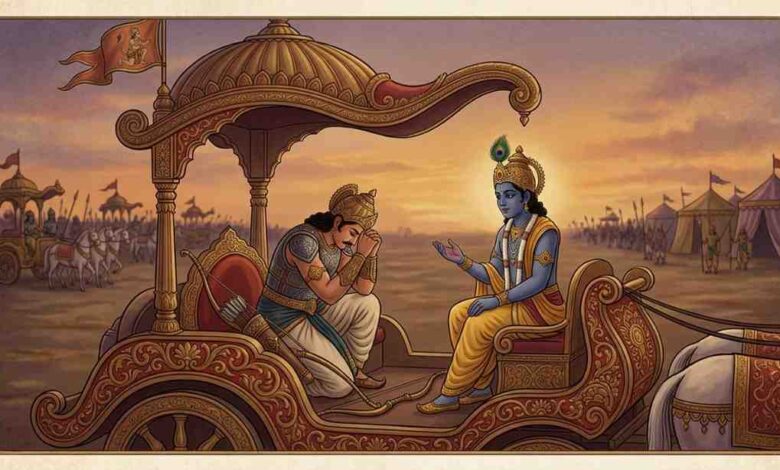
In this verse from the Bhagavad Gita, Arjuna expresses his confusion and moral dilemma before the battle. He addresses Krishna, referring to him as Madhusudana, and questions how he can fight against revered figures like Bhishma and Drona. Both warriors are not only his relatives and teachers but also embody qualities of wisdom and honor. Arjuna’s reluctance to engage in battle highlights the internal conflict between duty (Dharma) and personal emotions. This moment signifies the universal struggle of individuals when faced with difficult choices, especially when they involve harming loved ones. The verse sets the stage for Krishna’s teachings on duty, selflessness, and the nature of life and death, urging Arjuna to rise above his emotional turmoil and act in accordance with his responsibilities. Arjuna’s predicament resonates with anyone who has faced moral dilemmas in their personal or professional lives, where the right choice may conflict with emotional attachments.
Hindi
भगवद गीता के इस श्लोक में, अर्जुन अपने संदेह और नैतिक दुविधा को युद्ध से पहले व्यक्त करते हैं। वह कृष्ण को मधुसूदन कहकर संबोधित करते हैं और प्रश्न करते हैं कि वह भीष्म और द्रोण के खिलाफ कैसे लड़ सकते हैं। ये दोनों योद्धा न केवल उनके रिश्तेदार और शिक्षक हैं, बल्कि ज्ञान और सम्मान के प्रतीक भी हैं। अर्जुन का युद्ध में भाग लेने से हिचकिचाना धर्म (Dharma) और व्यक्तिगत भावनाओं के बीच आंतरिक संघर्ष को उजागर करता है। यह क्षण उन व्यक्तियों की सार्वभौमिक लड़ाई का प्रतीक है जब वे कठिन विकल्पों का सामना करते हैं, विशेष रूप से जब इसमें प्रियजनों को हानि पहुँचाने का प्रश्न हो। यह श्लोक कृष्ण की शिक्षाओं का आधार बनाता है, जो दायित्व, निस्वार्थता, और जीवन एवं मृत्यु के स्वभाव पर जोर देते हैं, अर्जुन को उनके भावनात्मक संकट से ऊपर उठकर उनके कर्तव्यों के अनुसार कार्य करने के लिए प्रेरित करते हैं। अर्जुन की स्थिति उन सभी के साथ गूंजती है जिन्होंने अपने व्यक्तिगत या पेशेवर जीवन में नैतिक दुविधाओं का सामना किया है, जहाँ सही विकल्प भावनात्मक संबंधों के साथ संघर्ष कर सकता है।
Practical Wisdom
English
This verse teaches us the importance of recognizing our duties even when faced with emotional conflicts. In life, we often encounter situations where our personal relationships may clash with our responsibilities. It is essential to maintain clarity and prioritize our obligations, as Arjuna ultimately learns. Seeking guidance, like Arjuna does from Krishna, can help us navigate our dilemmas. Embrace the challenges and make decisions that align with your values and duties, rather than letting emotions cloud your judgment.
Hindi
यह श्लोक हमें यह सिखाता है कि भावनात्मक संघर्षों का सामना करने पर भी अपने कर्तव्यों को पहचानना कितना महत्वपूर्ण है। जीवन में, हम अक्सर ऐसे हालात का सामना करते हैं जहाँ व्यक्तिगत संबंध हमारे दायित्वों के साथ टकराते हैं। स्पष्टता बनाए रखना और अपने कर्तव्यों को प्राथमिकता देना आवश्यक है, जैसा कि अर्जुन अंततः सीखते हैं। कृष्ण की तरह मार्गदर्शन प्राप्त करना हमारे दुविधाओं को हल करने में मदद कर सकता है। चुनौतियों को अपनाएँ और ऐसे निर्णय लें जो आपके मूल्यों और कर्तव्यों के अनुरूप हों, न कि भावनाओं को अपने निर्णय को धूमिल करने दें।
Life Application
English
In personal development, this verse challenges us to confront our fears and insecurities. Just as Arjuna hesitated to fight, many of us hold back from taking necessary actions due to emotional attachments or fear of conflict. Embrace your responsibilities even when they seem daunting. Reflect on your duties and values, and strive to act in alignment with them. This approach fosters growth, resilience, and clarity in decision-making, ultimately leading to a fulfilling life.
Hindi
व्यक्तिगत विकास में, यह श्लोक हमें हमारे डर और असुरक्षाओं का सामना करने के लिए चुनौती देता है। जैसे अर्जुन युद्ध करने में हिचकिचाते हैं, हम में से कई आवश्यक कार्यों को करने से पीछे हटते हैं क्योंकि हम भावनात्मक संबंधों या संघर्ष के डर से चिंतित होते हैं। अपने कर्तव्यों को अपनाएँ, भले ही वे चुनौतीपूर्ण लगें। अपने कर्तव्यों और मूल्यों पर विचार करें, और उनके अनुसार कार्य करने का प्रयास करें। यह दृष्टिकोण विकास, लचीलापन, और निर्णय लेने में स्पष्टता को बढ़ावा देता है, जो अंततः एक संतोषजनक जीवन की ओर ले जाता है।
Spiritual Insight
English
Spiritually, this verse emphasizes the importance of transcending attachments and performing one’s duty without personal bias. Arjuna’s reluctance to fight signifies the human tendency to cling to relationships and emotions, which can lead to inaction. Krishna’s guidance represents the higher wisdom that encourages selfless action in accordance with one’s Dharma. This teaching is relevant for spiritual seekers who aspire to rise above their ego and act for the greater good, fostering inner peace and fulfillment.
Hindi
आध्यात्मिक दृष्टि से, यह श्लोक attachments से परे जाने और अपने कर्तव्यों को बिना व्यक्तिगत पूर्वाग्रह के निभाने के महत्व पर जोर देता है। अर्जुन का लड़ाई में हिचकिचाना मानव प्रवृत्ति को दर्शाता है जो संबंधों और भावनाओं से चिपकने की होती है, जो निष्क्रियता की ओर ले जा सकती है। कृष्ण का मार्गदर्शन उच्चतर ज्ञान का प्रतिनिधित्व करता है जो निस्वार्थ क्रिया को अपने धर्म के अनुसार करने के लिए प्रोत्साहित करता है। यह शिक्षण उन आध्यात्मिक साधकों के लिए प्रासंगिक है जो अपने अहंकार से ऊपर उठने और समाज के लिए कार्य करने की आकांक्षा रखते हैं, आंतरिक शांति और संतोष को बढ़ावा देते हैं।
Modern Context
English
In today’s context, Arjuna’s dilemma reflects the struggles many people face in balancing personal values with professional responsibilities. As we navigate careers and relationships, we often encounter situations where our duties may conflict with our emotions. This verse encourages individuals to take a step back, reassess their priorities, and make choices that align with their core values, even in challenging circumstances. It serves as a reminder that personal growth often requires uncomfortable decisions.
Hindi
आज के संदर्भ में, अर्जुन की दुविधा उस संघर्ष को दर्शाती है जिसका सामना कई लोग अपने व्यक्तिगत मूल्यों और पेशेवर जिम्मेदारियों के बीच संतुलन बनाने में करते हैं। जब हम करियर और संबंधों के बीच चलते हैं, तो हम अक्सर उन परिस्थितियों का सामना करते हैं जहाँ हमारे कर्तव्यों और भावनाओं के बीच टकराव होता है। यह श्लोक व्यक्तियों को एक कदम पीछे हटने, अपनी प्राथमिकताओं का पुनर्मूल्यांकन करने, और चुनौतियों में भी अपने मूल मूल्यों के अनुरूप निर्णय लेने के लिए प्रोत्साहित करता है। यह एक अनुस्मारक के रूप में कार्य करता है कि व्यक्तिगत विकास अक्सर असुविधाजनक निर्णयों की आवश्यकता करता है।
Key Takeaways
English
- Recognize the conflict between duty and emotion.
- Seek guidance when facing moral dilemmas.
- Prioritize responsibilities over personal attachments.
- Embrace challenges for personal growth.
- Act in alignment with your values.
Hindi
- कर्तव्य और भावनाओं के बीच संघर्ष को पहचानें।
- नैतिक दुविधाओं का सामना करते समय मार्गदर्शन प्राप्त करें।
- व्यक्तिगत संबंधों पर जिम्मेदारियों को प्राथमिकता दें।
- व्यक्तिगत विकास के लिए चुनौतियों को अपनाएँ।
- अपने मूल्यों के अनुरूप कार्य करें।

