

Sanskrit Verse
पापमेवाश्रयेदस्मान्हत्वैतानाततायिनः।।1.36।।
English Translation
1.36. By killing these sons of Dhritarashtra, what pleasure can
be ours, O Janardana? Only sin will accrue to us from killing these felons.
Hindi Translation
।।1.36।।हे जनार्दन ! धृतराष्ट्र के पुत्रों की हत्या करके हमें क्या प्रसन्नता होगी? इन आततायियों को मारकर तो हमें केवल पाप ही लगेगा।
Detailed Meaning
English
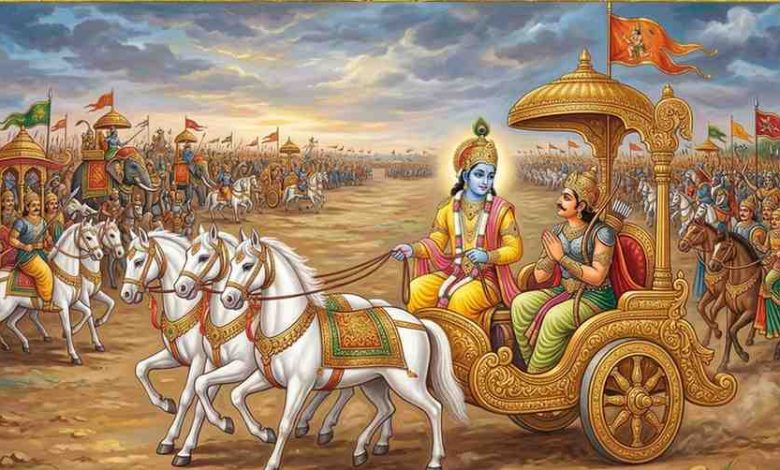
In this verse, Arjuna expresses his moral dilemma to Lord Krishna. He questions the logic of killing the sons of Dhritarashtra, who are his own relatives and teachers. Arjuna is deeply troubled by the thought of engaging in a battle that would lead to such destruction. He feels that the act of killing these ‘felons’ would not bring them joy or victory, but instead, would lead to sin and moral degradation. This highlights the internal conflict faced by individuals when confronted with difficult choices that challenge their ethical beliefs. Arjuna’s plea serves as a reminder of the importance of assessing the moral implications of our actions, emphasizing that true success cannot be achieved through wrongful means.
Hindi
इस श्लोक में, अर्जुन भगवान कृष्ण के सामने अपने नैतिक संघर्ष को व्यक्त करते हैं। वह धृतराष्ट्र के पुत्रों की हत्या के तर्क पर सवाल उठाते हैं, जो उनके अपने रिश्तेदार और शिक्षक हैं। अर्जुन इस विचार से गहरे दुखी हैं कि वह ऐसी लड़ाई में संलग्न हों जो इतनी विनाशकारी होगी। उन्हें लगता है कि इन ‘आततायियों’ का वध करने से न तो उन्हें खुशी मिलेगी और न ही विजय, बल्कि यह केवल पाप और नैतिक पतन की ओर ले जाएगा। यह उन व्यक्तियों के सामने आने वाले आंतरिक संघर्ष को उजागर करता है जब वे ऐसे कठिन विकल्पों का सामना करते हैं जो उनके नैतिक विश्वासों को चुनौती देते हैं। अर्जुन की गुहार इस बात की याद दिलाती है कि हमारे कार्यों के नैतिक परिणामों का आकलन करना कितना महत्वपूर्ण है, यह दर्शाते हुए कि सच्ची सफलता गलत तरीकों से प्राप्त नहीं की जा सकती।
Practical Wisdom
English
This verse teaches us the importance of evaluating the consequences of our actions. In modern life, we often face decisions that may benefit us in the short term but can lead to long-term regret. Just as Arjuna questioned the morality of killing his kin, we should question our choices, especially when they affect others negatively. Cultivating awareness about the ethical implications of our decisions can guide us towards making more compassionate and responsible choices in both personal and professional spheres.
Hindi
यह श्लोक हमें अपने कार्यों के परिणामों का आकलन करने के महत्व की शिक्षा देता है। आधुनिक जीवन में, हम अक्सर ऐसे निर्णय लेते हैं जो हमें तात्कालिक लाभ दे सकते हैं लेकिन दीर्घकालिक पछतावे का कारण बन सकते हैं। जैसे अर्जुन ने अपने रिश्तेदारों की हत्या की नैतिकता पर सवाल उठाया, हमें भी अपने विकल्पों पर सवाल उठाना चाहिए, खासकर जब वे दूसरों पर नकारात्मक प्रभाव डालते हैं। हमारे निर्णयों के नैतिक परिणामों के प्रति जागरूकता विकसित करने से हमें व्यक्तिगत और पेशेवर जीवन में अधिक दयालु और जिम्मेदार विकल्प बनाने में मदद मिल सकती है।
Life Application
English
To apply the wisdom of this verse in daily life, one should strive to act with integrity and consideration for others. Before making decisions, especially those that may harm or disadvantage others, take a moment to reflect on the potential moral implications. Engage in conversations that foster understanding and empathy rather than conflict. This approach not only enhances personal relationships but also contributes to a more harmonious community. By prioritizing ethical considerations, we can lead a life that is fulfilling and aligned with our values.
Hindi
इस श्लोक की बुद्धि को दैनिक जीवन में लागू करने के लिए, व्यक्ति को ईमानदारी और दूसरों के प्रति विचारशीलता के साथ कार्य करने का प्रयास करना चाहिए। निर्णय लेने से पहले, विशेष रूप से उन निर्णयों पर जो दूसरों को नुकसान या असुविधा पहुंचा सकते हैं, संभावित नैतिक प्रभावों पर विचार करने के लिए एक पल लें। संघर्ष के बजाय समझ और सहानुभूति को बढ़ावा देने वाली बातचीत में शामिल हों। यह दृष्टिकोण न केवल व्यक्तिगत संबंधों को बढ़ाता है बल्कि एक अधिक सामंजस्यपूर्ण समुदाय में भी योगदान करता है। नैतिक विचारों को प्राथमिकता देकर, हम एक ऐसा जीवन जी सकते हैं जो संतोषजनक और हमारे मूल्यों के अनुरूप हो।
Spiritual Insight
English
Spiritually, this verse illustrates the value of non-violence and the need to align one’s actions with higher moral standards. Arjuna’s reluctance to kill his kin reflects the universal quest for peace and harmony. It encourages individuals to seek alternatives to violence and conflict, advocating for love and understanding as paths to resolution. This aligns with the broader spiritual teachings of the Gita, which emphasize self-realization and the importance of acting in accordance with dharma, or righteous duty, rather than succumbing to base impulses.
Hindi
आध्यात्मिक रूप से, यह श्लोक अहिंसा के मूल्य और अपने कार्यों को उच्च नैतिक मानकों के साथ संरेखित करने की आवश्यकता को दर्शाता है। अर्जुन की अपने रिश्तेदारों का वध न करने की अनिच्छा शांति और सद्भाव के लिए सार्वभौमिक खोज को दर्शाती है। यह व्यक्तियों को हिंसा और संघर्ष के विकल्प खोजने के लिए प्रेरित करता है, जो समाधान के रूप में प्रेम और समझ को प्रोत्साहित करता है। यह गीता की व्यापक आध्यात्मिक शिक्षाओं के साथ मेल खाता है, जो आत्म-साक्षात्कार और धर्म, या धर्म के अनुसार कार्य करने के महत्व पर जोर देती हैं, बजाय इसके कि नीच प्रवृत्तियों के आगे झुकें।
Modern Context
English
In today’s world, where conflicts abound and moral dilemmas are frequent, the teachings of this verse resonate deeply. It encourages a shift from a confrontational mindset to one that seeks dialogue and understanding. The principles of non-violence and ethical decision-making are more relevant than ever, whether in personal disputes or global politics. By applying Arjuna’s insights, we can foster a culture of peace and reconciliation, showing that true strength lies in compassion and cooperation rather than in aggression.
Hindi
आज की दुनिया में, जहां संघर्ष प्रचुर मात्रा में हैं और नैतिक दुविधाएं अक्सर होती हैं, इस श्लोक की शिक्षाएं गहराई से गूंजती हैं। यह एक संघर्षात्मक मानसिकता से संवाद और समझ की ओर बढ़ने के लिए प्रोत्साहित करता है। अहिंसा और नैतिक निर्णय लेने के सिद्धांत आज पहले से कहीं अधिक प्रासंगिक हैं, चाहे वह व्यक्तिगत विवादों में हो या वैश्विक राजनीति में। अर्जुन की अंतर्दृष्टियों को लागू करके, हम शांति और सामंजस्य की संस्कृति को बढ़ावा दे सकते हैं, यह दिखाते हुए कि सच्ची शक्ति दया और सहयोग में है, न कि आक्रामकता में।
Key Takeaways
English
- Moral dilemmas require deep reflection.
- Actions have long-term consequences.
- Seek understanding over conflict.
- Non-violence is a higher virtue.
- True success aligns with ethical choices.
Hindi
- नैतिक दुविधाओं की गहन सोच की आवश्यकता होती है।
- कार्य के दीर्घकालिक परिणाम होते हैं।
- संघर्ष के बजाय समझ को खोजें।
- अहिंसा एक उच्च गुण है।
- सच्ची सफलता नैतिक विकल्पों के साथ संरेखित होती है।

