
Mahabharata Shanti Parva – लुब्धानां शुचयॊ दवेष्याः कातराणां तरस्विनः

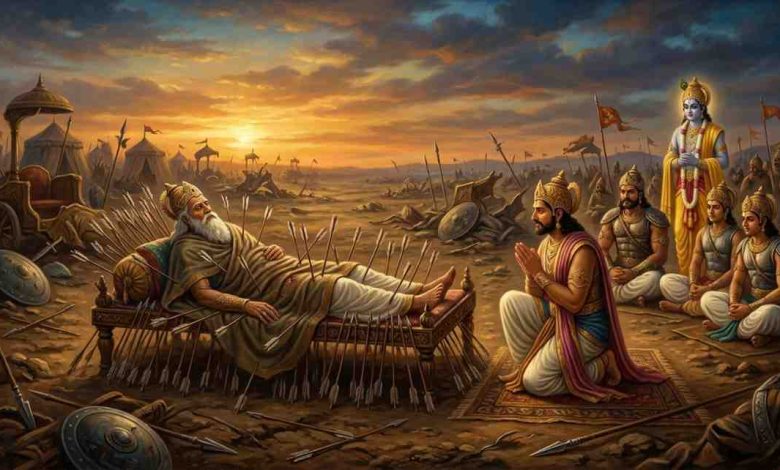
Shloka (श्लोक)
लुब्धानां शुचयॊ दवेष्याः कातराणां तरस्विनः
मूर्खाणां पण्डिता दवेष्या दरिद्राणां महाधनाः
अधार्मिकाणां धर्मिष्ठा विरूपाणां सुरूपकाः
⚡ Quick Meaning
This shloka reflects on the contrasting nature of individuals based on their qualities, highlighting the adversities faced by different categories.
Translations
English Translation
This verse emphasizes the varying perceptions and relationships among people with distinct traits. The greedy are considered impure, while the ignorant disdain the wise; affluent individuals are disliked by the poor, whereas the righteous are scorned by the unethical.
हिंदी अनुवाद
यह श्लोक विभिन्न गुणों वाले व्यक्तियों के बीच संबंधों और धारणाओं को उजागर करता है। लालची लोग अपवित्र माने जाते हैं, जबकि मूर्ख ज्ञानी का अपमान करते हैं; धनी लोग गरीबों द्वारा नापसंद किए जाते हैं, जबकि धर्मी लोगों को अधार्मिकों द्वारा तिरस्कृत किया जाता है।
Commentary
Context
This shloka is part of the Shanti Parva, which addresses ethical dimensions and conduct. It provides insights into societal behavior and human interactions.
Meaning
The verse implies a moral commentary on how individuals perceive one another based on personal attributes, often leading to judgments that determine social dynamics.
Application
In practical life, this shloka serves as a reminder to assess others based on qualities rather than appearances or wealth, fostering empathy and understanding in personal relationships.

