
Mahabharata Shanti Parva – न हय अयं कस्य चित कश चिन नास्य कश चन विद्यते

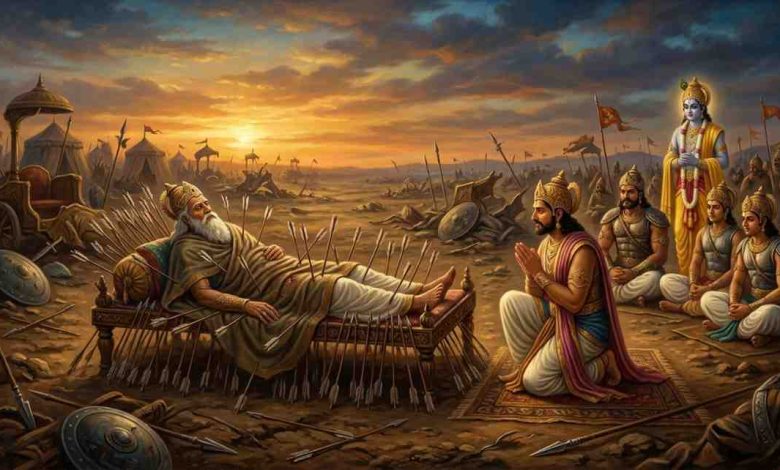
Shloka (श्लोक)
न हय अयं कस्य चित कश चिन नास्य कश चन विद्यते
भवत्य एकॊ हय अयं नित्यं शरीरे सुखदुःखभाज
⚡ Quick Meaning
This shloka emphasizes the oneness of the self and its constant state amid joys and sorrows.
Translations
English Translation
The verse suggests that the self is singular and eternal, unaffected by the dualities of happiness and sorrow that arise from the physical body.
हिंदी अनुवाद
यह श्लोक बताता है कि आत्मा एक और शाश्वत है, जो शारीरिक रूप से उत्पन्न सुख और दुःख की द्वंद्वों से अप्रभावित रहती है।
Commentary
Context
This verse reflects core philosophical insights about the self found in the Shanti Parva, exploring the essence of individuality.
Meaning
It teaches that the true self remains constant, highlighting the distinction between the eternal self and temporary emotions.
Application
This understanding promotes resilience and awareness, encouraging people to focus on their eternal nature beyond fleeting experiences.

