

️ मूल श्लोक (Original Shloka)
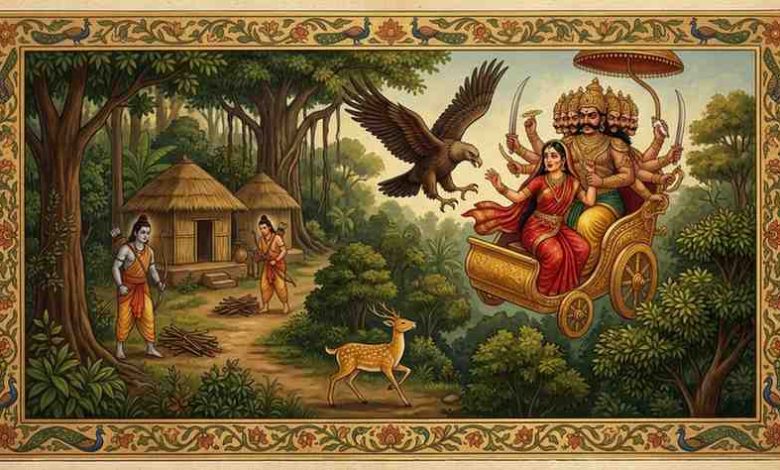
ततः सुवेषं मृगयागतं पतिं प्रतीक्षमाणा सहलक्ष्मणं तदा। विवीक्षमाणा हरितं ददर्श तन्महद्वनं नैव तु रामलक्ष्णौ।।3.46.37।।
Shloka Translation (IAST)
tataḥ suveṣaṃ mṛgayāgataṃ patiṃ pratīkṣamāṇā sahalakṣmaṇaṃ tadā | vivīkṣamāṇā haritaṃ dadarśa tanmahadvanaṃ naiva tu rāmalakṣmau || 3.46.37 ||
Shloka Meaning in English
Sita looked out for the beautiful figure of Rama who had gone to hunt the deer along with Lakshmana. Waiting eagerly for her husband, she only saw the vast stretch of green forest but not Rama and Lakshmana. इत्यार्षे श्रीमद्रामायणे वाल्मीकीय आदिकाव्ये अरण्यकाण्डे षट्चत्वारिंशस्सर्गः।। Thus ends the fortysixth sarga of Aranyakanda of the holy Ramayana the first epic composed by sage Valmiki.
श्लोक का हिंदी अर्थ (Shloka Meaning in Hindi)
सीता ने राम को देखा, जो लक्ष्मण के साथ हिरण का शिकार करने गए थे। अपने पति की प्रतीक्षा करते हुए, उसने केवल हरे-भरे जंगल का विशाल विस्तार देखा, लेकिन राम और लक्ष्मण को नहीं पाया।
Life Lessons
Life Lessons in English
Patience is essential in times of longing and uncertainty. Just as Sita waited for Rama, we must learn to endure and trust the process of life.
जीवन पाठ (Life Lessons in Hindi)
इच्छा और अनिश्चितता के समय में धैर्य आवश्यक है। जैसे सीता ने राम का इंतजार किया, हमें भी जीवन की प्रक्रिया में धैर्य रखना और विश्वास करना चाहिए।
Practical Application
Practical Application in English
In today’s fast-paced world, we often seek instant gratification. Emulating Sita’s patience can help us navigate challenges with resilience and hope.
व्यावहारिक अनुप्रयोग (Practical Application in Hindi)
आज की तेज़ रफ्तार वाली दुनिया में, हम अक्सर तात्कालिक संतोष की तलाश करते हैं। सीता के धैर्य का अनुकरण करने से हमें चुनौतियों का सामना करने में लचीलापन और आशा मिल सकती है।

