
Mahabharata Bhishma Parva – दयया यदि वा राजन दवेष्यभावान मम परभॊ

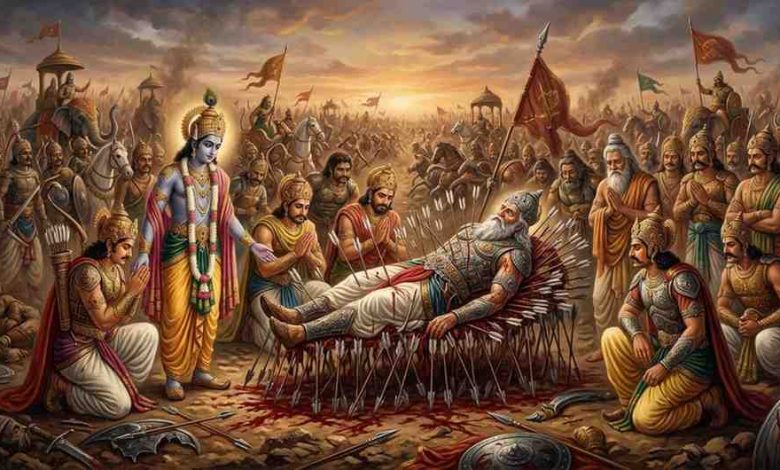
Shloka (श्लोक)
दयया यदि वा राजन दवेष्यभावान मम परभॊ
मन्दभाग्यतया वापि मम रक्षसि पाण्डवान
⚡ Quick Meaning
A plea for mercy or justification in the conflict involving the Pandavas.
Translations
English Translation
This shloka conveys a mixture of compassion and anguish, as the speaker deliberates on whether mercy or hatred motivates their actions concerning the Pandavas. It reveals the internal struggle faced in war, navigating personal feelings against duties.
हिंदी अनुवाद
यह श्लोक दया और विषाद के मिश्रित भाव को व्यक्त करता है, जब वक्ता विचार करता है कि क्या दया या घृणा उनके कार्यों के पीछे है पाण्डवों के खिलाफ। यह युद्ध में आंतरिक संघर्ष को उजागर करता है, व्यक्तिगत भावनाओं और कर्तव्यों के बीच संतुलन बनाते हुए।
Commentary
Context
In the context of the Bhishma Parva, this verse illustrates the conflict between dharma (duty) and personal emotion, making it significant in the broader narrative.
Meaning
The profound lesson here is the complexity of human emotions in conflict, emphasizing the need to balance duty with compassion.
Application
This shloka encourages reflection on our motivations, urging us to act with both commitment and empathy in difficult circumstances.

