
Mahabharata Drona Parva – ततॊ ऽरजुनं षड्भिर अथाजघान; दरौणायनिर दशभिर वासुदेवम

Shloka (श्लोक)
ततॊ ऽरजुनं षड्भिर अथाजघान; दरौणायनिर दशभिर वासुदेवम
भीमं दशार्धैर युवराजं चतुर्भिर; दवाभ्यां छित्त्वा कार्मुकं च धवजं च
पुनः पार्थं शरवर्षेण विद्ध्वा; दरौणिर घॊरं सिंहनादं ननाद
⚡ Quick Meaning
Then, six arrows struck Arjuna, while Dronacharya hit Vasudeva with ten, Bheema received five half arrows, and the prince with four arrows, causing a loud roar from Dronacharya.
Translations
English Translation
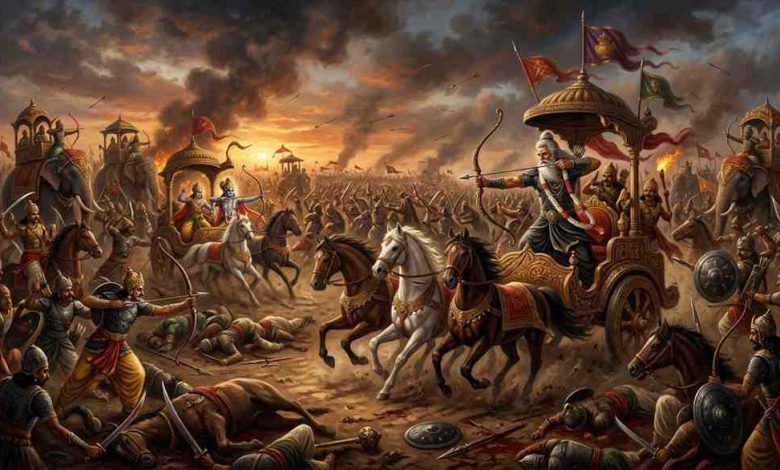
This shloka describes a rapid exchange of arrows during battle, where Arjuna, Drona, and others exchange blows. It signifies the fierce nature of the fight and Dronacharya’s powerful presence on the battlefield, represented by his fearsome roar.
हिंदी अनुवाद
यह श्लोक युद्ध के दौरान तीरों के तीव्र आदान-प्रदान का वर्णन करता है, जहाँ अर्जुन, द्रोण, और अन्य योद्धा मुठभेड़ करते हैं। यह लड़ाई की भयंकरता और द्रोणाचार्य की शक्ति का प्रतीक है, जिसे उनके भयानक नाद से दर्शाया गया है।
Commentary
Context
The context here portrays the intense moments in the Drona Parva, focused on the personalized combat between prominent warriors, adding depth and urgency to the narrative of the Mahabharata.
Meaning
This shloka emphasizes the highly competitive nature of battle, where remarkable warriors constantly face challenges from each other, revealing their strengths and strategies.
Application
The essence of this verse teaches us about resilience in competitive situations. Just as warriors oppose each other, we too must be prepared to face challenges head-on with courage and strategy.

