
Mahabharata Karna Parva – तं धयानमूकं कृपणं भृशार्तम; आर्तायनिर दीनम उवाच वाक्यम

Shloka (श्लोक)
तं धयानमूकं कृपणं भृशार्तम; आर्तायनिर दीनम उवाच वाक्यम
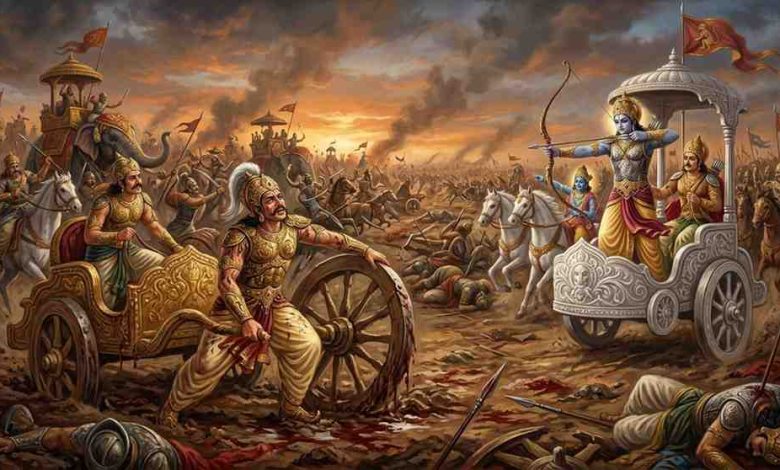
पश्येदम उग्रं नरवाजि नागैर; आयॊधनं वीर हतैः परपन्नम
⚡ Quick Meaning
This shloka depicts the sight of the lamenting warrior amidst the battlefield.
Translations
English Translation
The verse emphasizes the pitiable state of the warrior, who is both mute and tormented. He is surrounded by the fallen, seeing the destruction caused by valiant elephants, and his condition evokes compassion from the onlookers.
हिंदी अनुवाद
यह श्लोक युद्धभूमि पर करुणा को प्रकट करता है, जहाँ एक योद्धा चुप और दुखी है। वह मृतकों के बीच है और शक्तिशाली हाथियों द्वारा की गई तबाही को देखकर दुखी होता है, जिससे अन्य लोग उसकी स्थिति देखकर दयालु हो जाते हैं।
Commentary
Context
This shloka occurs in the Karna Parva, illustrating the emotional turmoil of warriors during battle, especially Karna’s predicament.
Meaning
It reflects the intense sorrow and helplessness of a warrior, magnified by the surrounding chaos and destruction, showcasing the impact of war on human emotions.
Application
This verse serves as a reminder of the sacrifices made in battle and the profound emotional consequences for warriors, urging us to consider the cost of conflict.

