

Shloka (श्लोक)
एतत परथमकल्पेन राजा कृतयुगे ऽभजत
पादॊ ऽनेनापि धर्मेण गच्छेत तरेतायुगे तथा
दवापरे तु दविपादेन पादेन तव अपरे युगे
⚡ Quick Meaning
This verse discusses the different forms of governance in each Yuga.
Translations
English Translation
This shloka explains that in the first Yuga, a king rules with virtue, guiding his subjects. In Tretayuga, governance evolves; in Dvapara Yuga, a king leads with duality. In Kali Yuga, the attributes of a ruler decline significantly, indicating a moral regression of society.
हिंदी अनुवाद
यह श्लोक बताता है कि पहले युग में राजा सदाचार के साथ शासन करता है। त्रेतायुग में शासन की प्रकृति बदलती है; द्वापर युग में राजा द्वित्व के साथ शासन करते हैं। कलियुग में, शासकों के गुण काफी घट जाते हैं, जो समाज के नैतिक पतन का संकेत है।
Commentary
Context
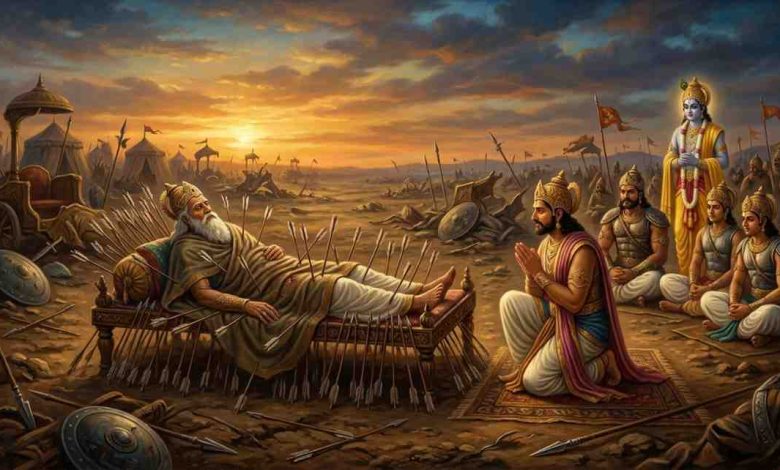
This verse is part of the Shanti Parva, where Yudhishthira seeks wisdom regarding governance and duties across different ages.
Meaning
It highlights the evolution of leadership qualities as society transitions through the Yugas, illustrating a decline in moral values.
Application
Understanding these changes can guide contemporary leaders to reflect on their responsibilities and the values they uphold in governance.

