
Mahabharata Shanti Parva – कामाकामाव ऋतुर मासः शर्वरी दिवसः कषणः

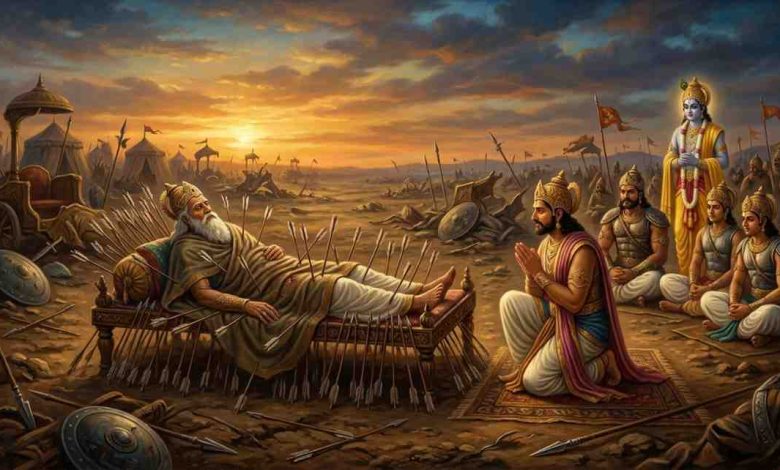
Shloka (श्लोक)
कामाकामाव ऋतुर मासः शर्वरी दिवसः कषणः
अप्रसादः परसादश च हर्षः करॊधः शमॊ दमः
⚡ Quick Meaning
The shloka discusses the states of desire, time, and emotional fluctuations, reflecting on their impact on human experience.
Translations
English Translation
This verse highlights the complex interplay of desires, seasons, time, and emotions such as joy, anger, peace, and control, and how they influence human behavior and experiences daily.
हिंदी अनुवाद
यह श्लोक इच्छाओं, ऋतुओं, समय और हर्ष, क्रोध, शांति और नियंत्रण जैसे भावनाओं के जटिल अंतर्संबंध को उजागर करता है, और यह बताता है कि ये कैसे मानव व्यवहार और अनुभव को प्रतिदिन प्रभावित करते हैं।
Commentary
Context
In the context of Shanti Parva, these verses offer insight into the cyclical nature of human emotion and desire.
Meaning
The acknowledgment of emotional states reflects our inherent conflicts and the pursuit of balance.
Application
By reflecting on these emotions, individuals can work towards emotional intelligence and stability in their lives.

