
MahabharataShanti Parva
Mahabharata Shanti Parva – कामान वयुदस्य धुनुते यत किं चित पुरुषॊ रजः

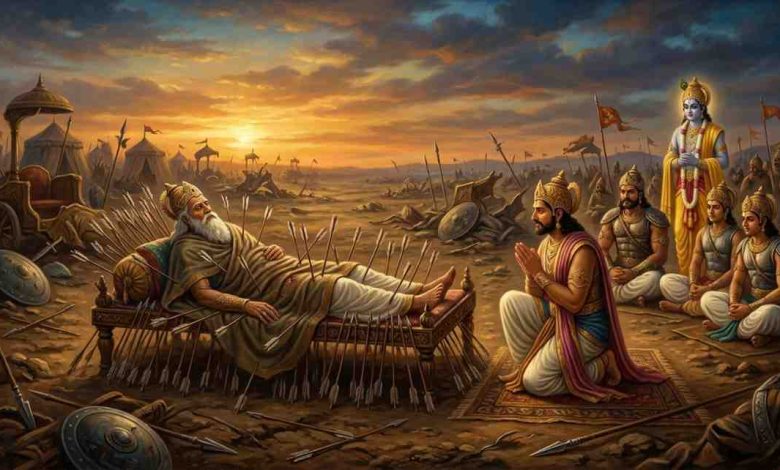
Shloka (श्लोक)
कामान वयुदस्य धुनुते यत किं चित पुरुषॊ रजः
कामक्रॊधॊद्भवं दुःखम अह्रीर अरतिर एव च
⚡ Quick Meaning
This shloka highlights that desires and anger create suffering and a lack of virtue.
Translations
English Translation
Whatever desires stir in a person and lead them toward attachment produce suffering, lack of shame, and desire-driven discontent.
हिंदी अनुवाद
जो भी इच्छाएँ एक व्यक्ति में जाग्रत होती हैं और उन्हें आसक्ति की ओर ले जाती हैं, वे दुःख, लज्जा की कमी, और इच्छाओं के प्रेरित असंतोष का कारण बनती हैं।
Commentary
Context
This verse reflects on the karmic consequences of uncontrolled desires from the Shanti Parva.
Meaning
It teaches the detrimental impact of succumbing to desires and anger, fostering awareness of their effects.
Application
By recognizing and managing these impulses, one can lead a life that prioritizes virtue over desire.

