
Mahabharata Shanti Parva – तत खलु दविविधं सुखम उच्यते शारीरं मानसं च

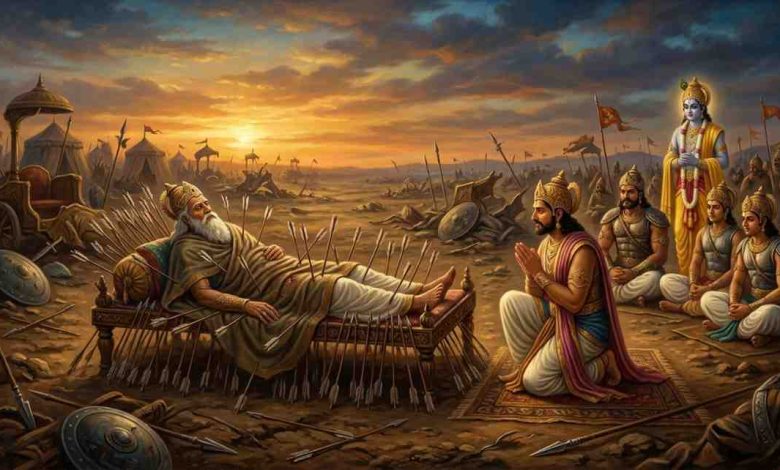
Shloka (श्लोक)
तत खलु दविविधं सुखम उच्यते शारीरं मानसं च
इह खल्व अमुष्मिंश च लॊके सर्वारम्भप्रवृत्तयः सुखार्थाभिधीयन्ते
न हय अतस तरिवर्गफलं विशिष्टतरम अस्ति
सैष काम्यॊ गुणविशेषॊ धर्मार्थयॊर आरम्भस तद धेतुर अस्यॊत्पत्तिः सुखप्रयॊजना
⚡ Quick Meaning
Happiness is of two kinds: physical and mental; it arises from actions driven by desire, and is distinct within worldly pursuits.
Translations
English Translation
This verse discusses the two types of happiness: physical and mental. It explains that all actions undertaken in this world are ultimately aimed at achieving happiness. It also mentions the importance of ethical pursuits (dharma), material gains (artha), and desires (kama), emphasizing their interconnectedness in the search for happiness.
हिंदी अनुवाद
यह श्लोक सुख के दो प्रकारों की चर्चा करता है: शारीरिक और मानसिक। यह बताता है कि इस दुनिया में किए गए सभी कार्य अंततः खुशी प्राप्त करने के उद्देश्य से होते हैं। यह नैतिक प्रयासों (धर्म), भौतिक लाभ (अर्थ) और इच्छाओं (काम) के महत्व को भी उजागर करता है, जो खुशी की खोज में आपस में जुड़े होते हैं।
Commentary
Context
This shloka appears in the Shanti Parva, reflecting on the dualities of happiness and the ethical framework that governs it.
Meaning
It articulates that true happiness is derived from balanced actions that harmoniously combine ethical and material pursuits.
Application
Understanding the nature of both physical and mental happiness can guide individuals to engage in fulfilling activities that promote holistic well-being.

