
Mahabharata Shanti Parva – पित्रा विभजते पुत्रॊ यश च सयाद गुरु तल्प गः

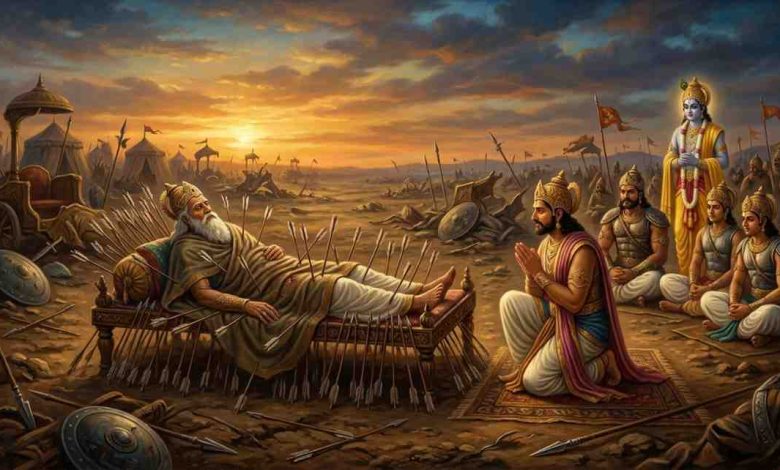
Shloka (श्लोक)
पित्रा विभजते पुत्रॊ यश च सयाद गुरु तल्प गः
अप्रजायन्न अधर्मेण भवत्य आधर्मिकॊ जनः
⚡ Quick Meaning
This shloka highlights the consequences of dividing resources among children and the nature of dharma.
Translations
English Translation
A child who divides the wealth bestowed by a father and who also follows the teachings of a guru will not be born into progeny with unrighteousness. Rather, the person who engages in unrighteous acts becomes the unrighteous one.
हिंदी अनुवाद
जो पुत्र अपने पिता द्वारा दिए गए धन को बांटता है और गुरु की शिक्षाओं का पालन करता है, वह अधर्म में उत्पन्न नहीं होता। बल्कि, जो लोग अधर्म में संलग्न होते हैं, वे ही अधर्म कर रहे होते हैं।
Commentary
Context
In the Shanti Parva of the Mahabharata, this shloka addresses the moral implications of dharma in familial relationships.
Meaning
It conveys that wisdom and righteousness must guide the distribution of resources, influencing future generations positively.
Application
This verse emphasizes the importance of ethical decision-making in family settings and the long-lasting impact of such choices.

