

Sanskrit Verse
स॒हस्र॑शीर्षा॒ पुरु॑षः सहस्रा॒क्षः स॒हस्र॑पात् । स भूमिं॑ वि॒श्वतो॑ वृ॒त्वाऽत्य॑तिष्ठद्दशाङ्गु॒लम् ॥१॥
पुरु॑ष ए॒वेदं सर्वं॒ यद्भू॒तं यच्च॒ भव्य॑म् । उ॒तामृ॑त॒त्वस्येशा॑नो॒ यदन्ने॑नाति॒रोह॑ति ॥२॥
ए॒तावा॑नस्य महि॒माऽतो॒ ज्यायाँ॑श्च॒ पूरु॑षः । पादो॑ऽस्य॒ विश्वा॑ भू॒तानि॑ त्रि॒पाद॑स्या॒मृतं॑ दि॒वि ॥३॥
त्रि॒पादू॒र्ध्व उदै॒त्पुरु॑ष॒: पादो॑ऽस्ये॒हाभ॑व॒त्पुन॑: । ततो॒ विष्व॒ङ्व्य॑क्रामत्साशनानश॒ने अ॒भि ॥४॥
तस्मा॑द्वि॒राळ॑जायत वि॒राजो॒ अधि॒ पूरु॑षः । स जा॒तो अत्य॑रिच्यत प॒श्चाद्भूमि॒मथो॑ पु॒रः ॥५॥
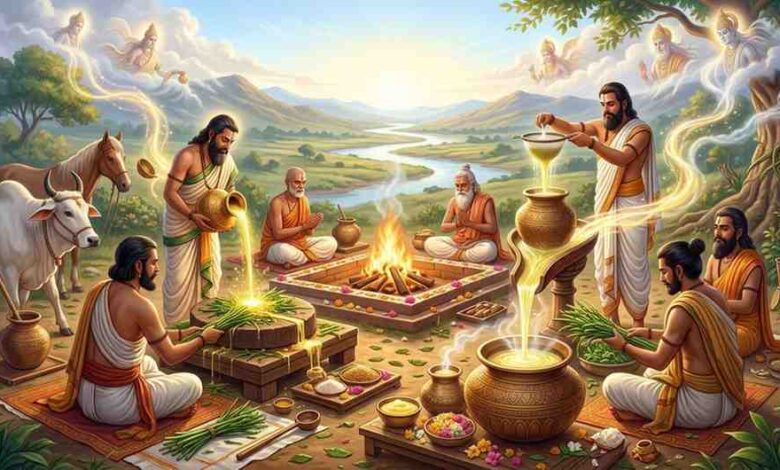
यत्पुरु॑षेण ह॒विषा॑ दे॒वा य॒ज्ञमत॑न्वत । व॒स॒न्तो अ॑स्यासी॒दाज्यं॑ ग्री॒ष्म इ॒ध्मः श॒रद्ध॒विः ॥६॥
तं य॒ज्ञं ब॒र्हिषि॒ प्रौक्ष॒न्पुरु॑षं जा॒तम॑ग्र॒तः । तेन॑ दे॒वा अ॑यजन्त सा॒ध्या ऋष॑यश्च॒ ये ॥७॥
तस्मा॑द्य॒ज्ञात्स॑र्व॒हुत॒: सम्भृ॑तं पृषदा॒ज्यम् । प॒शून्ताँश्च॑क्रे वाय॒व्या॑नार॒ण्यान्ग्रा॒म्याश्च॒ ये ॥८॥
तस्मा॑द्य॒ज्ञात्स॑र्व॒हुत॒ ऋच॒: सामा॑नि जज्ञिरे । छन्दां॑सि जज्ञिरे॒ तस्मा॒द्यजु॒स्तस्मा॑दजायत ॥९॥
तस्मा॒दश्वा॑ अजायन्त॒ ये के चो॑भ॒याद॑तः । गावो॑ ह जज्ञिरे॒ तस्मा॒त्तस्मा॑ज्जा॒ता अ॑जा॒वय॑: ॥१०॥
यत्पुरु॑षं॒ व्यद॑धुः कति॒धा व्य॑कल्पयन् । मुखं॒ किम॑स्य॒ कौ बा॒हू का ऊ॒रू पादा॑ उच्येते ॥११॥
ब्रा॒ह्म॒णो॑ऽस्य॒ मुख॑मासीद्बा॒हू रा॑ज॒न्य॑: कृ॒तः । ऊ॒रू तद॑स्य॒ यद्वैश्य॑: प॒द्भ्यां शू॒द्रो अ॑जायत ॥१२॥
च॒न्द्रमा॒ मन॑सो जा॒तश्चक्षो॒: सूर्यो॑ अजायत । मुखा॒दिन्द्र॑श्चा॒ग्निश्च॑ प्रा॒णाद्वा॒युर॑जायत ॥१३॥
नाभ्या॑ आसीद॒न्तरि॑क्षं शी॒र्ष्णो द्यौः सम॑वर्तत । प॒द्भ्यां भूमि॒र्दिश॒: श्रोत्रा॒त्तथा॑ लो॒काँ अ॑कल्पयन् ॥१४॥
स॒प्तास्या॑सन्परि॒धय॒स्त्रिः स॒प्त स॒मिध॑: कृ॒ताः । दे॒वा यद्य॒ज्ञं त॑न्वा॒ना अब॑ध्न॒न्पुरु॑षं प॒शुम् ॥१५॥
य॒ज्ञेन॑ य॒ज्ञम॑यजन्त दे॒वास्तानि॒ धर्मा॑णि प्रथ॒मान्या॑सन् ।
ते ह॒ नाकं॑ महि॒मान॑: सचन्त॒ यत्र॒ पूर्वे॑ सा॒ध्याः सन्ति॑ दे॒वाः ॥१६॥
Mantra-by-Mantra Translations
Mantra 1
English
The Purusha is a thousand-headed, a thousand-eyed, and a thousand-footed being. He pervades the earth from all sides and stands beyond it by ten fingers’ breadth.
Hindi / हिंदी
पुरुष हजार सिरों वाला, हजार आंखों वाला और हजार पैरों वाला है। वह चारों ओर से पृथ्वी को व्याप्त करता है और दस अंगुलों की चौड़ाई से उसके पार खड़ा है।
Mantra 2
English
The Purusha is indeed all that exists, whatever has been and whatever shall be. He is the Lord of immortality, because of whom the universe evolves.
Hindi / हिंदी
पुरुष वास्तव में सब कुछ है, जो कुछ था और जो कुछ होगा। वह अमरता का स्वामी है, जिसके कारण ब्रह्मांड विकसित होता है।
Mantra 3
English
This is the greatness of the Purusha, greater than which there is none. One-fourth of him is all beings, while three-fourths of him is the immortal in heaven.
Hindi / हिंदी
यह पुरुष की महिमा है, जिसके समान कोई नहीं है। उसका एक चौथाई सभी प्राणियों में है, जबकि तीन चौथाई अमर है जो स्वर्ग में है।
Mantra 4
English
Three-fourths of the Purusha ascended; one-fourth remained here. From there, he took steps everywhere, nourishing the universe.
Hindi / हिंदी
पुरुष के तीन चौथाई ऊपर उठ गए; एक चौथाई यहाँ रह गया। वहीं से उसने चारों ओर कदम बढ़ाया, ब्रह्मांड का पोषण करते हुए।
Mantra 5
English
From him, the Viraj was born, and that Purusha, after being born, exceeded the earth and went beyond.
Hindi / हिंदी
उससे विराट का जन्म हुआ, और वह पुरुष, जन्म लेने के बाद, पृथ्वी को पार कर गया।
Mantra 6
English
With the Purusha as the offering, the gods performed the sacrifice. The seasons were created by this offering, as were summer, autumn, and winter.
Hindi / हिंदी
पुरुष को अर्पण के रूप में लेकर, देवताओं ने यज्ञ किया। इस अर्पण द्वारा ऋतुएं बनाई गईं, जैसे ग्रीष्म, शरद और शीतकाल।
Mantra 7
English
The gods performed the sacrifice with the Purusha as the offering, thus the sages and those of divine nature were born.
Hindi / हिंदी
देवताओं ने पुरुष को अर्पण के रूप में लेकर यज्ञ किया, इस प्रकार ऋषि और दिव्य स्वभाव के लोग उत्पन्न हुए।
Mantra 8
English
From that sacrifice, all the oblations were gathered. The animals were created from it, as also the birds and the creatures of the earth.
Hindi / हिंदी
उस यज्ञ से सभी हुतों को संचित किया गया। उससे पशु, पक्षी और पृथ्वी के जीवों का निर्माण हुआ।
Mantra 9
English
From that sacrifice, all the hymns were born. The Chandas (meters) were created from it, and from that, the Yajur was also born.
Hindi / हिंदी
उस यज्ञ से सभी ऋचाएँ उत्पन्न हुईं। उससे छंदों का निर्माण हुआ, और उसी से यजुर्वेद भी उत्पन्न हुआ।
Mantra 10
English
From that Purusha, the horses were born, and whatever other beings there are, they were born from him.
Hindi / हिंदी
उस पुरुष से घोड़े उत्पन्न हुए, और जो भी अन्य प्राणी हैं, वे उसी से उत्पन्न हुए।
Mantra 11
English
As they divided the Purusha, how many parts did they make? What is his mouth, what are his arms, what are his thighs and what are his feet?
Hindi / हिंदी
जब उन्होंने पुरुष को विभाजित किया, तो उन्होंने कितने भाग बनाए? उसका मुख क्या है, उसके बाहु क्या हैं, उसके ऊर्ध्व क्या हैं और उसके पाद क्या हैं?
Mantra 12
English
The Brahmana was his mouth; his arms were made into the Rajanya. The Vaishya was born from his thighs, and the Shudra from his feet.
Hindi / हिंदी
ब्रह्मण उसका मुख था; उसकी बाहें राजन्य में बनाई गईं। वैश्य उसके जांघों से पैदा हुआ, और शूद्र उसके पैरों से।
Mantra 13
English
The moon was born from the mind; the sun was born from the eye. From his mouth came Indra and Agni; from his breath, the Wind was born.
Hindi / हिंदी
चन्द्रमा मन से उत्पन्न हुआ; सूर्य आंख से उत्पन्न हुआ। उसके मुख से इन्द्र और अग्नि उत्पन्न हुए; उसके प्राण से वायु का जन्म हुआ।
Mantra 14
English
From his navel came the sky; from his head, the heavens were formed. From his feet, the earth, and from his ears, the directions were created.
Hindi / हिंदी
उसकी नाभि से आकाश उत्पन्न हुआ; उसके सिर से आकाश का निर्माण हुआ। उसके पांवों से पृथ्वी, और उसके कानों से दिशाएँ बनाई गईं।
Mantra 15
English
Seven were the coverings, and three were the flames made. The gods, desiring the sacrifice, bound the Purusha, the animal.
Hindi / हिंदी
सात थे आवरण, और तीन अग्नियाँ बनाई गईं। देवताओं ने यज्ञ की इच्छा से पुरुष, पशु को बांध दिया।
Mantra 16
English
The gods performed the sacrifice with that sacrifice, and the first laws of righteousness were established. They reached the great world, where the ancient gods reside.
Hindi / हिंदी
देवताओं ने उस यज्ञ से यज्ञ किया, और धर्म के पहले नियम स्थापित किए। वे महान लोक तक पहुंचे, जहाँ प्राचीन देवता निवास करते हैं।
Detailed Meaning
English
Sukta 90 of Mandala 10 of the Rigveda elaborates on the concept of Purusha, embodying the cosmic being that is the source of all creation. It describes how the universe and all beings have originated from Purusha, symbolizing the interconnectedness of life. The Purusha is both immanent and transcendent, representing the unity of existence where all beings are manifestations of a singular divine essence. The text emphasizes the role of sacrifice (Yajna) in the cosmic order, highlighting how various elements of nature and humanity emerged from this primordial being. The verses illustrate a profound understanding of creation, where the division of Purusha gives rise to the social order and the natural world, suggesting a harmonious relationship between all aspects of existence.
Hindi
ऋग्वेद के मंडल 10 के सूक्त 90 में पुरुष के अवधारणा का विस्तार किया गया है, जो सभी सृष्टि का स्रोत है। यह बताता है कि ब्रह्मांड और सभी प्राणी पुरुष से उत्पन्न हुए हैं, जो जीवन के आपसी संबंध को प्रतीकित करता है। पुरुष, जो दोनों अंतर्निहित और पारलौकिक है, अस्तित्व की एकता का प्रतिनिधित्व करता है, जहाँ सभी प्राणी एक ही दिव्य सार के रूप में प्रकट होते हैं। पाठ में यज्ञ (यज्ञ) की भूमिका पर जोर दिया गया है, जो ब्रह्मांडीय व्यवस्था में महत्वपूर्ण है, और यह दर्शाता है कि कैसे विभिन्न तत्वों ने इस प्राचीन प्राणी से उत्पन्न हुआ। श्लोकों में सृष्टि की गहरी समझ दिखाई गई है, जहाँ पुरुष का विभाजन सामाजिक व्यवस्था और प्राकृतिक संसार को जन्म देता है, जो सभी अस्तित्व के पहलुओं के बीच सामंजस्यपूर्ण संबंध का सुझाव देता है।
Practical Wisdom
English
The teachings of Sukta 90 encourage individuals to recognize their interconnectedness with the universe. By understanding that we are all part of a greater whole, we can foster compassion and empathy towards others. Practicing rituals and acts of kindness can be seen as modern-day sacrifices that uphold harmony in our environment. Embracing the essence of Purusha can inspire us to live with purpose and align our actions with the universal laws of righteousness and balance.
Hindi
सूक्त 90 के शिक्षाएँ व्यक्तियों को ब्रह्मांड के साथ अपने आपसी संबंध को पहचानने के लिए प्रोत्साहित करती हैं। यह समझकर कि हम सभी एक बड़े संपूर्ण का हिस्सा हैं, हम दूसरों के प्रति सहानुभूति और करुणा को बढ़ावा दे सकते हैं। अनुष्ठान और दयालुता के कार्यों का पालन करना हमारे वातावरण में सामंजस्य बनाए रखने के लिए आधुनिक युग के बलिदान के रूप में देखा जा सकता है। पुरुष के सार को अपनाना हमें उद्देश्य के साथ जीने और अपनी क्रियाओं को न्याय और संतुलन के सार्वभौमिक नियमों के साथ संरेखित करने के लिए प्रेरित कर सकता है।
Life Application
English
To apply the wisdom from this Sukta in daily life, one can actively engage in community service or environmental conservation efforts. This embodies the spirit of sacrifice and collective responsibility. Recognizing that our actions have a ripple effect on the universe encourages mindfulness in our choices. By aligning our goals with the greater good, we contribute positively to the cycle of life and promote a sense of unity among all beings.
Hindi
इस सूक्त की बुद्धिमत्ता को दैनिक जीवन में लागू करने के लिए, कोई सामुदायिक सेवा या पर्यावरण संरक्षण के प्रयासों में सक्रिय रूप से भाग ले सकता है। यह बलिदान और सामूहिक जिम्मेदारी की भावना को दर्शाता है। यह पहचानना कि हमारे कार्यों का ब्रह्मांड पर प्रभाव पड़ता है, हमारे चुनावों में जागरूकता को प्रोत्साहित करता है। अपने लक्ष्यों को सामान्य भलाई के साथ संरेखित करके, हम जीवन के चक्र में सकारात्मक योगदान करते हैं और सभी प्राणियों के बीच एकता का अनुभव बढ़ाते हैं।
Spiritual Insight
English
The spiritual insights from this Sukta highlight the divine nature of creation and the importance of recognizing the sacred in all aspects of life. It invites contemplation on the unity of existence and the interconnectedness of all beings. By perceiving life through the lens of Purusha, one can cultivate a deeper understanding of their own spiritual journey and the collective journey of humanity, encouraging a sense of reverence for life and a commitment to living in harmony with the universe.
Hindi
इस सूक्त से प्राप्त आध्यात्मिक अंतर्दृष्टियाँ सृष्टि के दिव्य स्वभाव और जीवन के सभी पहलुओं में पवित्रता को पहचानने के महत्व को उजागर करती हैं। यह अस्तित्व की एकता और सभी प्राणियों के आपसी संबंध पर ध्यान करने की आमंत्रणा देती है। पुरुष के दृष्टिकोण से जीवन को देखने से, कोई अपनी आध्यात्मिक यात्रा और मानवता की सामूहिक यात्रा की गहरी समझ विकसित कर सकता है, जो जीवन के प्रति श्रद्धा और ब्रह्मांड के साथ सामंजस्य में जीने की प्रतिबद्धता को बढ़ावा देता है।
Modern Context
English
In today’s context, the essence of this Sukta resonates with themes of sustainability and collective responsibility. As we face global challenges like climate change and social inequality, understanding our place within the larger cosmic order can inspire proactive measures. The idea of sacrifice can be reinterpreted as our commitment to ethical living and fostering community well-being. This ancient wisdom can guide contemporary efforts to create a more just and harmonious world.
Hindi
आज के संदर्भ में, इस सूक्त का सार स्थिरता और सामूहिक जिम्मेदारी के विषयों के साथ गूंजता है। जब हम जलवायु परिवर्तन और सामाजिक असमानता जैसी वैश्विक चुनौतियों का सामना कर रहे हैं, तो हमारे बड़े ब्रह्मांडीय क्रम में अपनी जगह को समझना सक्रिय उपायों को प्रेरित कर सकता है। बलिदान का विचार हमारे नैतिक जीवन जीने और सामुदायिक कल्याण को बढ़ावा देने की प्रतिबद्धता के रूप में फिर से व्याख्यायित किया जा सकता है। यह प्राचीन ज्ञान समकालीन प्रयासों को एक अधिक न्यायपूर्ण और सामंजस्यपूर्ण विश्व बनाने के लिए मार्गदर्शन कर सकता है।
Key Takeaways
English
- Purusha symbolizes the unity of all existence.
- Sacrifice (Yajna) is essential for maintaining cosmic order.
- All beings are manifestations of the same divine essence.
- Understanding interconnection fosters compassion and empathy.
- Ancient wisdom guides modern ethical living.
Hindi
- पुरुष सभी अस्तित्व की एकता का प्रतीक है।
- यज्ञ ब्रह्मांडीय व्यवस्था बनाए रखने के लिए आवश्यक है।
- सभी प्राणी उसी दिव्य सार के प्रकट हैं।
- आपसी संबंध को समझना सहानुभूति और करुणा को बढ़ावा देता है।
- प्राचीन ज्ञान आधुनिक नैतिक जीवन का मार्गदर्शन करता है।

