

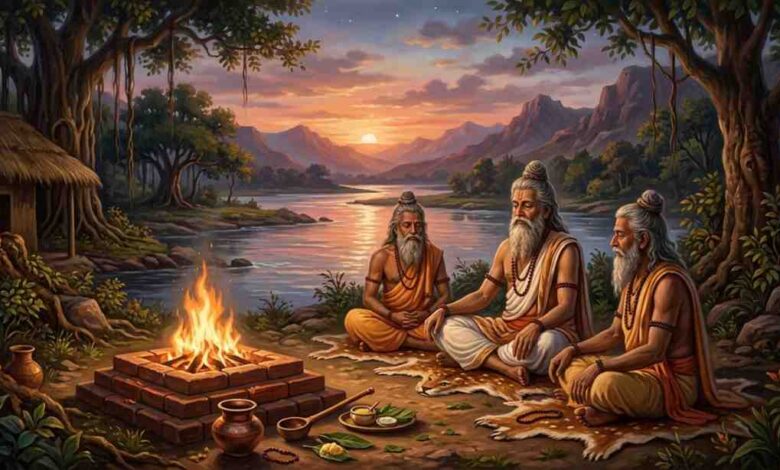
Sanskrit Verse
प्र राजा॒ वाचं॑ ज॒नय॑न्नसिष्यदद॒पो वसा॑नो अ॒भि गा इ॑यक्षति ।
गृ॒भ्णाति॑ रि॒प्रमवि॑रस्य॒ तान्वा॑ शु॒द्धो दे॒वाना॒मुप॑ याति निष्कृ॒तम् ॥१
इन्द्रा॑य सोम॒ परि॑ षिच्यसे॒ नृभि॑र्नृ॒चक्षा॑ ऊ॒र्मिः क॒विर॑ज्यसे॒ वने॑ ।
पू॒र्वीर्हि ते॑ स्रु॒तय॒: सन्ति॒ यात॑वे स॒हस्र॒मश्वा॒ हर॑यश्चमू॒षद॑: ॥२॥
स॒मु॒द्रिया॑ अप्स॒रसो॑ मनी॒षिण॒मासी॑ना अ॒न्तर॒भि सोम॑मक्षरन् ।
ता ईं॑ हिन्वन्ति ह॒र्म्यस्य॑ स॒क्षणिं॒ याच॑न्ते सु॒म्नं पव॑मान॒मक्षि॑तम् ॥३॥
गो॒जिन्न॒: सोमो॑ रथ॒जिद्धि॑रण्य॒जित्स्व॒र्जिद॒ब्जित्प॑वते सहस्र॒जित् ।
यं दे॒वास॑श्चक्रि॒रे पी॒तये॒ मदं॒ स्वादि॑ष्ठं द्र॒प्सम॑रु॒णं म॑यो॒भुव॑म् ॥४॥
ए॒तानि॑ सोम॒ पव॑मानो अस्म॒युः स॒त्यानि॑ कृ॒ण्वन्द्रवि॑णान्यर्षसि ।
ज॒हि शत्रु॑मन्ति॒के दू॑र॒के च॒ य उ॒र्वीं गव्यू॑ति॒मभ॑यं च नस्कृधि ॥५॥
Mantra-by-Mantra Translations
Mantra 1
English
The poet Bhargava, the Purifier, is the Soma. He who generates the speech, the king, does not go to the waters; the one who dwells within him approaches.
Hindi / हिंदी
कवि भार्गव, शुद्ध करने वाला, सोम है। जो राजा वाणी उत्पन्न करता है, वह जल में नहीं जाता; जो उसके भीतर निवास करता है, वह निकट आता है।
Mantra 2
English
To Indra, Soma is poured forth; may the men with their songs and hymns bring forth the swirling energy. The ancient hymns have passed down to you, O Lord, with a thousand horses and armies.
Hindi / हिंदी
इन्द्र के लिए सोम का अर्पण किया जाता है; पुरुषों के गीत और स्तोत्रों से ऊर्जा उत्पन्न करें। प्राचीन गीत आपके पास आए हैं, हे प्रभु, हजार घोड़ों और सेनाओं के साथ।
Mantra 3
English
The waters of the oceans and the Apsaras, they are seated with the wise, and in between, they pour forth the imperishable Soma. They seek the happy, pure Soma, the eye of the dwelling.
Hindi / हिंदी
महासागरों का जल और अप्सराएँ, वे ज्ञानी के साथ बैठते हैं, और बीच में, अमर सोम का प्रवाह करते हैं। वे सुखद, शुद्ध सोम, निवास की आंख की खोज करते हैं।
Mantra 4
English
Soma, the joyous one, is the vehicle of the radiant ones, the one who brings forth the power of heaven. The gods have created a drink for the yellow, sweet, and delightful Soma.
Hindi / हिंदी
सोम, आनंदित, प्रकाशवानों का वाहन है, जो स्वर्ग की शक्ति लाता है। देवताओं ने पीले, मीठे और सुखद सोम के लिए एक पेय बनाया है।
Mantra 5
English
These are the truths that the pure Soma has made for us; they are the destroyers of the enemy, the ones who drive away fear from the earth and provide safety in abundance.
Hindi / हिंदी
ये वे सत्य हैं जो शुद्ध सोम ने हमारे लिए बनाए हैं; ये शत्रुओं का नाशक हैं, जो पृथ्वी से भय को दूर करते हैं और प्रचुरता में सुरक्षा प्रदान करते हैं।
English Translation
Hindi Translation
Detailed Meaning
English
This Sukta from the Rigveda focuses on the significance of Soma, a sacred drink associated with divine inspiration and immortality. It highlights the role of Soma as a divine entity that connects humans with the heavens, personified through the poet Bhargava. The mantras emphasize the importance of hymns and rituals in invoking divine blessings, particularly for strength and protection. The verses portray Soma as a purifying force that not only nourishes the body but also elevates the spirit, encouraging a harmonious relationship between humanity and the divine. The reference to Indra and the ancient hymns underscores the cultural continuity of Vedic rituals that seek prosperity and wealth through spiritual practices. Ultimately, the Sukta serves as a reminder of the interconnectedness between nature, divinity, and human endeavor.
Hindi
यह ऋग्वेद का सूक्त सोम के महत्व पर केंद्रित है, जो एक पवित्र पेय है जो दिव्य प्रेरणा और अमरता से जुड़ा है। यह सोम की भूमिका को एक दिव्य तत्व के रूप में उजागर करता है जो मनुष्यों को स्वर्ग से जोड़ता है, जिसे कवि भार्गव के माध्यम से व्यक्त किया गया है। मंत्रों में भक्ति और अनुष्ठानों के महत्व पर जोर दिया गया है, विशेष रूप से शक्ति और सुरक्षा के लिए। ये श्लोक सोम को एक शुद्धिकरण बल के रूप में चित्रित करते हैं जो न केवल शरीर को पोषण देता है बल्कि आत्मा को भी ऊंचा करता है, मानवता और दिव्य के बीच सामंजस्यपूर्ण संबंध को प्रोत्साहित करता है। इन्द्र और प्राचीन गीतों का संदर्भ उन वेदिक अनुष्ठानों की सांस्कृतिक निरंतरता को रेखांकित करता है जो आध्यात्मिक प्रथाओं के माध्यम से समृद्धि और धन की खोज करते हैं। अंततः, यह सूक्त प्रकृति, दिव्यता और मानव प्रयास के बीच आपसी संबंध की याद दिलाता है।
Practical Wisdom
English
The teachings of this Sukta remind us of the importance of rituals and spiritual practices in our daily lives. They encourage us to seek purity in our thoughts and actions, fostering a deep connection with the divine. By chanting hymns and engaging in community rituals, we can cultivate strength and resilience, both personally and collectively. This Sukta emphasizes the need for harmony between humanity and nature, urging us to honor the earth and its resources while striving for spiritual growth and well-being.
Hindi
इस सूक्त की शिक्षाएँ हमें अपने दैनिक जीवन में अनुष्ठानों और आध्यात्मिक प्रथाओं के महत्व की याद दिलाती हैं। ये हमें अपने विचारों और कार्यों में शुद्धता की खोज करने के लिए प्रोत्साहित करती हैं, जिससे दिव्य के साथ गहरा संबंध स्थापित होता है। भक्ति गाने और सामुदायिक अनुष्ठानों में भाग लेकर, हम व्यक्तिगत और सामूहिक रूप से शक्ति और लचीलापन विकसित कर सकते हैं। यह सूक्त मानवता और प्रकृति के बीच सामंजस्य की आवश्यकता पर जोर देता है, हमें पृथ्वी और इसके संसाधनों का सम्मान करने और आध्यात्मिक विकास और कल्याण की ओर प्रयास करने के लिए प्रेरित करता है।
Life Application
English
Drawing lessons from this Sukta can inspire personal development by highlighting the significance of inner purity and the quest for knowledge. By engaging in contemplation and self-reflection, we can identify our fears and work towards overcoming them. The mantra’s emphasis on community and shared rituals can lead to stronger bonds with others, fostering a supportive environment where everyone can thrive. This approach encourages a proactive stance in life, leading to greater resilience and an enriched spiritual journey.
Hindi
इस सूक्त से सबक लेना व्यक्तिगत विकास को प्रेरित कर सकता है, जो आंतरिक शुद्धता और ज्ञान की खोज के महत्व को उजागर करता है। ध्यान और आत्म-प्रतिबिंब में संलग्न होकर, हम अपने भय की पहचान कर सकते हैं और उन्हें दूर करने की दिशा में कार्य कर सकते हैं। मंत्र का सामुदायिक और साझा अनुष्ठानों पर जोर देने से दूसरों के साथ मजबूत संबंध बन सकते हैं, जिससे एक सहायक वातावरण का निर्माण होता है जहाँ सभी फल-फूल सकते हैं। यह दृष्टिकोण जीवन में एक सक्रिय रुख को प्रोत्साहित करता है, जो अधिक लचीलापन और समृद्ध आध्यात्मिक यात्रा की ओर ले जाता है।
Spiritual Insight
English
This Sukta invites us to explore the relationship between the mundane and the divine through the lens of Soma. It symbolizes the transformative power of spiritual practices that purify the mind and nourish the soul. The references to divine beings and sacred rituals teach us that engaging with the spiritual world can lead to profound insights and revelations. By embracing the teachings of this Sukta, we can deepen our understanding of our place in the universe and cultivate a sense of reverence towards life and its mysteries.
Hindi
यह सूक्त हमें सोम के दृष्टिकोण से सांसारिक और दिव्य के बीच के संबंध को खोजने के लिए आमंत्रित करता है। यह आध्यात्मिक प्रथाओं की परिवर्तनकारी शक्ति का प्रतीक है जो मन को शुद्ध करती है और आत्मा को पोषण देती है। दिव्य प्राणियों और पवित्र अनुष्ठानों के संदर्भ हमें सिखाते हैं कि आध्यात्मिक जगत के साथ जुड़ना गहन अंतर्दृष्टियों और रहस्यों की खोज की ओर ले जा सकता है। इस सूक्त की शिक्षाओं को अपनाकर, हम ब्रह्मांड में अपनी जगह की समझ को गहरा कर सकते हैं और जीवन और इसके रहस्यों के प्रति एक श्रद्धा की भावना विकसित कर सकते हैं。
Modern Context
English
In today’s fast-paced world, the themes of this Sukta resonate deeply as they advocate for mindfulness and spiritual awareness. The focus on purity and community aligns with contemporary movements towards sustainable living and collective well-being. As individuals seek deeper meanings in their lives, the teachings of this Sukta serve as a guide to fostering connections with nature and each other, promoting a holistic approach to life. The emphasis on rituals can inspire modern practices that enhance mental and emotional health, making it relevant in our ongoing quest for balance and fulfillment.
Hindi
आज की तेज़-तर्रार दुनिया में, इस सूक्त के विषय गहराई से प्रतिध्वनित होते हैं क्योंकि वे जागरूकता और आध्यात्मिक जागरूकता की वकालत करते हैं। शुद्धता और समुदाय पर ध्यान केंद्रित करना सामयिक स्थायी जीवन और सामूहिक कल्याण के प्रति आधुनिक आंदोलनों के साथ मेल खाता है। जैसे-जैसे व्यक्ति अपने जीवन में गहरे अर्थों की खोज करते हैं, इस सूक्त की शिक्षाएँ हमें प्रकृति और एक-दूसरे के साथ संबंध विकसित करने के लिए मार्गदर्शन करती हैं, जो जीवन के लिए एक समग्र दृष्टिकोण को बढ़ावा देती हैं। अनुष्ठानों पर जोर आधुनिक प्रथाओं को प्रेरित कर सकता है जो मानसिक और भावनात्मक स्वास्थ्य को बढ़ाते हैं, जिससे यह संतुलन और संतोष की निरंतर खोज में प्रासंगिक बनता है।
Key Takeaways
English
- Soma symbolizes purity and divine connection.
- Rituals and hymns are essential for spiritual growth.
- Community engagement fosters strength and resilience.
- Nature and spirituality are interconnected.
- The pursuit of knowledge is vital for personal development.
Hindi
- सोम शुद्धता और दिव्य संबंध का प्रतीक है।
- आध्यात्मिक विकास के लिए अनुष्ठान और स्तोत्र आवश्यक हैं।
- सामुदायिक सहभागिता शक्ति और लचीलापन को बढ़ावा देती है।
- प्रकृति और आध्यात्मिकता परस्पर जुड़े हुए हैं।
- ज्ञान की खोज व्यक्तिगत विकास के लिए महत्वपूर्ण है।

