
Mahabharata Shanti Parva – आत्मना विहितं दुःखम आत्मना विहितं सुखम

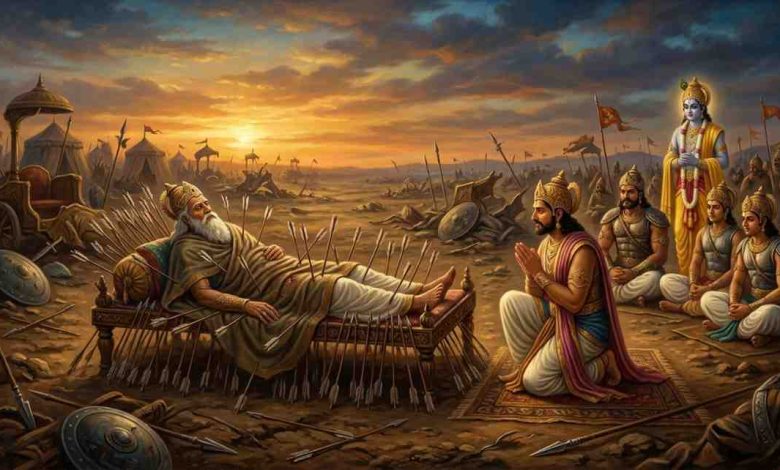
Shloka (श्लोक)
आत्मना विहितं दुःखम आत्मना विहितं सुखम
गर्भशय्याम उपादाय भुज्यते पौर्वदेहिकम
⚡ Quick Meaning
One’s own happiness and suffering are borne from one’s own actions, carried from past lives.
Translations
English Translation
This shloka reinforces the idea that both joy and sorrow are consequences of one’s own actions. What one experiences in life is a result of one’s karma, indicating that the soul carries its past deeds into new lives.
हिंदी अनुवाद
यह श्लोक इस विचार को मजबूती से स्थापित करता है कि खुशी और दुःख दोनों अपने कर्मों का परिणाम होते हैं। जीवन में जो अनुभव करते हैं वह अपने कर्मों का फल है, जो यह इंगित करता है कि आत्मा अपने पिछले कर्मों को नए जीवन में साथ लाती है।
Commentary
Context
This verse appears in the Shanti Parva, discussing the continuity of karma through different lifetimes.
Meaning
The primary lesson is about personal responsibility for one’s emotional states, which are derived from past deeds.
Application
Realizing this helps in fostering self-awareness and a proactive approach to life, aiming for positive actions.

