
Mahabharata Shanti Parva – रागी मुक्तः पचमानॊ ऽऽतमहेतॊर; मूर्खॊ वक्ता नृप हीनं च रास्त्रम

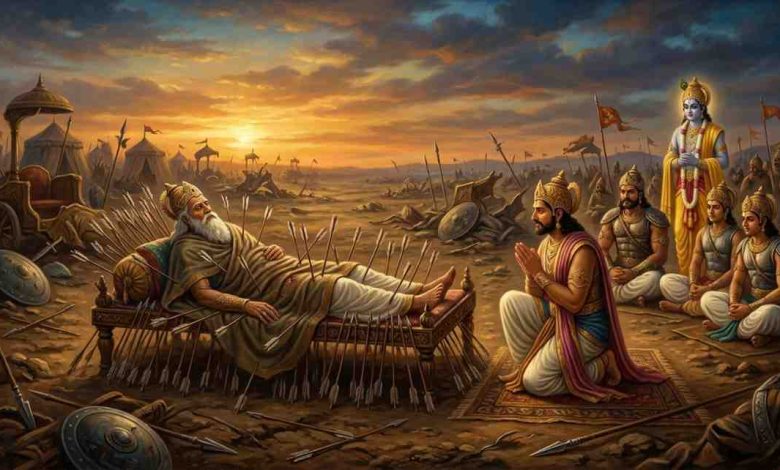
Shloka (श्लोक)
रागी मुक्तः पचमानॊ ऽऽतमहेतॊर; मूर्खॊ वक्ता नृप हीनं च रास्त्रम
एते सर्वे शॊच्यतां यान्ति राजन; यश चायुक्तः सनेहहीनः परजासु
⚡ Quick Meaning
The attachment leads to suffering and distress, both for oneself and others.
Translations
English Translation
This verse addresses the perils of attachment, suggesting that an individual who is possessive, foolishly speaking against authority and acting without compassion, faces sadness. It points towards the emotional turmoil that arises from greed and lack of empathy.
हिंदी अनुवाद
यह श्लोकattachment के खतरों को दर्शाता है, यह सुझाते हुए कि जो व्यक्ति स्वार्थी होता है, जो सत्ता के खिलाफ मूर्खतापूर्ण बोलता है और दया के बिना कार्य करता है, वह दुःख का सामना करता है। यह लालच और सहानुभूति की कमी से उत्पन्न मनोवैज्ञानिक उथल-पुथल की ओर इशारा करता है।
Commentary
Context
Part of the Shanti Parva, this verse reflects on the emotional pitfalls arising from attachment and greed.
Meaning
It suggests that self-centeredness and lack of empathy ultimately lead to devastation, highlighting the relationship between personal emotions and social dynamics.
Application
This teaching serves as a reminder to cultivate selflessness and empathy in all interactions, reducing distress both personally and within the community.

