
Mahabharata Shanti Parva – अव्यक्तं परकृतिं पराहुः पुरुषेति च निर्गुणम

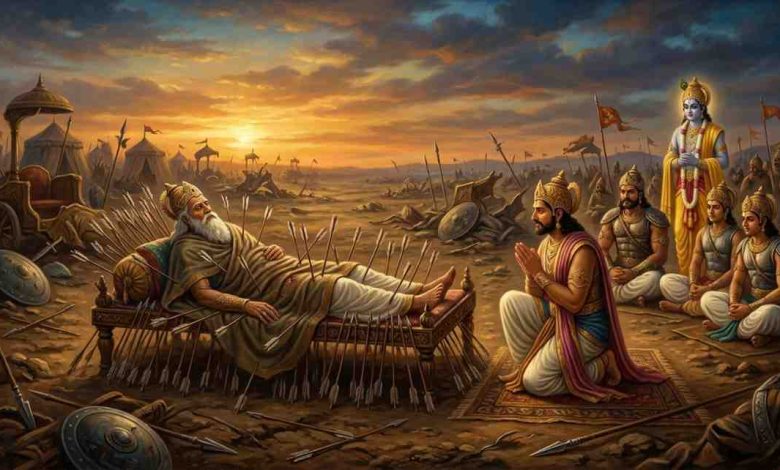
Shloka (श्लोक)
अव्यक्तं परकृतिं पराहुः पुरुषेति च निर्गुणम
तथैव मित्रं पुरुषं वरुणं परकृतिं तथा
⚡ Quick Meaning
This verse discusses the concept of the unmanifested, calling it the ultimate form of the divine.
Translations
English Translation
It describes the unmanifest as the foundational nature of reality and connects it to the divine purity that transcends qualities, drawing parallels with friendship and cosmic governance.
हिंदी अनुवाद
यह अव्यक्त को वास्तविकता की मूल प्रकृति के रूप में वर्णित करता है और इसे गुणों से परे की दिव्यता से जोड़ता है, जो मित्रता और ब्रह्माण्डीय शासन के साथ समानांतर है।
Commentary
Context
This shloka is pivotal in understanding the nature of the unmanifest in the framework of Shanti Parva.
Meaning
It signifies that the ultimate reality is beyond manifestations and is characterized by purity and incompleteness.
Application
Recognizing the unmanifest can guide us to deeper spiritual truths and enrich our relationships based on essence rather than form.

