
Mahabharata Shanti Parva – न हय एष कषयम आप्नॊति सॊमः सुरगणैर यथा

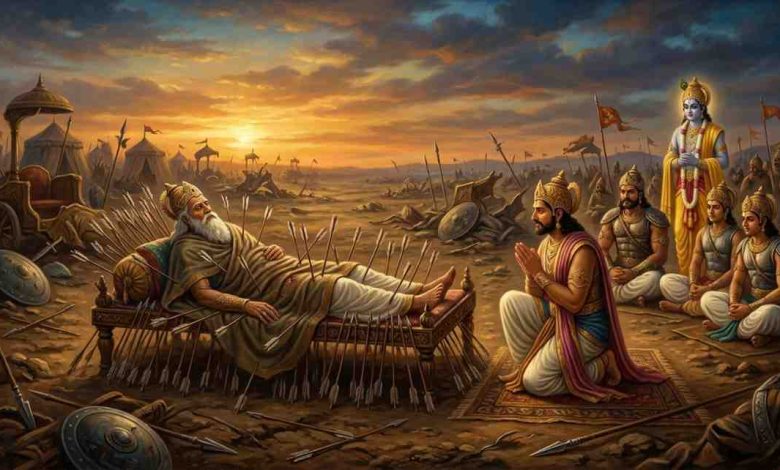
Shloka (श्लोक)
न हय एष कषयम आप्नॊति सॊमः सुरगणैर यथा
कम्पितः पतते भूमिं पुनश चैवाधिरॊहति
कषीयते हि सदा सॊमः पुनश चैवाभिपूर्यते
⚡ Quick Meaning
Indeed, the moon does not perish like the gods; it oscillates, falls to the earth, and again rises, demonstrating its eternal nature.
Translations
English Translation
This shloka illustrates the cyclical nature of the moon, which, unlike the gods, does not perish. It symbolizes the eternal rhythm of creation, descent, and ascent, reaffirming the moon’s eternal essence that persists through cycles of waxing and waning.
हिंदी अनुवाद
यह श्लोक चन्द्रमा की चक्रीय प्रकृति को दर्शाता है, जो देवताओं के विपरीत नष्ट नहीं होता। यह निर्माण, अवतरण और उत्थान की शाश्वत लय का प्रतीक है, जो चन्द्रमा की शाश्वतता को पुनः पुष्टि करता है जो बढ़ने और घटने के चक्रों के माध्यम से बनी रहती है।
Commentary
Context
This verse from the Shanti Parva reflects on cosmic cycles and the perpetual nature of celestial bodies, emphasizing their significance in philosophy.
Meaning
The underlying message is that while physical forms evolve, certain entities like the moon reflect eternal existence beyond physical limitations.
Application
This shloka inspires recognition of the cyclical aspects of life and nature, encouraging a balanced perspective towards change and resilience.

