
Mahabharata Bhishma Parva – राक्षसापसदं हन्तुं सवयम एव पितामह

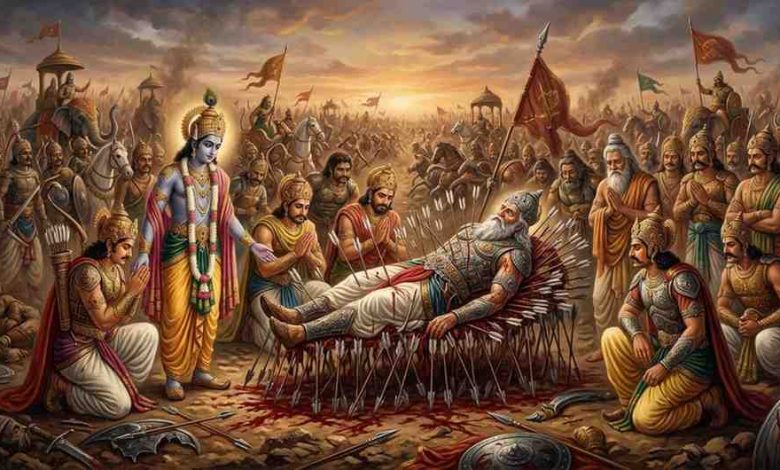
Shloka (श्लोक)
राक्षसापसदं हन्तुं सवयम एव पितामह
तवां समाश्रित्य दुर्धर्षं तन मे कर्तुं तवम अर्हसि
⚡ Quick Meaning
This shloka emphasizes the need for the warrior to rely on their lineage and strength to confront formidable foes.
Translations
English Translation
The speaker expresses their intent to fight against difficult foes, seeking strength from their lineage represented by the revered grandsire, Bhishma. They affirm their readiness to undertake this challenge, demonstrating loyalty to family and duty.
हिंदी अनुवाद
वक्ता ने कठिन दुश्मनों के खिलाफ लड़ने की अपनी चाहत व्यक्त की, और अपने प्रिय दादा भीष्म से शक्ति प्राप्त करने की बात की। वे इस चुनौती को लेने के लिए तैयार हैं, जो परिवार और कर्तव्य प्रति निष्ठा को दर्शाता है।
Commentary
Context
This verse from the Bhishma Parva showcases the pivotal moment in the Kurukshetra war where warriors assert their family ties in the face of impending battle.
Meaning
The essence of the shloka lies in the recognition of the power derived from one’s ancestry and the moral obligation of loyalty to protect that legacy in battle.
Application
This teaching inspires us to recognize our unique strengths and the influence of our backgrounds as we face life challenges courageously, upholding family honor.

