

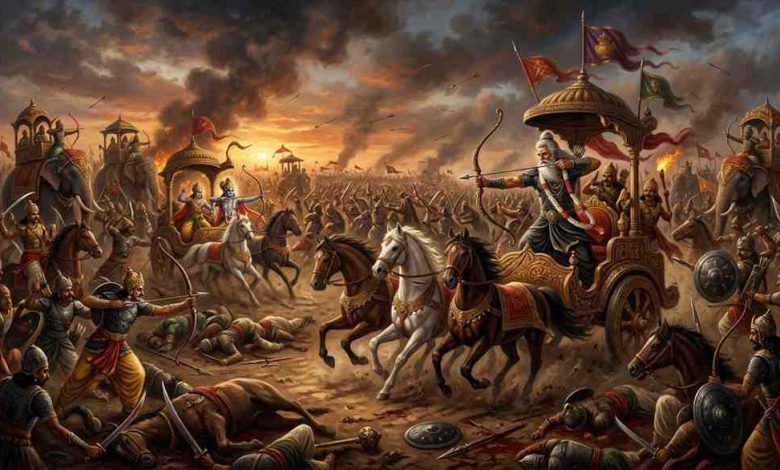
Shloka (श्लोक)
त एनं कॊष्ठकी कृत्यरथवंशेन मारिष
सर्वतॊ वयकिरन बाणैर उल्काभिर इव कुञ्जरम
⚡ Quick Meaning
Alambusha was struck from all sides like a great elephant hit by arrows and missiles.
Translations
English Translation
This verse vividly describes the overwhelming attack on Alambusha, portraying him as a massive elephant being bombarded by arrows and projectiles from all angles. The simile emphasizes the ferocity of the assault against him.
हिंदी अनुवाद
यह श्लोक अलंबुष पर किए गए आक्रमण का जीवंत चित्रण करता है, जिसमें उसे एक विशाल हाथी के रूप में चित्रित किया गया है, जिसे चारों ओर से तीरों और प्रक्षिप्तियों द्वारा निशाना बनाया जा रहा है। उपमा उसकी स्थिति की भयंकरता को उजागर करती है।
Commentary
Context
This shloka occurs during the tumultuous battles of Drona Parva, highlighting the chaotic nature of the conflict.
Meaning
The imagery serves as a metaphor for experiencing overwhelming circumstances in life, illustrating how one can feel surrounded by challenges.
Application
This verse prompts reflection on personal resilience and the strength required to withstand overwhelming difficulties.

