
Mahabharata Shalya Parva – नरान नागान समाहत्य हयांश चापि विशां पते

Shloka (श्लोक)
नरान नागान समाहत्य हयांश चापि विशां पते
अपतन्त रणे बाणाः पतंगा इव घॊषिणः
⚡ Quick Meaning
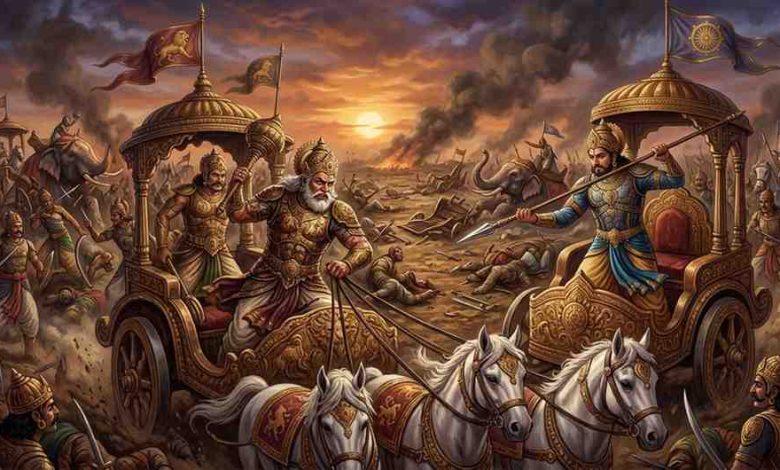
This shloka conveys the imagery of arrows striking down warriors and elephants in battle.
Translations
English Translation
The shloka depicts arrows as they fall upon both human warriors and elephants, likening the arrows to swarming insects. This powerful metaphor emphasizes the chaotic nature and destruction prevalent on the battlefield.
हिंदी अनुवाद
यह श्लोक तीरों को मानव योद्धाओं और हाथियों पर गिरते हुए दिखाता है, इन तीरों की तुलना कीड़ा प्रवृत्ति से की जाती है। यह शक्तिशाली उपमा युद्ध के मैदान में व्याप्त अराजकता और विनाश को उजागर करती है।
Commentary
Context
This verse, part of the Shalya Parva, highlights the significant impact of arrows on the battlefield.
Meaning
It illustrates how in warfare, destruction affects all forms of combatants, both human and animal, through relentless arrows.
Application
The shloka can serve as a reminder of the interconnected nature of conflict and its effects on all beings involved.

