

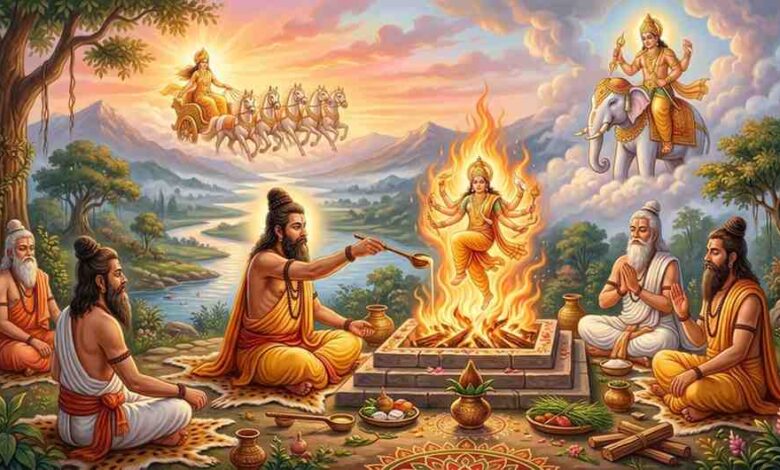
Sanskrit Verse
स यो वृषा॒ वृष्ण्ये॑भि॒: समो॑का म॒हो दि॒वः पृ॑थि॒व्याश्च॑ स॒म्राट् ।
स॒ती॒नस॑त्वा॒ हव्यो॒ भरे॑षु म॒रुत्वा॑न् नो भव॒त्विन्द्र॑ ऊ॒ती ॥१॥
यस्याना॑प्त॒: सूर्य॑स्येव॒ यामो॒ भरे॑भरे वृत्र॒हा शुष्मो॒ अस्ति॑ ।
वृष॑न्तम॒: सखि॑भि॒: स्वेभि॒रेवै॑र्म॒रुत्वा॑न् नो भव॒त्विन्द्र॑ ऊ॒ती ॥२॥
दि॒वो न यस्य॒ रेत॑सो॒ दुघा॑ना॒: पन्था॑सो॒ यन्ति॒ शव॒साप॑रीताः ।
त॒रद्द्वे॑षाः सास॒हिः पौंस्ये॑भिर्म॒रुत्वा॑न् नो भव॒त्विन्द्र॑ ऊ॒ती ॥३॥
सो अङ्गि॑रोभि॒रङ्गि॑रस्तमो भू॒द् वृषा॒ वृष॑भि॒: सखि॑भि॒: सखा॒ सन् ।
ऋ॒ग्मिभि॑र्ऋग्मी गा॒तुभि॒र्ज्येष्ठो॑ म॒रुत्वा॑न् नो भव॒त्विन्द्र॑ ऊ॒ती ॥४॥
स सू॒नुभि॒र्न रु॒द्रेभि॒र्ऋभ्वा॑ नृ॒षाह्ये॑ सास॒ह्वाँ अ॒मित्रा॑न् ।
सनी॑ळेभिः श्रव॒स्या॑नि॒ तूर्व॑न् म॒रुत्वा॑न् नो भव॒त्विन्द्र॑ ऊ॒ती ॥५॥
स म॑न्यु॒मीः स॒मद॑नस्य क॒र्ता ऽस्माके॑भि॒र्नृभि॒: सूर्यं॑ सनत् ।
अ॒स्मिन्नह॒न्त्सत्प॑तिः पुरुहू॒तो म॒रुत्वा॑न् नो भव॒त्विन्द्र॑ ऊ॒ती ॥६॥
तमू॒तयो॑ रणय॒ञ्छूर॑सातौ॒ तं क्षेम॑स्य क्षि॒तय॑: कृण्वत॒ त्राम् ।
स विश्व॑स्य क॒रुण॑स्येश॒ एको॑ म॒रुत्वा॑न् नो भव॒त्विन्द्र॑ ऊ॒ती ॥७॥
तम॑प्सन्त॒ शव॑स उत्स॒वेषु॒ नरो॒ नर॒मव॑से॒ तं धना॑य ।
सो अ॒न्धे चि॒त् तम॑सि॒ ज्योति॑र्विदन् म॒रुत्वा॑न् नो भव॒त्विन्द्र॑ ऊ॒ती ॥८॥
स स॒व्येन॑ यमति॒ व्राध॑तश्चि॒त् स द॑क्षि॒णे संगृ॑भीता कृ॒तानि॑ ।
स की॒रिणा॑ चि॒त् सनि॑ता॒ धना॑नि म॒रुत्वा॑न् नो भव॒त्विन्द्र॑ ऊ॒ती ॥९॥
स ग्रामे॑भि॒: सनि॑ता॒ स रथे॑भिर्वि॒दे विश्वा॑भिः कृ॒ष्टिभि॒र्न्व१द्य ।
स पौंस्ये॑भिरभि॒भूरश॑स्तीर्म॒रुत्वा॑न् नो भव॒त्विन्द्र॑ ऊ॒ती ॥१०॥
स जा॒मिभि॒र्यत् स॒मजा॑ति मी॒ह्ले ऽजा॑मिभिर्वा पुरुहू॒त एवै॑: ।
अ॒पां तो॒कस्य॒ तन॑यस्य जे॒षे म॒रुत्वा॑न् नो भव॒त्विन्द्र॑ ऊ॒ती ॥
स व॑ज्र॒भृद् द॑स्यु॒हा भी॒म उ॒ग्रः स॒हस्र॑चेताः श॒तनी॑थ॒ ऋभ्वा॑ ।
च॒म्री॒षो न शव॑सा॒ पाञ्च॑जन्यो म॒रुत्वा॑न् नो भव॒त्विन्द्र॑ ऊ॒ती ॥१२॥
तस्य॒ वज्र॑: क्रन्दति॒ स्मत् स्व॒र्षा दि॒वो न त्वे॒षो र॒वथ॒: शिमी॑वान् ।
तं स॑चन्ते स॒नय॒स्तं धना॑नि म॒रुत्वा॑न् नो भव॒त्विन्द्र॑ ऊ॒ती ॥१३॥
यस्याज॑स्रं॒ शव॑सा॒ मान॑मु॒क्थं प॑रिभु॒जद् रोद॑सी वि॒श्वत॑: सीम् ।
स पा॑रिष॒त् क्रतु॑भिर्मन्दसा॒नो म॒रुत्वा॑न् नो भव॒त्विन्द्र॑ ऊ॒ती ॥१४॥
न यस्य॑ दे॒वा दे॒वता॒ न मर्ता॒ आप॑श्च॒न शव॑सो॒ अन्त॑मा॒पुः ।
स प्र॒रिक्वा॒ त्वक्ष॑सा॒ क्ष्मो दि॒वश्च॑ म॒रुत्वा॑न् नो भव॒त्विन्द्र॑ ऊ॒ती ॥१५॥
रो॒हिच्छ्या॒वा सु॒मदं॑शुर्लला॒मीर्द्यु॒क्षा रा॒य ऋ॒ज्राश्व॑स्य ।
वृष॑ण्वन्तं॒ बिभ्र॑ती धू॒र्षु रथं॑ म॒न्द्रा चि॑केत॒ नाहु॑षीषु वि॒क्षु ॥१६॥
ए॒तत् त्यत् त॑ इन्द्र॒ वृष्ण॑ उ॒क्थं वा॑र्षागि॒रा अ॒भि गृ॑णन्ति॒ राध॑: ।
ऋ॒ज्राश्व॒: प्रष्टि॑भिरम्ब॒रीष॑: स॒हदे॑वो॒ भय॑मानः सु॒राधा॑: ॥१७॥
दस्यू॒ञ्छिम्यूँ॑श्च पुरुहू॒त एवै॑र्ह॒त्वा पृ॑थि॒व्यां शर्वा॒ नि ब॑र्हीत् ।
सन॒त् क्षेत्रं॒ सखि॑भिः श्वि॒त्न्येभि॒: सन॒त् सूर्यं॒ सन॑द॒पः सु॒वज्र॑: ॥१८॥
वि॒श्वाहेन्द्रो॑ अधिव॒क्ता नो॑ अ॒स्त्वप॑रिह्वृताः सनुयाम॒ वाज॑म् ।
तन्नो॑ मि॒त्रो वरु॑णो मामहन्ता॒मदि॑ति॒: सिन्धु॑: पृथि॒वी उ॒त द्यौः ॥१९॥
Mantra-by-Mantra Translations
Mantra 1
English
He who is powerful, who is like a bull, may we be blessed with the strength of Indra.
Hindi / हिंदी
जो शक्तिशाली है, जो बैल के समान है, वह हमें इंद्र की शक्ति से आशीर्वादित करे।
Mantra 2
English
He who is the sun of the heavens, may he be our strength against the enemies.
Hindi / हिंदी
जो आकाश का सूर्य है, वह हमारे शत्रुओं के खिलाफ हमारी शक्ति बने।
Mantra 3
English
In whom the paths of truth and righteousness dwell, may we find strength.
Hindi / हिंदी
जिसमें सत्य और धर्म के मार्ग निवास करते हैं, वह हमें शक्ति प्रदान करे।
Mantra 4
English
He who is invoked by the Angiras, may he grant us prosperity and strength.
Hindi / हिंदी
जिसे अंगिरस द्वारा आह्वान किया जाता है, वह हमें समृद्धि और शक्ति प्रदान करे।
Mantra 5
English
He who is the mighty one among the Rudras, may he protect us from our foes.
Hindi / हिंदी
जो रुद्रों में महान है, वह हमें हमारे दुश्मनों से बचाए।
Mantra 6
English
He who rules the sun, may he grant us power and strength.
Hindi / हिंदी
जो सूर्य पर राज्य करता है, वह हमें शक्ति और सामर्थ्य प्रदान करे।
Mantra 7
English
He who brings peace and harmony, may he make our paths smooth.
Hindi / हिंदी
जो शांति और सद्भाव लाता है, वह हमारे मार्ग को सुगम बनाए।
Mantra 8
English
He who sees the light in darkness, may he guide us towards wisdom.
Hindi / हिंदी
जो अंधकार में प्रकाश देखता है, वह हमें ज्ञान की ओर मार्गदर्शन करे।
Mantra 9
English
He who is the master of all actions, may he bless us with success.
Hindi / हिंदी
जो सभी कार्यों का स्वामी है, वह हमें सफलता से आशीर्वादित करे।
Mantra 10
English
He who is revered in every village, may he grant us strength and protection.
Hindi / हिंदी
जो हर गाँव में पूज्य है, वह हमें शक्ति और सुरक्षा प्रदान करे।
Mantra 11
English
He who brings forth wealth and prosperity, may he bless us abundantly.
Hindi / हिंदी
जो धन और समृद्धि लाता है, वह हमें abundantly आशीर्वादित करे।
Mantra 12
English
He who holds the thunderbolt, may he make us fearless and strong.
Hindi / हिंदी
जो वज्र धारण करता है, वह हमें निर्भीक और मजबूत बनाए।
Mantra 13
English
He who is the source of all strength, may he nourish our endeavors.
Hindi / हिंदी
जो सभी शक्ति का स्रोत है, वह हमारे प्रयासों को पोषित करे।
Mantra 14
English
He who is beyond the reach of all, may he grant us his grace.
Hindi / हिंदी
जो सभी की पहुँच से परे है, वह हमें अपनी कृपा प्रदान करे।
Mantra 15
English
He who is the ultimate truth, may he guide us towards righteousness.
Hindi / हिंदी
जो अंतिम सत्य है, वह हमें धर्म की ओर मार्गदर्शन करे।
Mantra 16
English
He who brings clarity and light, may he be our guide.
Hindi / हिंदी
जो स्पष्टता और प्रकाश लाता है, वह हमारा मार्गदर्शक बने।
Mantra 17
English
He who is invoked by the wise, may our offerings be received.
Hindi / हिंदी
जिसे ज्ञानी लोगों द्वारा आह्वान किया जाता है, हमारी भेंटें स्वीकार हों।
Mantra 18
English
He who is the protector of the earth, may he bestow upon us wealth.
Hindi / हिंदी
जो पृथ्वी का रक्षक है, वह हमें धन का आशीर्वाद दें।
Mantra 19
English
May Indra, the lord of all, bless us with strength and protection.
Hindi / हिंदी
इंद्र, जो सभी का स्वामी है, हमें शक्ति और सुरक्षा दे।
English Translation
Hindi Translation
Detailed Meaning
English
This Sukta from the Rigveda invokes the blessings of Indra, the king of gods, emphasizing his strength, power, and protection. Each mantra highlights the various aspects of Indra’s character, portraying him as a protector, a bringer of prosperity, and a source of wisdom. The repeated invocation of Indra signifies the importance of divine intervention in human endeavors, seeking his guidance to overcome challenges. The Sukta illustrates the relationship between humans and the divine, where invoking deities is essential for attaining success and strength in life. It reflects the Vedic belief in the interconnectedness of the cosmos and the necessity of appealing to higher powers for blessings in various aspects of life, including moral conduct, prosperity, and personal strength.
Hindi
यह ऋग्वेद का सूक्त इंद्र, देवताओं के राजा, के आशीर्वाद की प्रार्थना करता है, जो उसकी शक्ति, सामर्थ्य और सुरक्षा पर जोर देता है। प्रत्येक मंत्र इंद्र के चरित्र के विभिन्न पहलुओं को उजागर करता है, उसे एक रक्षक, समृद्धि लाने वाला और ज्ञान का स्रोत बताता है। इंद्र का बार-बार आह्वान मानव प्रयासों में दिव्य हस्तक्षेप के महत्व को दर्शाता है, चुनौतियों पर काबू पाने के लिए उनकी मार्गदर्शिता का अनुरोध करता है। यह सूक्त मानव और दिव्य के बीच संबंध को उजागर करता है, जहां देवताओं का आह्वान करना जीवन के विभिन्न पहलुओं में सफलता और शक्ति प्राप्त करने के लिए आवश्यक होता है। यह वेदों में ब्रह्मांड की आपसी संबंधता और उच्च शक्तियों से आशीर्वाद की अपील की आवश्यकता को दर्शाता है।
Practical Wisdom
English
This Sukta offers practical wisdom by reminding us to seek divine guidance in our endeavors. By acknowledging the higher powers, we can cultivate humility and strengthen our resolve to overcome obstacles. The repeated invocation of Indra emphasizes the importance of resilience and the necessity to appeal to forces beyond our control for support. In daily life, this translates to seeking wisdom and strength in times of uncertainty and recognizing that collective efforts can lead to greater outcomes.
Hindi
यह सूक्त हमें अपने प्रयासों में दिव्य मार्गदर्शन की तलाश करने की याद दिलाकर व्यावहारिक ज्ञान प्रदान करता है। उच्च शक्तियों को स्वीकार करके, हम विनम्रता को विकसित कर सकते हैं और बाधाओं को पार करने के लिए अपनी दृढ़ता को मजबूत कर सकते हैं। इंद्र के बार-बार आह्वान से लचीलापन और समर्थन के लिए हमारे नियंत्रण से परे शक्तियों की अपील की आवश्यकता का महत्व स्पष्ट होता है। दैनिक जीवन में, यह अनिश्चितता के समय में ज्ञान और शक्ति की तलाश करने और यह पहचानने में बदलता है कि सामूहिक प्रयास बेहतर परिणामों की ओर ले जा सकते हैं।
Life Application
English
Incorporating the teachings of this Sukta into daily life encourages individuals to remain steadfast in their goals while seeking divine assistance. It promotes the idea of resilience when faced with challenges and the importance of community support. By understanding the significance of invoking higher powers, one can foster a sense of purpose and direction, leading to personal and collective growth. This approach can be particularly beneficial in professional and personal relationships.
Hindi
इस सूक्त की शिक्षाओं को दैनिक जीवन में शामिल करने से व्यक्तियों को अपने लक्ष्यों में दृढ़ रहने और दिव्य सहायता की तलाश करने के लिए प्रेरित करता है। यह चुनौतियों का सामना करते समय लचीलापन और सामुदायिक समर्थन के महत्व के विचार को बढ़ावा देता है। उच्च शक्तियों को आह्वान करने के महत्व को समझते हुए, कोई उद्देश्य और दिशा का एक अर्थ पैदा कर सकता है, जो व्यक्तिगत और सामूहिक विकास की ओर ले जाता है। यह दृष्टिकोण विशेष रूप से पेशेवर और व्यक्तिगत संबंधों में लाभकारी हो सकता है।
Spiritual Insight
English
The spiritual insight of this Sukta emphasizes the connection between the divine and human experience. It teaches that by acknowledging and invoking the presence of deities like Indra, individuals can align their actions with cosmic principles. This alignment fosters not only personal strength but also a collective spirit that can overcome adversities. Embracing this spiritual practice can lead to a deeper understanding of one’s purpose and the interconnectedness of all beings.
Hindi
इस सूक्त की आध्यात्मिक अंतर्दृष्टि मानव अनुभव और दिव्य के बीच संबंध पर जोर देती है। यह सिखाता है कि देवताओं जैसे इंद्र की उपस्थिति को स्वीकार कर और आह्वान कर, व्यक्ति अपने कार्यों को ब्रह्मांडीय सिद्धांतों के साथ संरेखित कर सकते हैं। यह संरेखण न केवल व्यक्तिगत शक्ति को बढ़ावा देता है बल्कि एक सामूहिक भावना को भी बढ़ावा देता है जो प्रतिकूलताओं पर काबू पा सकती है। इस आध्यात्मिक अभ्यास को अपनाने से किसी के उद्देश्य और सभी प्राणियों के आपसी संबंध की गहरी समझ प्राप्त की जा सकती है।
Modern Context
English
In today’s fast-paced world, the teachings of this Sukta resonate with the need for spiritual grounding and resilience. Individuals often face challenges that require support beyond themselves. By invoking the principles laid out in this Sukta, one can cultivate a mindset that is open to divine guidance and community support. This relevance can be seen in team dynamics, leadership, and personal growth journeys where collaboration and strength are essential.
Hindi
आज की तेज़-तर्रार दुनिया में, इस सूक्त की शिक्षाएँ आध्यात्मिक आधार और लचीलापन की आवश्यकता के साथ प्रतिध्वनित होती हैं। व्यक्ति अक्सर ऐसे चुनौतियों का सामना करते हैं जो उनके अपने से परे समर्थन की आवश्यकता होती हैं। इस सूक्त में निर्धारित सिद्धांतों को आह्वान करके, कोई ऐसा मनोवृत्ति विकसित कर सकता है जो दिव्य मार्गदर्शन और सामुदायिक समर्थन के लिए खुली हो। यह प्रासंगिकता टीम गतिशीलता, नेतृत्व और व्यक्तिगत विकास की यात्रा में देखी जा सकती है जहां सहयोग और शक्ति अनिवार्य हैं।
Key Takeaways
English
- Invoke higher powers for guidance.
- Recognize the strength in community support.
- Embrace resilience in challenges.
- Align actions with cosmic principles.
- Foster a sense of purpose through spirituality.
Hindi
- मार्गदर्शन के लिए उच्च शक्तियों का आह्वान करें।
- सामुदायिक समर्थन में शक्ति को पहचानें।
- चुनौतियों में लचीलापन अपनाएं।
- क्रियाओं को ब्रह्मांडीय सिद्धांतों के साथ संरेखित करें।
- आध्यात्मिकता के माध्यम से उद्देश्य की भावना को बढ़ावा दें।

