
Mahabharata Bhishma Parva – शरुतं ते कुरुमुख्यस्य नाहं हन्यां शिखण्डिनम

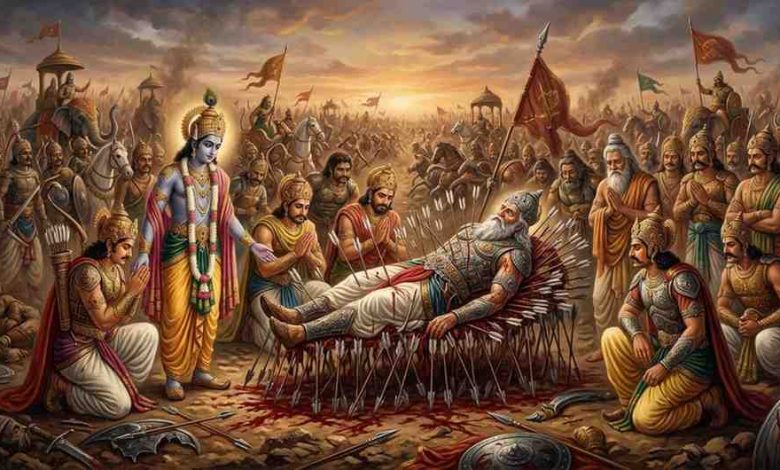
Shloka (श्लोक)
शरुतं ते कुरुमुख्यस्य नाहं हन्यां शिखण्डिनम
कन्या हय एषा पुरा जाता पुरुषः समपद्यत
⚡ Quick Meaning
This shloka discusses the dilemma of not wanting to kill Shikhandi, a pivotal character in the battle.
Translations
English Translation
In this verse, it is expressed that the speaker, who is addressing a chief of the Kurus, cannot kill Shikhandi, despite the potential consequences, as they refer to a past event where a girl has become a man.
हिंदी अनुवाद
इस श्लोक में यह बताया गया है कि बोलने वाला, जो कुरु के एक प्रमुख को संबोधित कर रहा है, शिखण्डी को नहीं मार सकता, भले ही इसके परिणाम क्या भी हों, क्योंकि वह एक अतीत के क्षण का उल्लेख करता है जहां एक कन्या एक पुरुष के रूप में स्थापित हो गई थी।
Commentary
Context
This shloka is set in the Bhishma Parva during the great war of Kurukshetra, exemplifying the complexities of battle ethics.
Meaning
The meaning highlights the moral dilemma faced in war, particularly in relation to identities and transformations.
Application
This shloka challenges us to consider our values in conflict situations and the nature of identity.

