

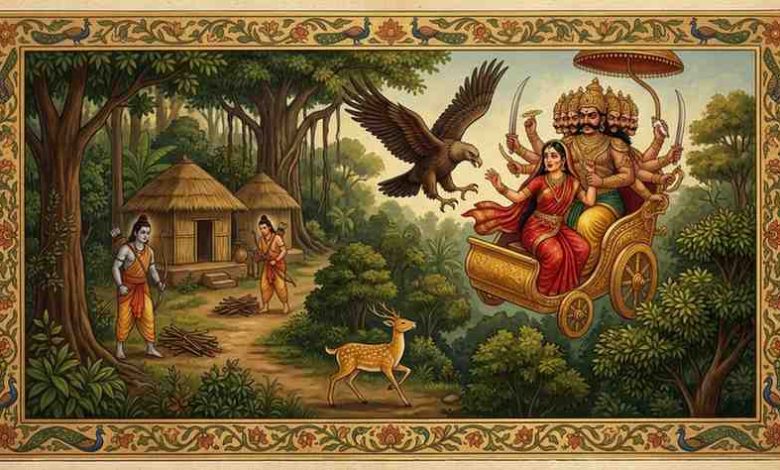
️ मूल श्लोक (Original Shloka)
विवशं शोकसन्तप्तं दीनं भग्नमनोरथम्।।3.61.9।। मामिहोत्सृज्य करुणं कीर्तिर्नरमिवानृजुम्। क्व गच्छसि वरारोहे मां नोत्सृज सुमध्यमे।।3.61.10।। त्वया विरहितश्चाहं मोक्ष्ये जीवितमात्मनः।
Shloka Translation (IAST)
vivaśaṁ śokasantaptaṁ dīnaṁ bhagnamanoratham || 3.61.9 || māmihotsṛjya karuṇaṁ kīrtirnarimivānṛjum | kva gacchasi varārohe māṁ notsṛja sumadhyame || 3.61.10 || tvayā virahitaścāhaṁ mokṣye jīvitamātmanaḥ.
Shloka Meaning in English
O lovely lady where have you gone, leaving me here like fame deserting a crook? I am helpless griefstricken, pitiable, pathetic and disappointed. O lady of slender waist, leave me not. Separated from you, I will give up my life.
श्लोक का हिंदी अर्थ (Shloka Meaning in Hindi)
हे सुंदरी, तुम कहाँ चली गई हो, मुझे यहाँ छोड़कर जैसे कि प्रसिद्धि एक धोखेबाज़ को छोड़ देती है? मैं helpless, शोक से संतप्त, दीन, और निराश हूँ। हे पतली कमर वाली, मुझे मत छोड़ो। तुम्हारे बिना, मैं अपनी जान दे दूंगा।
Life Lessons
Life Lessons in English
Emotional attachment can lead to profound despair when faced with separation. It teaches us the importance of valuing relationships and the pain that can arise from losing them.
जीवन पाठ (Life Lessons in Hindi)
भावनात्मक लगाव अलगाव के समय गहरे दुःख का कारण बन सकता है। यह हमें रिश्तों के महत्व को समझाता है और यह भी कि उन्हें खोने से जो पीड़ा होती है, वह कितनी गहरी हो सकती है।
Practical Application
Practical Application in English
In today’s fast-paced world, we often overlook the emotional bonds we share with others. Recognizing the value of these connections can lead to healthier relationships and greater emotional well-being.
व्यावहारिक अनुप्रयोग (Practical Application in Hindi)
आज की तेज़ रफ्तार वाली दुनिया में, हम अक्सर दूसरों के साथ साझा किए गए भावनात्मक बंधनों की अनदेखी कर देते हैं। इन संबंधों के मूल्य को पहचानना स्वस्थ रिश्तों और बेहतर भावनात्मक कल्याण की ओर ले जा सकता है।

