
Mahabharata Drona Parva – आवारितस तु कौन्तेयस तव पुत्रेण धन्विना

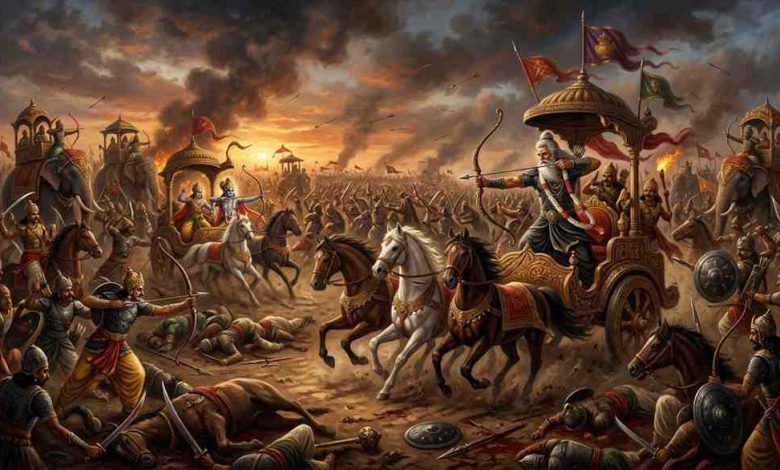
Shloka (श्लोक)
आवारितस तु कौन्तेयस तव पुत्रेण धन्विना
संरम्भम अगमद भूयः स च तस्मिन परंतपः
⚡ Quick Meaning
This shloka depicts how Arjuna, agitated by his son’s actions, moves into battle.
Translations
English Translation
In this verse, Arjuna is described as overwhelming his opponents while being provoked by his son, who wields a bow. This reflects the dynamics of familial ties in the chaos of war, illustrating the complex interplay of emotions during the Kurukshetra battle.
हिंदी अनुवाद
इस श्लोक में अर्जुन को अपने प्रतिकूलों पर विजय प्राप्त करते हुए दर्शाया गया है, जो अपने पुत्र द्वारा भविष्य में उत्कीर्णिता में वक्ष्ठित होता है। यह युद्ध की उथल-पुथल में पारिवारिक बंधनों की जटिलता को प्रदर्शित करता है।
Commentary
Context
This verse appears in the Drona Parva of the Mahabharata, highlighting a critical moment in battle when emotions run high among family members.
Meaning
It signifies the internal conflicts faced by characters in the war, emphasizing how personal relationships affect their decisions on the battlefield.
Application
The message encourages self-reflection on how our attachments can drive our actions, especially in times of conflict.

