
Mahabharata Drona Parva – तम ऊहुर जवना दान्ता विकुर्वाणा हयॊत्तमाः

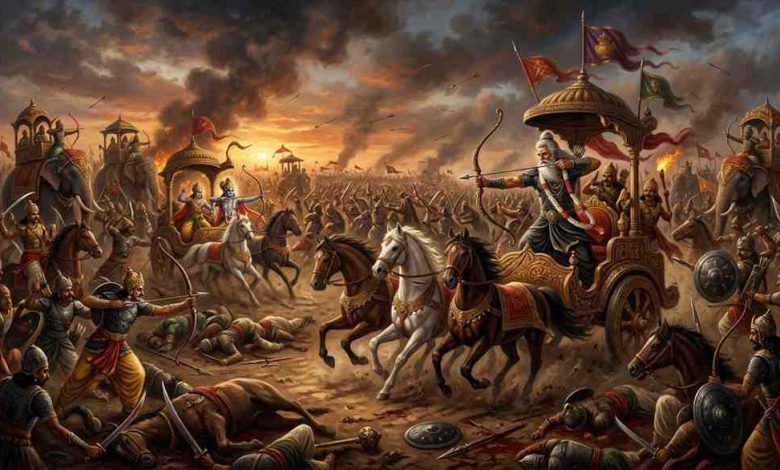
Shloka (श्लोक)
तम ऊहुर जवना दान्ता विकुर्वाणा हयॊत्तमाः
विशॊकेनाभिसंयत्ता मनॊमारुतरंहसः
⚡ Quick Meaning
This shloka describes the exceptional qualities of Bhima and his extraordinary steadiness.
Translations
English Translation
They regarded Bhima, the greatest of the strong warriors, who wields a steady grip on his energy and emotions with exceptional mastery. This illustrates not just his physical prowess, but also the mental discipline he maintains amidst the chaos of battle.
हिंदी अनुवाद
उन्हें भीम को देखा गया, जो सबसे शक्तिशाली योद्धाओं में से एक हैं, जो अपनी ऊर्जा और भावनाओं पर अद्वितीय नियंत्रण रखते हैं। यह केवल उनकी शारीरिक क्षमता को नहीं बताता, बल्कि युद्ध की अशांति के बीच उनके मानसिक अनुशासन को भी दिखाता है।
Commentary
Context
This shloka appears in the Drona Parva, focusing on Bhima’s prowess and mental fortitude in combat. It symbolizes the balance between physical might and mental stability required in warfare.
Meaning
This verse emphasizes the importance of self-discipline and emotional control in the face of adversity. It suggests that true strength lies not only in physical capabilities but also in the stability of the mind.
Application
From this shloka, we learn that maintaining composure and control is vital during challenging situations. It reflects the need for harmony between physical strength and mental clarity to overcome obstacles efficiently.

