
Mahabharata Karna Parva – महारथान नागवरान हयांश च; पदातिमिख्यान अपि च परमथ्य

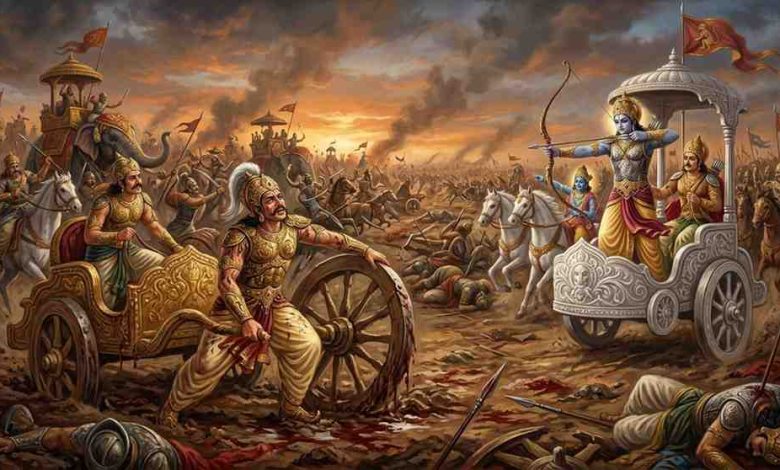
Shloka (श्लोक)
महारथान नागवरान हयांश च; पदातिमिख्यान अपि च परमथ्य
एकॊ भीमॊ धार्तराष्ट्रेषु मग्नः; स माम उपालब्धुम अरिंदमॊ ऽरहति
⚡ Quick Meaning
This shloka speaks of the unmatched valor of Bhima, who can defeat numerous mighty warriors single-handedly.
Translations
English Translation
The verse emphasizes Bhima’s extraordinary strength and bravery, capable of overcoming even formidable warriors, elephants, and horses in the battlefield, indicating that he stands alone strong enough to conquer his foes with ease.
हिंदी अनुवाद
यह श्लोक भीम की असाधारण शक्ति और साहस की बात करता है, जो अकेले ही शक्तिशाली योद्धाओं, हाथियों और घोड़ों को पराजित कर सकता है, यह दर्शाते हुए कि वह एकाकी रूप से अपने दुश्मनों को आसानी से हराने का सामर्थ्य रखता है।
Commentary
Context
This shloka occurs in the Karna Parva, emphasizing Bhima’s essential role in the Kurukshetra war and his capacity to challenge multiple adversaries simultaneously.
Meaning
The message here accentuates the essence of individual strength and the ability to withstand and confront significant battles, underscoring Bhima’s crucial role in the narrative.
Application
In life, this shloka encourages individuals to face challenges boldly, asserting that personal strength can overcome formidable obstacles, especially in times of crisis.

