
Mahabharata Karna Parva – तच्छिरः परापतद भूमौ शयेनाहृतम इवामिषम

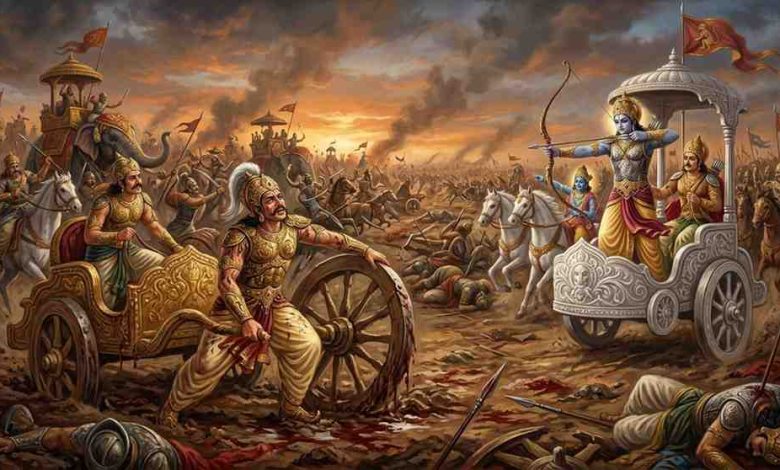
Shloka (श्लोक)
तच्छिरः परापतद भूमौ शयेनाहृतम इवामिषम
ततॊ ऽसय कायॊ वसुधां पश्चात पराप तदा चयुतः
⚡ Quick Meaning
This shloka narrates the moment of Gautama’s downfall in the battle.
Translations
English Translation
This verse describes how Gautama’s head fell to the ground like prey dropped by a falcon. It signifies a significant turning point in the battle, as the valor of mighty archers comes to a dreadful conclusion.
हिंदी अनुवाद
इस श्लोक में गौतम का सिर पृथ्वी पर गिरने का वर्णन किया गया है, जैसे कोई शिकार शिकारी द्वारा छोड़ा गया हो। यह युद्ध में एक महत्वपूर्ण मोड़ का संकेत है, जो महान धनुर्धारियों की वीरता की भयावहता का प्रतीक है।
Commentary
Context
This shloka occurs in a highly emotional and pivotal moment in the Karna Parva, marking significant loss in the battle.
Meaning
It symbolizes the high stakes of battle and the severe consequences that can result from fierce confrontations between mighty warriors.
Application
In life, it reminds us to be aware of the outcomes of our actions and the intensity of circumstances we find ourselves in.

