

Shloka (श्लोक)
तं पुत्रपशुसंमत्तं वयासक्तमनसं नरम
सुप्तं वयाघ्रं महौघॊ वा मृत्युर आदाय गच्छति
⚡ Quick Meaning
Death takes the one who is deluded by attachment, even amidst great possessions.
Translations
English Translation
This shloka illustrates that those who are attached to their family, wealth, or possessions remain oblivious to the approach of death. It conveys that death is indifferent to worldly achievements and can seize anyone at any moment.
हिंदी अनुवाद
यह श्लोक दर्शाता है कि जो लोग अपने परिवार, धन, या संपत्ति से जुड़े होते हैं, वे मृत्यु के निकटता के प्रति अनजान होते हैं। यह बताता है कि मृत्यु सांसारिक सफलताओं के प्रति उदासीन है और किसी भी क्षण किसी को भी लूट सकती है।
Commentary
Context
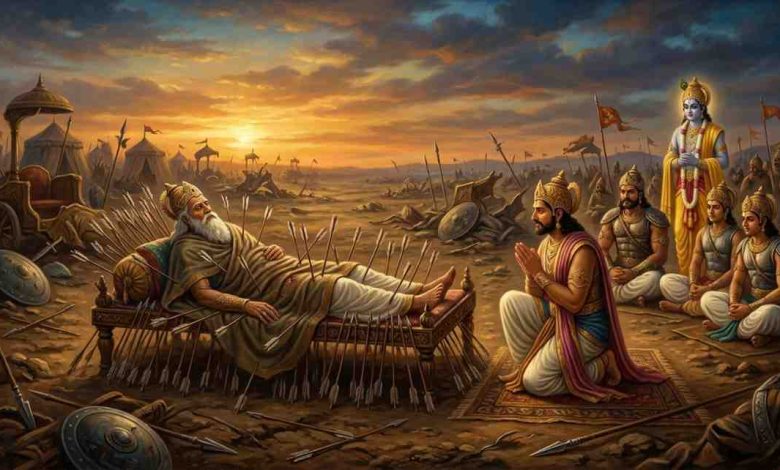
This verse is found in the broader discussions of the Shanti Parva, which reinforces the themes of attachment and mortality in human life, reminding us of the impermanence of material possessions.
Meaning
The essence of this shloka lies in cautioning against excessive attachment to worldly possessions, which can blind one to the reality of life and death. It serves as a reminder to maintain perspective on what truly matters.
Application
In today’s world, this verse encourages individuals to evaluate their attachments and prioritize what is genuinely important in life, urging them to be aware of the transient nature of their possessions.

