
Mahabharata Shanti Parva – परित्यजति यॊ दुःखं सुखं वाप्य उभयं नरः

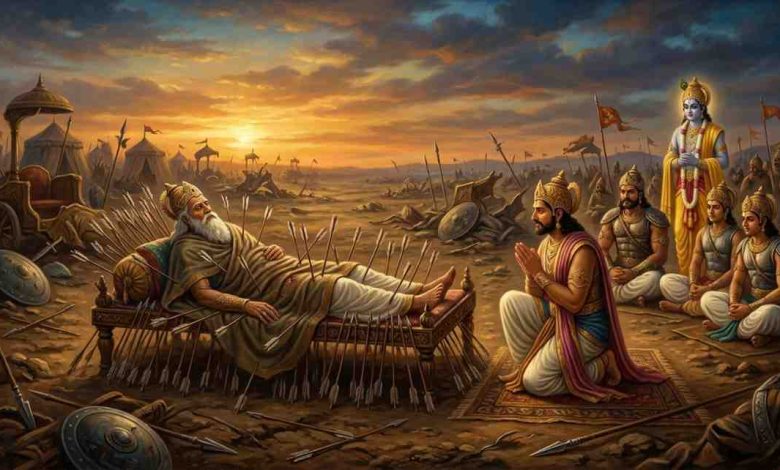
Shloka (श्लोक)
परित्यजति यॊ दुःखं सुखं वाप्य उभयं नरः
अभ्येति बरह्म सॊ ऽतयन्तं न तं शॊचन्ति पण्डिताः
⚡ Quick Meaning
One who relinquishes both happiness and sorrow transcends to a higher state of existence.
Translations
English Translation
This shloka conveys that those who let go of both pleasure and pain achieve a higher realization of truth, known as Brahman. Wise individuals do not lament over their personal emotional states but rise above dualities.
हिंदी अनुवाद
यह श्लोक यह बताता है कि जो व्यक्ति सुख और दुख दोनों को छोड़ देता है, वह सत्य का एक उच्च अनुभव प्राप्त करता है, जिसे ब्रह्म के रूप में जाना जाता है। बुद्धिमान व्यक्ति अपने व्यक्तिगत भावनात्मक अवस्थाओं पर शोक नहीं मनाते, बल्कि द्वैतों से ऊपर उठते हैं।
Commentary
Context
In the Shanti Parva, this shloka addresses the idea of transcending emotional dualities, highlighting the wisdom inherent in detachment from worldly experiences.
Meaning
The verse teaches that wisdom lies in understanding that emotions, whether positive or negative, are temporary, and engaging with them cleverly can lead to spiritual awakening.
Application
Practice letting go of emotional attachments. Engage in meditation or mindfulness to cultivate equanimity in the face of life’s ups and downs, embracing a broader perspective.

