
Mahabharata Shanti Parva – कथं राजा परजा रक्षेन न च किं चित परतापयेत

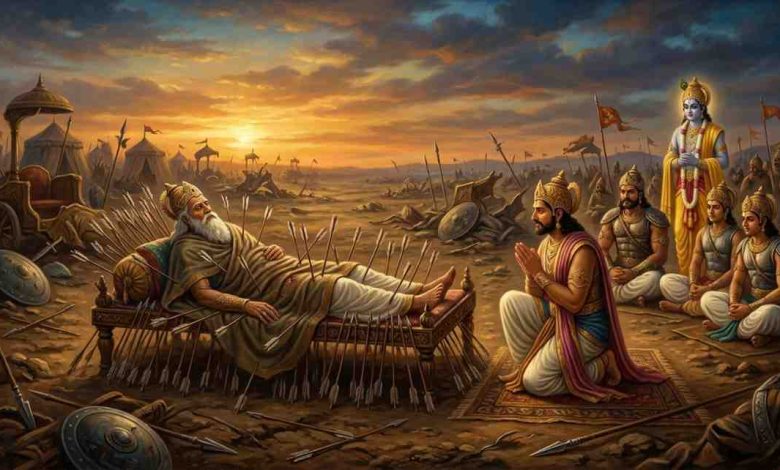
Shloka (श्लोक)
[य]
कथं राजा परजा रक्षेन न च किं चित परतापयेत
पृच्छामि तवां सतां शरेष्ठ तन मे बरूहि पितामह
⚡ Quick Meaning
This shloka raises a moral question regarding the responsibilities of a king towards his subjects.
Translations
English Translation
The speaker queries how a king can protect his citizens and not exert any form of pressure or oppression upon them. This verse encapsulates the ethical responsibilities of leadership and governance.
हिंदी अनुवाद
वक्ता यह प्रश्न करता है कि एक राजा अपनी प्रजा की रक्षा कैसे कर सकता है जबकि वह उन पर कोई भी दवाब या दमन नहीं डालता है। यह श्लोक नेतृत्व और शासन की नैतिक जिम्मेदारियों को संक्षेप में प्रस्तुत करता है।
Commentary
Context
Located in the Shanti Parva, this verse reflects on the duties of a ruler and their moral obligations towards their people.
Meaning
The essence is to question the balance between authority and benevolence in governance.
Application
This invites contemporary leaders to reflect on their commitment to ethical governance and the well-being of their constituents.

