
Mahabharata Shanti Parva – दिवाकरांशु परभम आशु गामिनं; विचित्रनाना मणिरत्नभूषितम

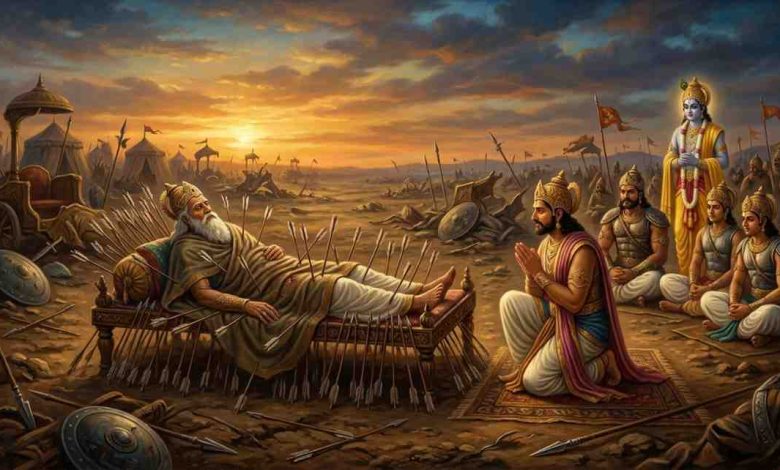
Shloka (श्लोक)
दिवाकरांशु परभम आशु गामिनं; विचित्रनाना मणिरत्नभूषितम
नवॊदितं सूर्यम इव परतापिनं; विचित्रतार्क्ष्य धवजिनं पताकिनम
⚡ Quick Meaning
This shloka portrays a radiant charioteer adorned with various precious jewels, shining brightly like a rising sun.
Translations
English Translation
In this shloka, the charioteer is depicted as luminous and resplendent, decorated with a variety of exquisite jewels. The imagery compares him to the sun at dawn, signifying the triumph of light over darkness and the glorious nature of the heroic figure.
हिंदी अनुवाद
इस श्लोक में रथ चालक को उज्ज्वल और चमकदार रूप में चित्रित किया गया है, जिसे विभिन्न उत्कृष्ट रत्नों से सजाया गया है। यह सूर्योदय के समान है, जो अंधकार पर प्रकाश की विजय और नायक के गौरवमयी स्वरूप का प्रतीक है।
Commentary
Context
This verse is featured in the Shanti Parva, where it evokes feelings of pride and bravery following the great battles of the Mahabharata.
Meaning
The shloka emphasizes the themes of valor and luminosity, illustrating how a true hero can inspire hope and determination in others, much like the sun does for the earth.
Application
One can apply this in life by recognizing the importance of surrounding oneself with positivity and inspiration, much like the jewels that adorn the charioteer.

