
Mahabharata Shanti Parva – यदा कामान समीक्षेत धर्मवैतंसिकॊ ऽनृजुः

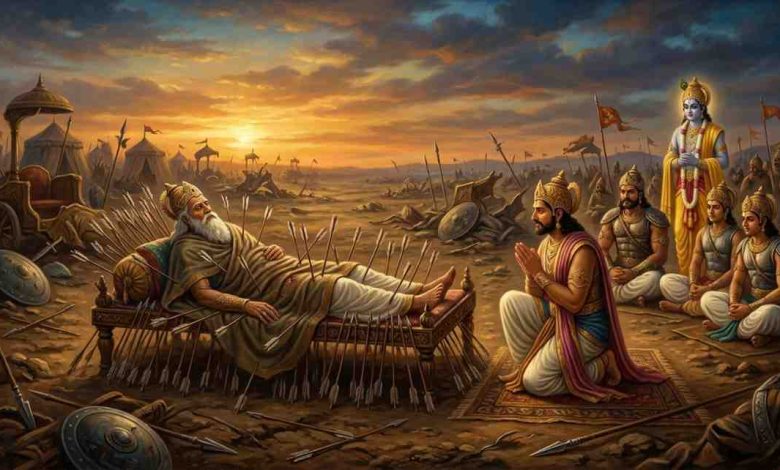
Shloka (श्लोक)
यदा कामान समीक्षेत धर्मवैतंसिकॊ ऽनृजुः
अथैनं मृत्युपाशेन कण्ठे बध्नाति मृत्युराज
⚡ Quick Meaning
This shloka explains the binding nature of desires and the inevitability of death.
Translations
English Translation
When a person reflects on desires from a righteous perspective and remains free from deceit, then death, like a noose, ensnares him inevitably. It highlights the bond death holds over those attached to desires.
हिंदी अनुवाद
जब एक व्यक्ति इच्छाओं को धर्मपरायण दृष्टिकोण से देखता है और धोखे से मुक्त रहता है, तो मृत्यु उसे, जैसे एक फंदा, अनिवार्य रूप से पकड़ लेती है। यह इच्छाओं से बंधे लोगों के प्रति मृत्यु के बंधन को उजागर करता है।
Commentary
Context
This verse reflects on the consequences of attachment to desires and the nature of death found in the Shanti Parva.
Meaning
It indicates that awareness of one’s desires can determine one’s fate concerning life and death.
Application
Contemplate desires critically to gain freedom from attachments, thus becoming liberated from the constraints of mortality.

