
Mahabharata Shanti Parva – यदि कालः परमाणं ते न वैरं कस्य चिद भवेत

Shloka (श्लोक)
[प]यदि कालः परमाणं ते न वैरं कस्य चिद भवेत
कस्मात तव अपचितिं यान्ति बान्धवा बान्धवे हते
⚡ Quick Meaning
This shloka questions the nature of time and relationships, asking why resentment arises among friends and family if time is as constant as it seems.
Translations
English Translation
This verse raises a rhetorical question about the role of time in human relationships. It suggests that if time is indeed constant, then why do feelings of anger or resentment develop among close kin during adversity?
हिंदी अनुवाद
यह श्लोक मानव संबंधों में समय की भूमिका पर एक आलोचनात्मक प्रश्न उठाता है। यदि समय निरंतर है, तो फिर विपत्ति के समय निकट संबंधों के बीच क्रोध या द्वेष क्यों पैदा होते हैं?
Commentary
Context
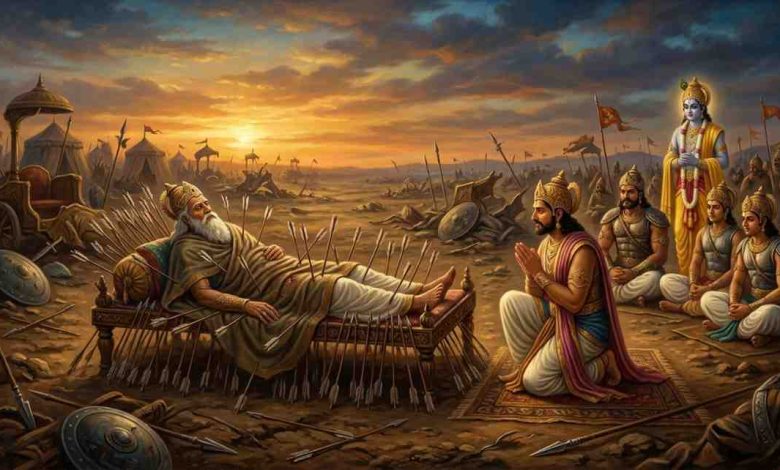
This shloka forms part of a philosophical inquiry in Shanti Parva, focusing on understanding the transient nature of emotions influenced by our relationships with time and each other.
Meaning
The core meaning suggests that despite time’s constancy, human emotions can fluctuate, leading to conflict within relationships, highlighting the paradox of emotional attachments.
Application
This verse invites introspection on personal relationships, reminding individuals to seek understanding and empathy rather than allowing time and circumstances to breed resentment.

