
Mahabharata Karna Parva – ताम अस्त्रवृष्टिं परहितां दविपस्थैर यवनैः समयन

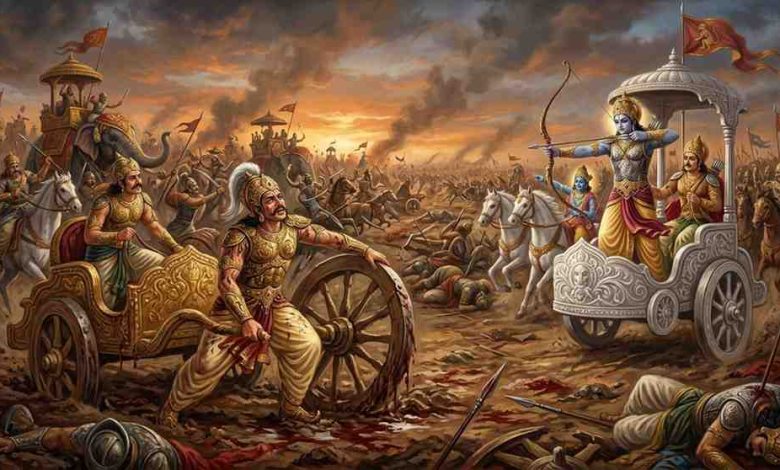
Shloka (श्लोक)
ताम अस्त्रवृष्टिं परहितां दविपस्थैर यवनैः समयन
चिच्छेद निशितैर भल्लैर अर्धचन्द्रैश च फल्गुनः
⚡ Quick Meaning
Arjuna severed the onslaught of missiles launched by the elephants and the enemy forces with his sharp arrows.
Translations
English Translation
Arjuna, steadfast as ever, skillfully cut off the overwhelming barrage of projectiles fired by the elephants and enemy soldiers with his precise arrows shaped like half-moons, demonstrating his expertise in the martial art.
हिंदी अनुवाद
अर्जुन, हमेशा की तरह अडिग, ने अपने नुकीले बाणों से हाथियों और दुश्मन सैनिकों द्वारा छोड़े गए एक भयंकर तीर के बाणों को कुशलता से काट दिया, जो अर्धचन्द्राकार थे, और अपने युद्ध कौशल का प्रदर्शन किया।
Commentary
Context
This shloka showcases Arjuna’s unmatched skill and martial prowess in the Karna Parva, as he faces an overwhelming attack.
Meaning
It signifies the strength of resolve and the ability to overcome seemingly insurmountable challenges with skill and determination.
Application
This teaches us that mastering one’s skills is vital for overcoming the trials we face along our journey.

