
Mahabharata Bhishma Parva – माया हि सहजा तेषां वयॊ रूपं च कामजम

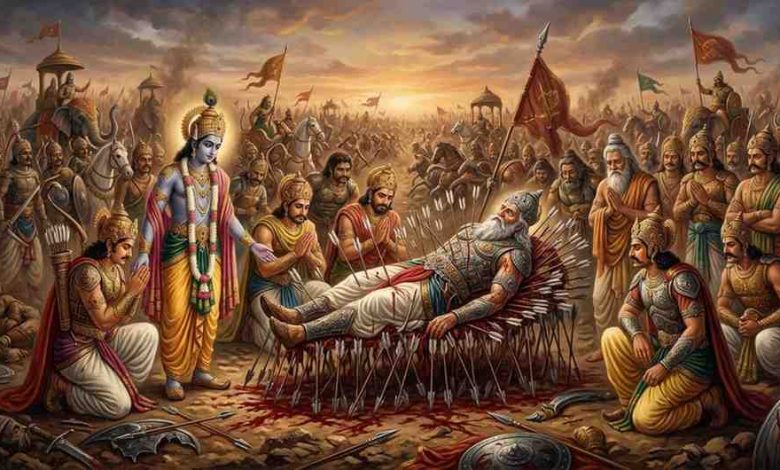
Shloka (श्लोक)
माया हि सहजा तेषां वयॊ रूपं च कामजम
एवं तद राक्षसस्याङ्गं छिन्नं छिन्नं वयरॊहत
⚡ Quick Meaning
This shloka describes the unearthly prowess of a demon, highlighting an innate charm and beauty that seemed destroyed.
Translations
English Translation
The shloka reflects on the illusion and natural beauty of demons, illustrating that despite their destruction, their essence remains influential. It portrays the struggle between angels and demons, with each contending for control.
हिंदी अनुवाद
यह श्लोक राक्षसों की अद्भुत शक्ति और प्राकृतिक सौंदर्य को दर्शाता है, यह दिखाते हुए कि उनकी विनाश के बावजूद उनकी सार्थकता बनी रहती है। यह देवताओं और राक्षसों के बीच संघर्ष को दर्शाता है, जिसमें प्रत्येक नियंत्रित करने के लिए प्रयासरत है।
Commentary
Context
This shloka is found in the Bhishma Parva of the Mahabharata, where mighty battles are waged against fearsome demons.
Meaning
The term ‘maya’ symbolizes the ethereal beauty that transcends physical reality, presenting both allure and danger.
Application
This shloka encourages introspection about the deceptive nature of appearances, prompting readers to seek deeper truths beyond the visible.

