
Mahabharata Shanti Parva – मृत्युर आत्मेच्छया यस्य जातस्य मनुजेष्व अपि

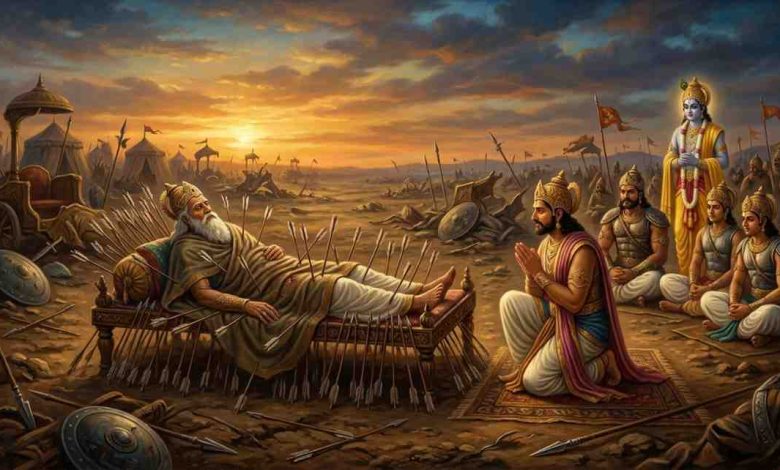
Shloka (श्लोक)
मृत्युर आत्मेच्छया यस्य जातस्य मनुजेष्व अपि
तथानपत्यस्य सतः पुण्यलॊका दिवि शरुताः
⚡ Quick Meaning
This shloka explains that death is at the behest of one’s own desire and those of noble character achieve divine realms.
Translations
English Translation
The shloka emphasizes that death is governed by one’s will, and righteous individuals, even in their absence of offspring, attain the heavenly realms of virtue, illustrating the reward of a virtuous life.
हिंदी अनुवाद
यह श्लोक बताता है कि मृत्यु किसी की अपनी इच्छा से नियंत्रित होती है, और जो लोग धर्मी होते हैं, वे संतान के बिना भी पुण्य लोक को प्राप्त करते हैं, जो एक पुण्यपूर्ण जीवन के फल को दर्शाता है।
Commentary
Context
Found in Shanti Parva, this verse shows how personal virtue affects one’s afterlife and understanding of mortality.
Meaning
It highlights the idea that moral character and actions dictate life’s outcomes, including the afterlife.
Application
This serves as a reminder to live righteously, reinforcing that true worth is measured beyond material legacies.

