
Mahabharata Drona Parva – सुत सॊमं तु यं धौम्यात पार्थः पुत्रम अयाचत

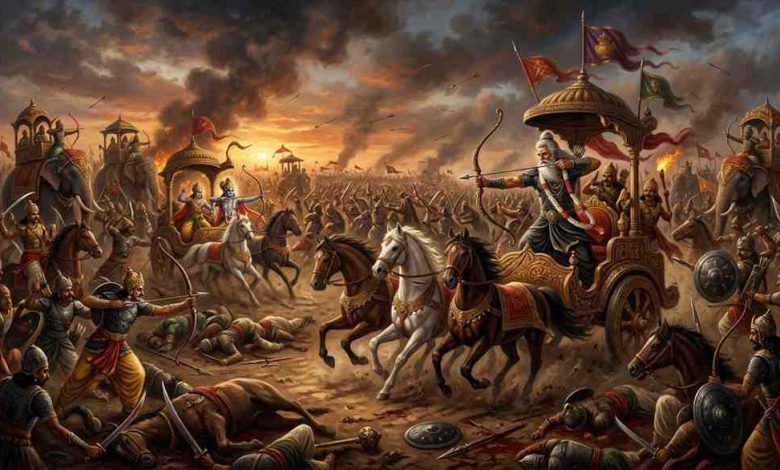
Shloka (श्लोक)
सुत सॊमं तु यं धौम्यात पार्थः पुत्रम अयाचत
माषपुष्पसवर्णास तम अवहन वाजिनॊ रणे
⚡ Quick Meaning
Arjuna requests Dronacharya to summon his son, who is as radiant as a flower.
Translations
English Translation
In this shloka, Arjuna expresses his desire for Dronacharya to call upon his son, Som, who is described as having the brilliance of a flower. This highlights the bond between a father and son and exemplifies how warriors summon their kin in battle.
हिंदी अनुवाद
इस श्लोक में, अर्जुन अपने गुरु द्रोणाचार्य से अपने पुत्र सोम को बुलाने का अनुरोध करते हैं, जो एक फूल के समान चमकदार बताया गया है। यह पिता और पुत्र के रिश्ते को दर्शाता है और यह बताता है कि युद्ध में कैसे योद्धा अपने क़िन को आमंत्रित करते हैं।
Commentary
Context
This verse is set in the Drona Parva of the Mahabharata, where the focus is on the dynamics of warfare and familial bonds during the Kurukshetra war.
Meaning
This shloka illustrates the honor and valor associated with warriors, emphasizing the emotional aspects of battle, where relationships are celebrated amidst conflict.
Application
For modern readers, this shloka emphasizes the importance of family ties even in times of conflict, prompting reflection on how we honor our loved ones during challenges.

