

Shloka (श्लोक)
अथार्धचन्द्रेण हृतं किरीटिना;
पपात दण्डस्य शिरः कषितिं दविपात
तच छॊणिताभं निपतद विरेजे;
दिवाकरॊ ऽसताद इव पश्चिमां दिशम
⚡ Quick Meaning
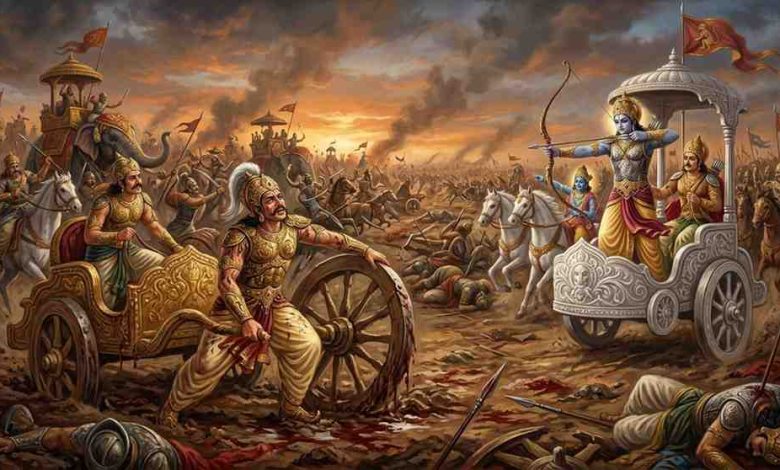
This verse describes the fall of a significant warrior’s head, symbolically likened to the moon falling, in a great battle.
Translations
English Translation
In this shloka, it is depicted how the head of a powerful warrior fell to the ground as if the half-moon had dropped, spreading a crimson hue. This imagery underlines the intensity and gravity of the battle, similar to the sun setting in the west, suggesting an end to an era.
हिंदी अनुवाद
इस श्लोक में एक शक्तिशाली योद्धा का सिर भूमि पर गिरने का दृश्य दर्शाया गया है, जैसे आधा चन्द्रमा गिर पड़ा हो, खून का रंग फैला रहा हो। यह चित्रण युद्ध की तीव्रता और गंभीरता को उजागर करता है, सूर्य के पश्चिम में ढलने के समान, जो एक युग का अंत दर्शाता है।
Commentary
Context
This shloka is set in the Karna Parva, a crucial phase of the Mahabharata, detailing significant moments of battle.
Meaning
The fall of the warrior’s head represents not just defeat but the end of a heroic legacy, affecting all those involved in the battle.
Application
This imagery serves as a reminder of the fleeting nature of power and glory in life, urging reflection on one’s legacy.

