

Shloka (श्लोक)
अनेयश चाभिमानेन बाल बुद्धिर अमर्षणः
हतॊत्साहं बलं दृष्ट्वा किंस्विद दुर्यॊधनॊ ऽबरवीत
⚡ Quick Meaning
This shloka reflects on Duryodhana’s reaction to defeat.
Translations
English Translation
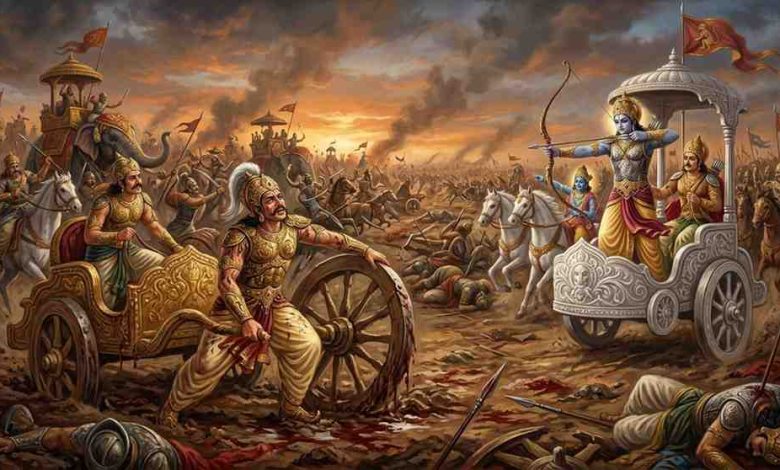
Duryodhana, feeling emboldened by mistaken pride and the youthful zest, questions the fate of his army upon witnessing their demoralization, illustrating his denial of reality and stubbornness.
हिंदी अनुवाद
दुर्योधन अपनी ही सेना की हार देखकर और भी गहरे गर्व में खोता जाता है, पहचानता है कि उनकी मनोदशा बिगड़ गई है, लेकिन फिर भी वह कर्तव्य की अनदेखी करता है।
Commentary
Context
This verse features in the emotional dialogue of the Karna Parva, showcasing Duryodhana’s mental state during critical moments of battle.
Meaning
It highlights themes of pride and folly, visible in leaders who fail to recognize their impending doom.
Application
This reminds us to stay grounded and humble, particularly during moments of perceived success or power.

