
Mahabharata Shanti Parva – अलॊलुपॊ ऽवयथॊ दान्तॊ न कृती न निराकृतिः

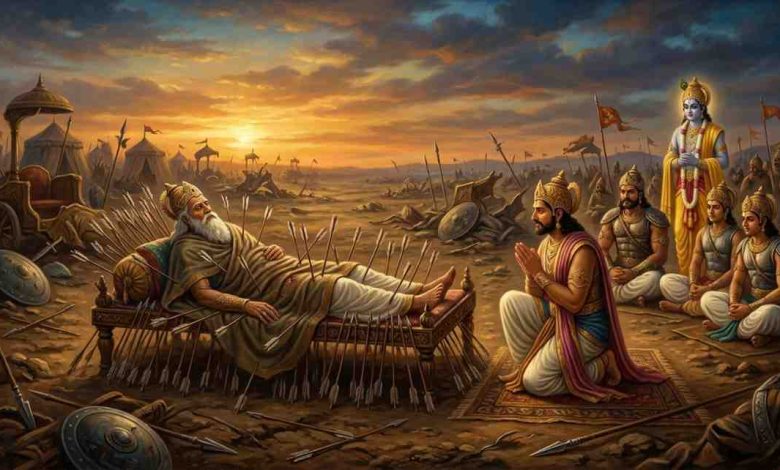
Shloka (श्लोक)
अलॊलुपॊ ऽवयथॊ दान्तॊ न कृती न निराकृतिः
नास्येन्द्रियम अनेकाग्रं नातिक्षिप्त मनॊरथः
अहिंस्रः सर्वभूतानाम ईदृक सांख्यॊ विमुच्यते
⚡ Quick Meaning
A self-restrained person who is untroubled by desires or disturbances is liberated from bondage.
Translations
English Translation
This shloka describes an ideal individual characterized by steadiness, self-control, and compassion. They remain undisturbed by incessant desires and possess a non-violent nature, ultimately leading to true freedom.
हिंदी अनुवाद
यह श्लोक एक आदर्श व्यक्ति का वर्णन करता है, जो स्थिरता, आत्म-अनुशासन और करुणा से युक्त होता है। ये अनवरत इच्छाओं से अचंभित नहीं होते और अहिंसक होते हैं, जो अंततः सच्ची मुक्ति की ओर ले जाती है।
Commentary
Context
This verse illustrates essential qualities of a liberated soul, emphasized within the Shanti Parva, teaching the importance of self-control and compassion in achieving liberation.
Meaning
The fundamental idea conveyed is that true freedom comes from transcending desires and maintaining an unwavering mind, which fosters peace and compassion towards all beings.
Application
Practicing self-discipline and non-violence in everyday life can lead to a more harmonious existence and inspire others around us to cultivate similar traits.

